Global layout
 +86 769 2366 8529




Time:2026-08-13 Views:110
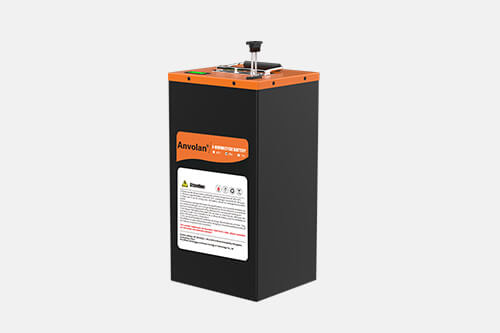
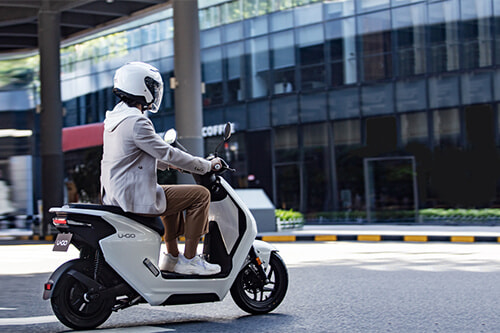
With the accelerated popularization of the global electric two-wheeler industry and the continuous implementation of urban green travel policies, electric motorcycles have become the core carrier for short-distance commuting, urban distribution and urban-rural transportation. Traditional fixed charging batteries suffer from prominent range anxiety, long charging waiting time, high replacement costs for aged batteries and great vehicle downtime loss, making them unable to adapt to high-frequency commercial travel and efficient civilian commuting scenarios. Under this industrial iteration trend, swappable batteries for electric motorcycles have completely subverted the traditional charging mode by virtue of the core characteristics of second-level battery swapping, no waiting for energy replenishment, cyclic reuse and low-cost operation and maintenance, becoming the mainstream direction of industrial technological upgrading. Professional manufacturers focusing on the R&D and production of swappable electric motorcycle batteries are the core backbone supporting the large-scale implementation and standardized popularization of the global two-wheeler battery swapping ecosystem. They solve the core industry pain points of slow energy replenishment, difficult operation and maintenance and high costs relying on exclusive swappable structure design, intelligent adaptation technology and safety standard systems.
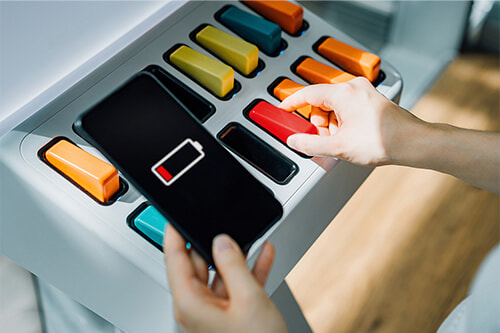
The core value of swappable batteries lies in the modular, standardized, pluggable and recyclable product design logic, which is completely different from the fixed attributes of traditional integrally packaged batteries. Traditional electric motorcycle batteries are mostly customized and integrated with vehicles with strong binding performance and poor universal interchangeability. Once the battery is aged, faulty or depleted, users can only charge the vehicle statically or replace the whole battery, which not only occupies a lot of operating time, but also greatly increases long-term vehicle usage costs. In contrast, swappable batteries manufactured by professional manufacturers adopt a universal modular design with unified size specifications, locking structures, interface protocols and communication standards, compatible with most mainstream electric motorcycle models on the market and supporting universal interchangeability across vehicles and scenarios. Without self-built charging piles or long charging waiting time, users can complete battery replacement in 3 to 5 seconds at swap stations and drive with full power immediately, completely eliminating range anxiety and charging waiting troubles, and perfectly adapting to high-frequency uninterrupted operation scenarios such as food delivery, express transportation and shared travel.
The core competitiveness of professional swappable electric motorcycle battery manufacturers is reflected in three major dimensions: swappable exclusive structural optimization, intelligent protection and ecological adaptation. In terms of structural design, the products adopt a lightweight and compact modular architecture with anti-misplug and anti-loosening locking structures, balancing convenient plugging and unplugging with driving seismic stability. They effectively avoid problems such as loose interfaces and poor contact caused by frequent battery replacement under high-frequency usage conditions. In terms of safety technology, a customized intelligent BMS system is built in with multiple optimized protection mechanisms for swapping scenarios, which can real-time monitor battery voltage, temperature, current and cycle times, realizing full-dimensional protection against overcharge, overdischarge, short circuit and high-temperature overload. Meanwhile, it supports intelligent identification, data upload and cloud management of swap stations to meet the intelligent operation and maintenance needs of large-scale battery swapping. In terms of performance, high-stability lithium iron phosphate cells are adopted with long cycle life and slow attenuation, supporting multiple cyclic reuse, greatly reducing the unit battery usage cost and fitting the new business model of shared battery swapping and Battery-as-a-Service (BaaS) subscription.
The global swappable electric motorcycle battery market is ushering in explosive growth, with the market size of global two-wheeler swappable batteries exceeding 8.7 billion US dollars in 2025 and maintaining rapid expansion in the coming years. As major brands accelerate the layout of standardized battery swapping ecosystems, the market demand for highly adaptable, safe and universal swappable batteries continues to surge. At present, the industry is generally faced with problems such as low universality, flooding of non-standard products and poor swapping compatibility. Ordinary battery manufacturers can only produce fixed batteries and lack the capabilities of swappable structure design and intelligent protocol adaptation. In contrast, professional swappable battery manufacturers focus on the segmented track, strictly benchmark universal industrial swapping standards to create highly compatible standardized products, and support model customization, interface fine-tuning and functional upgrading. They can meet the large-scale bulk supply demand of major swap station operators, as well as the diverse scenarios of complete vehicle factory supporting and battery swapping upgrading of old models.
Empowered by industrial upgrading and policies, the two-wheeler battery swapping model has become an important part of urban green transportation infrastructure. Countries around the world continue to introduce policies to encourage the construction of standardized battery swapping systems and promote the standardization, generalization and large-scale development of swappable batteries. Different from traditional fixed battery suppliers, swappable battery manufacturers not only provide hardware products, but also output standardized, reusable and intelligent overall energy replenishment solutions, helping the industry reduce operation and maintenance costs, improve travel efficiency and optimize the energy ecosystem. In the future, with the continuous popularization of swapping networks and improvement of standardized systems, high-quality manufacturers with mature swappable technology, strict quality control and strong ecological adaptation capabilities will continue to lead the global swappable battery track for electric motorcycles, promoting the comprehensive transformation of two-wheeled electric travel from "vehicle-mounted charging" to "shared battery swapping".
Be the first to receive our latest news, how-to user guides,
and exclusive deals! Subscribe now.

 Headquarter Address:10F, Building 25, N0. 179 Fengguan, Dongshen Road, Dongguan, Guangdong
 Factory Address:Building 3, Area D, Shengyang Science and Technology Industrial Park, East District of Suichuan County Industrial Park, Ji'an, Jiangxi
 Headquarter Telephone No.:+86 769 2366 8529
Factory Telephone No.:+86 796 6111618
 Contact Person:Kevin Chen
 Email Address:chen@xpower-world.com