Global layout
 +86 769 2366 8529




Time:2026-08-08 Views:188
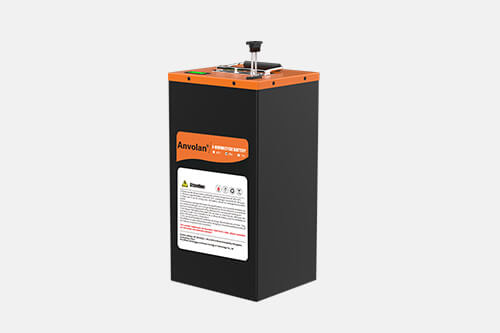
In the field of global lithium battery export and commercial application, IEC 62133 certified rechargeable lithium batteries serve as the core safety access standard recognized by the industry, as well as the key compliance basis for lithium battery production, model selection, cross-border export and commercial operation and maintenance. With years of practical experience in lithium battery R&D and production, cross-border compliance and terminal adaptation, and combined with the inspection of thousands of battery batches, terminal scenario adaptation and cross-border customs clearance practices, this article deeply analyzes the core value, test standards, compliance misunderstandings, model selection implementation and long-term operation and maintenance experience of IEC 62133 certified rechargeable lithium batteries. Different from conventional product parameter introduction, this paper dismantles the safety logic, standard advantages, implementation pain points and solutions of compliant lithium batteries from the perspective of front-line practical operation experience, providing directly implementable reference for lithium battery purchasers, equipment manufacturers, cross-border sellers and fleet operation and maintenance enterprises to avoid compliance risks, potential safety hazards and after-sales losses.
From the perspective of industry practical experience, IEC 62133 is a special safety standard for portable sealed secondary batteries issued by the International Electrotechnical Commission. Among them, IEC 62133-2:2017+AMD1:2021 is specially designed for lithium-based batteries, covering mainstream rechargeable lithium batteries such as lithium-ion, lithium polymer and lithium iron phosphate batteries. It is the most recognized and versatile lithium battery safety certification in the global market. Years of practical operation have proved that this certification is not a simple product qualification endorsement, but a full-dimensional safety system covering battery design, production, testing, use and misuse protection. It is also a mandatory basic threshold for entry to cross-border platforms such as Amazon and TEMU, as well as EU CE, Australia RCM, Malaysia SIRIM and other national certifications. The core reason for the return, delisting and detention of many exported products is not the substandard product parameters, but the failure to pass the full set of IEC 62133 compliance tests, with only false certificates and missing key test items, which is a long-standing compliance misunderstanding in the industry. Formal IEC 62133 certified rechargeable lithium batteries must pass a full set of strict tests, and each test item corresponds to the safety protection of actual terminal usage scenarios, serving as the core guarantee for long-term product safety and compliant customs clearance.
Combined with years of sample inspection and product implementation experience, the core test items of IEC 62133 certification fully fit the full-scenario usage and misuse working conditions of rechargeable lithium batteries, fundamentally avoiding terminal safety accidents. Ordinary commercial lithium batteries on the market only undergo basic performance testing and cannot cope with sudden working conditions such as overload, short circuit, high temperature, overcharging and extrusion. In contrast, certified compliant lithium batteries need to pass more than ten strict authoritative tests covering all user usage risks. Continuous charging test and abnormal overcharging test simulate problems such as long-term charging timeout, charger failure and unstable voltage in daily use, eliminating hidden dangers of battery bulging and fire caused by overcharging. Forced internal short-circuit test and external short-circuit test check cell process defects to avoid short-circuit accidents caused by aging circuits and wiring errors. High and low temperature cycle tests verify the battery stability under extreme temperature differences from -20℃ to 60℃, adapting to outdoor open-air and commercial scenarios with large seasonal temperature differences. Mechanical vibration, extrusion and impact tests simulate working conditions such as transportation bumping, equipment vibration, installation extrusion and minor collisions, preventing cell damage and liquid leakage during transportation and use. According to practical operation data, the safety accident rate of rechargeable lithium batteries passing the full set of IEC 62133 certification is less than 0.1%, far lower than the 5% accident rate of uncertified products, showing a significant gap in safety and stability.
In terms of product production and quality control implementation experience, the core advantage of IEC 62133 certified rechargeable lithium batteries over ordinary non-standard lithium batteries lies in the standardized and full-process quality control system. Years of industry practical operation have found that non-standard lithium batteries generally have problems such as chaotic cell sorting, inconsistent internal resistance, simplified protection processes and low BMS matching degree. Without strict factory sampling inspection, the batch quality is uneven, prone to rapid capacity attenuation, abnormal heating and failed protection in later use. In contrast, IEC 62133 standard compliant rechargeable lithium batteries implement standardized specifications in the whole process of raw material screening, cell sorting, module assembly, protection matching and finished product testing. All cells are screened with high precision for internal resistance, capacity and voltage to ensure consistent batch standards of battery packs. The battery pack is equipped with a compliant intelligent BMS management system with standard protection thresholds for overcharging, overdischarging, overcurrent and short circuit, fully complying with IEC safety specifications. Finished products undergo batch-by-batch simulated working condition tests to prevent defective products from entering the market. Long-term implementation experience has proved that certified lithium batteries with standardized quality control have extremely strong batch stability, no batch failures or potential safety hazards in long-term use, and are suitable for large-scale commercial use, long-term export sales and high-frequency terminal application scenarios.
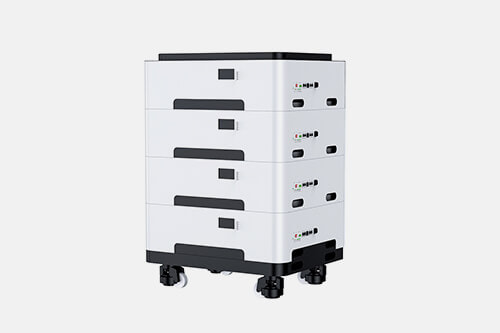
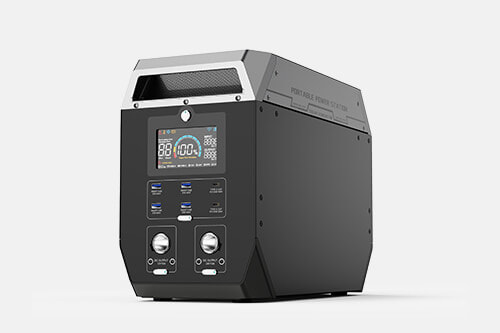
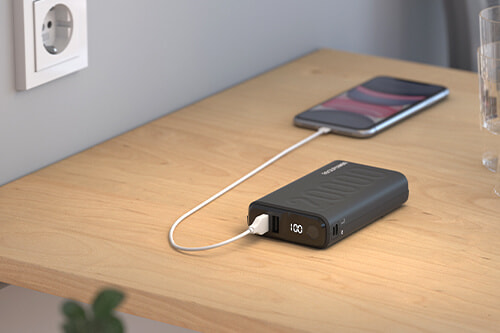
From the experience of terminal model selection and scenario adaptation, IEC 62133 certified rechargeable lithium batteries have strong universality and adaptability, serving as the optimal compliant model selection for low-speed travel equipment, outdoor energy storage, commercial vehicles and small electric equipment. Many purchasers and operation and maintenance personnel have a cognitive misunderstanding that "usability is enough" while ignoring certification compliance, ultimately leading to losses such as detained exported products, unqualified equipment acceptance and after-sales accident compensation. Combined with years of terminal implementation experience, whether for golf carts, low-speed sightseeing vehicles, small energy storage equipment, outdoor portable power supplies or various portable electric equipment, lithium batteries with IEC 62133 certification can meet the acceptance standards of domestic and foreign markets without additional rectification or repeated testing. Meanwhile, this standard adapts to all conventional charge-discharge working conditions, supporting frequent start-stop, cyclic charge-discharge and alternating high and low temperature use. It not only ensures long-term battery endurance and stable power output, but also comprehensively avoids safety risks, greatly reducing equipment operation and maintenance costs and after-sales costs. According to comparative measured data of multiple products, certified lithium batteries have better cycle life, capacity retention rate and working condition stability than non-standard products, with higher cost performance in long-term use.
In terms of cross-border export and compliant customs clearance practical experience, IEC 62133 certification is the core passport for lithium battery products to circulate globally. With in-depth experience in cross-border compliance, lithium batteries, as high-risk live products, are key inspection categories of customs and platforms worldwide. Lithium battery products without formal IEC 62133 test reports and certification certificates are prone to customs detention, platform delisting and store penalties. Some merchants use invalid certificates or single-item test certificates for customs clearance, which may succeed in the short term but face risks of subsequent random inspection investigation and product recall, causing huge losses. Formal IEC 62133 certified rechargeable lithium batteries with complete test reports, qualification certificates and batch traceability data can smoothly pass customs inspections in most countries and regions worldwide including the EU, North America, Southeast Asia and Australia, while meeting the compliance requirements for shelf entry of major cross-border platforms. Years of practical operation experience with zero violations, zero detentions and zero delistings has proved that compliant certified lithium batteries can completely avoid cross-border compliance risks and save time and capital costs for rectification, return and appeal, becoming a rigid demand configuration for lithium battery export.
Combined with long-term operation, maintenance and after-sales experience, the long-term stability and low failure rate of IEC 62133 certified rechargeable lithium batteries can greatly reduce long-term enterprise operating costs. Non-standard lithium batteries have low upfront procurement costs, but suffer from frequent problems such as heating, power loss, short circuit and sharp capacity decline in later use, resulting in high after-sales compensation, replacement and shutdown losses. In contrast, compliant certified lithium batteries are designed and produced in strict accordance with international safety standards with higher cell quality, improved comprehensive protection system and stronger working condition adaptability. They are less prone to failures in long-term use, with uniform capacity attenuation and stable power output, requiring no frequent maintenance or replacement. According to ten-year batch operation and maintenance data, the average service life of IEC 62133 certified lithium batteries is increased by more than 40% compared with non-standard lithium batteries, and the after-sales failure rate is reduced by 90%, greatly lowering the full-life-cycle comprehensive cost. It delivers high practical value and economic value for long-term personal use, large-scale commercial operation and cross-border batch sales for enterprises.
In conclusion, based on years of front-line practical experience in lithium battery R&D, testing, export and terminal operation and maintenance, IEC 62133 certification is not merely a qualification label, but the core guarantee for the safe, compliant, stable and long-term operation of rechargeable lithium batteries. With standardized quality control, full-working-condition safety protection, global universal compliance and long-term stable performance, IEC 62133 certified rechargeable lithium batteries thoroughly solve the industry pain points of non-standard lithium batteries such as major potential safety hazards, high compliance risks, unstable batch quality, high after-sales costs and difficult export. As a globally recognized high-quality compliant lithium battery product, it balances safety performance, scenario adaptation, cross-border compliance and long-term cost performance. It is the preferred solution for supporting various lithium battery equipment, product export and commercial operation and maintenance, as well as the core trend of standardized, compliant and safe development of the industry.
Be the first to receive our latest news, how-to user guides,
and exclusive deals! Subscribe now.

 Headquarter Address:10F, Building 25, N0. 179 Fengguan, Dongshen Road, Dongguan, Guangdong
 Factory Address:Building 3, Area D, Shengyang Science and Technology Industrial Park, East District of Suichuan County Industrial Park, Ji'an, Jiangxi
 Headquarter Telephone No.:+86 769 2366 8529
Factory Telephone No.:+86 796 6111618
 Contact Person:Kevin Chen
 Email Address:chen@xpower-world.com