Global layout
 +86 769 2366 8529




Time:2026-09-11 Views:129
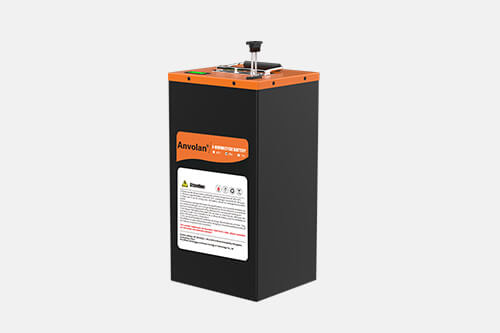
In many fields such as electric transportation, commercial freight, energy storage backup and equipment power supply, traditional lead-acid batteries have long dominated the market. However, their inherent defects including short cycle life, rapid charge-discharge attenuation and poor durability remain the biggest pain points for users. Most lead-acid batteries only achieve 300 to 500 effective charge-discharge cycles. After frequent deep charging and discharging, they suffer from rapid capacity decline, insufficient power, bulging and liquid leakage. They usually need replacement within 1 to 2 years, resulting in high long-term replacement and maintenance costs. As a high-performance lead-acid replacement solution, this prismatic cell battery takes excellent charge-discharge cycle performance as its core advantage. Adopting mature prismatic lithium battery structure and premium cell technology, it thoroughly solves the service life limitations of traditional lead-acid batteries, greatly reducing users’ long-term power consumption costs.
Super long charge-discharge cycle life is the core competitiveness of this prismatic cell replacement battery. Different from the weak cycle tolerance of lead-acid batteries, this product adopts automotive-grade LiFePO4 prismatic large single cells with rigid aluminum shell packaging. The internal electrodes are neatly arranged and evenly stressed, which effectively buffers internal stress during repeated charging and discharging expansion and contraction, preventing structural damage and active material shedding of cells. Professional tests prove that the battery achieves more than 3,500 effective charge-discharge cycles under standard working conditions, 7 to 10 times that of ordinary lead-acid batteries. It maintains an ultra-long service life even under high-intensity working conditions with high-frequency deep charging and discharging and frequent start-stop cycles, supporting a stable service life of 8 to 10 years. It completely eliminates the trouble of annual lead-acid battery replacement and significantly reduces equipment operation and battery iteration costs.
In addition to ultra-long cycle times, the prismatic cell battery features far superior charge-discharge stability and anti-attenuation performance compared with traditional lead-acid batteries, perfectly adapting to long-term high-frequency use. Traditional lead-acid batteries decay to less than 60% of their initial capacity after 300 cycles, resulting in sharply reduced cruising range and power output. They cannot withstand deep discharge, and each full power depletion causes irreversible cell damage and accelerated scrapping. In contrast, the prismatic cell replacement battery supports 100% deep charge and discharge without cell loss. It retains more than 80% of its initial capacity after 3,000 charge-discharge cycles, with negligible attenuation in cruising range and power during long-term operation. It delivers stable charge-discharge efficiency and consistent performance for electric tricycles, four-wheel mobility scooters, outdoor energy storage power supplies and industrial backup equipment.
To solve cycle loss problems under complex working conditions, the battery is equipped with an intelligent Battery Management System (BMS) to protect every charge and discharge process and extend the overall cycle life. The system monitors the voltage, current, temperature and charge-discharge status of each prismatic cell in real time, providing six intelligent protection functions against overcharging, overdischarging, overcurrent, short circuit, high temperature and low voltage. It balances cell voltage during charging to avoid single-cell damage from overcharging, and stabilizes output current during discharging to prevent cell aging caused by high-current overload, effectively solving premature local aging and overall scrapping caused by unbalanced charging and discharging. Meanwhile, the unique three-dimensional heat dissipation structure of prismatic cells provides a larger heat dissipation area and higher heat dissipation efficiency, quickly releasing heat generated during charging and discharging and avoiding cell aging caused by heat accumulation, thus improving cycle stability in complex environments.
With stronger cycle adaptability, the prismatic cell battery matches the charge-discharge logic and usage scenarios of various equipment. Traditional lead-acid batteries have obvious memory effect, and long-term shallow charge and discharge will cause fixed capacity attenuation and shortened cycle life. In comparison, prismatic lithium cells have no memory effect, with no capacity loss under shallow charge-discharge, opportunistic charging or deep cycle operation, fully adapting to diverse daily power consumption habits. It also features excellent weather resistance, supporting stable charge-discharge cycles in a wide temperature range from -20℃ to 60℃, maintaining stable performance in low winter temperatures and high summer temperatures for indoor and outdoor use across all regions.
In terms of cost performance and practicality, the excellent cycle performance enables one-time investment and long-term trouble-free use. Traditional lead-acid batteries need replacement 2 to 3 times within 3 years with high cumulative costs and cumbersome replacement work. In contrast, the prismatic cell battery delivers far better long-term cost performance thanks to its ultra-long cycle life. Its lightweight design reduces over 60% of the weight of equivalent-capacity lead-acid batteries, lowering equipment load and optimizing charge-discharge energy efficiency. It is completely maintenance-free with no need for regular water maintenance and no risk of liquid leakage or chassis corrosion. As an optimal replacement for traditional lead-acid batteries, it delivers efficient, low-cost and long-term stable power supply experience with outstanding charge-discharge cycle performance.
Be the first to receive our latest news, how-to user guides,
and exclusive deals! Subscribe now.

 Headquarter Address:10F, Building 25, N0. 179 Fengguan, Dongshen Road, Dongguan, Guangdong
 Factory Address:Building 3, Area D, Shengyang Science and Technology Industrial Park, East District of Suichuan County Industrial Park, Ji'an, Jiangxi
 Headquarter Telephone No.:+86 769 2366 8529
Factory Telephone No.:+86 796 6111618
 Contact Person:Kevin Chen
 Email Address:chen@xpower-world.com