Global layout
 +86 769 2366 8529




Time:2026-09-17 Views:94
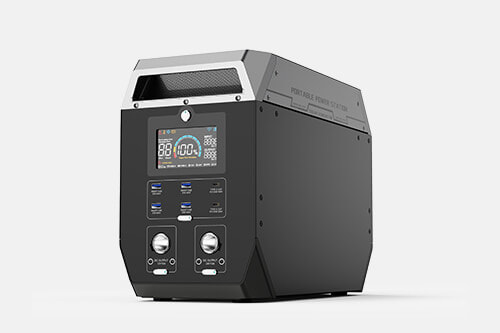
Cell voltage is the core underlying parameter that determines the energy storage accuracy, power supply stability, equipment compatibility and service life of portable solar power stations. All operational logics including energy storage charging, power conversion, load output and safety protection operate based on dynamic changes of cell voltage. Different from ordinary power banks working under constant conditions, solar energy storage devices long operate in complex environments with fluctuating illumination, unstable input voltage and dynamically switched loads, easily causing voltage drift, unbalanced differential pressure, virtual high voltage and sudden voltage fluctuation. Most ordinary solar energy storage products on the market lack professional voltage control mechanisms and only rely on basic circuit voltage stabilization, failing to adapt to the intermittency and volatility of photovoltaic power. Long-term use easily leads to common faults such as full-charge virtual voltage, power-off voltage jump, loaded voltage drop, enlarged cell differential pressure and premature aging and scrapping, directly resulting in reduced battery life, unstable power supply, precision equipment damage and shortened battery lifespan. Centered on refined cell voltage management and control, this portable solar power station relies on the inherent voltage characteristics of LiFePO4 cells to build an integrated voltage regulation system including single-cell voltage stabilization, series cell pressure equalization, photovoltaic input voltage adaptation, load dynamic voltage stabilization and temperature-voltage linkage protection. It fundamentally solves the voltage runaway pain points of traditional solar energy storage equipment from the cell voltage dimension, realizes stable voltage output under full working conditions, full temperature ranges and full cycles, and greatly improves energy storage efficiency and equipment durability.
Leveraging the exclusive single-cell voltage characteristics of LiFePO4 batteries to lay the foundational advantages of stabilized energy storage. This power station adopts standardized LiFePO4 cells with a nominal voltage of 3.2V, featuring an extremely flat voltage discharge platform, which is the core voltage advantage distinguishing it from ternary lithium batteries and lead-acid batteries. Ordinary batteries show linearly declining voltage during discharge, with simultaneous attenuation of power and voltage after half discharge, easily causing low-voltage load drop and weak power supply. In contrast, LiFePO4 cells maintain an extremely stable voltage curve within the standard operating range of 2.5V to 3.65V, sustaining constant output voltage around 3.2V during most of the discharge cycle. In daily photovoltaic energy storage working conditions, the cell voltage will not fluctuate greatly with power consumption during long-term stable energy supplementation or continuous load output, effectively avoiding the pseudo-range defect of insufficient voltage despite residual power in traditional energy storage devices. Meanwhile, the cells feature accurate voltage threshold characteristics, with a stable full-charge cut-off voltage of 3.65V and a precise low-voltage protection cut-off voltage of 2.5V. The reasonable voltage tolerance range prevents cell damage caused by high-voltage overcharging and capacity overdraft caused by low-voltage overdischarging, realizing safe, stable and efficient voltage energy storage and release at the single-cell level.
Dynamic differential pressure equalization control for series cells solves the core problem of unbalanced voltage in series modules. Portable solar power stations adopt multi-cell series assembly structures, with the overall pack voltage superposed by the voltage of each single cell. Voltage deviation of any single cell will directly affect the overall energy storage and output performance. Ordinary energy storage products lack refined differential pressure control. After long-term intermittent photovoltaic charging and discharging, discrete voltage deviations occur in each cell, forming series voltage differences. Accumulated differential pressure causes low-voltage cells to fail full charging and high-voltage cells to cut off early during charging, while low-voltage cells power off in advance during discharging, resulting in substantial waste of available capacity and accelerated cell aging. Equipped with a high-precision BMS voltage equalization system, this device collects the voltage data of each series cell in real time at the millisecond level, dynamically monitors voltage differences, limits charging for cells with high voltage and precisely supplements voltage for cells with low voltage, correcting voltage deviations in real time and keeping the differential pressure of the entire battery pack within an ultra-small millivolt-level range. It maintains synchronous voltage rise and fall and balanced operation of all cells throughout the cycle, completely solving capacity shrinkage, lifespan attenuation and unstable power supply caused by unbalanced series module voltage, and preserving the brand-new voltage consistency of the entire battery pack for long-term use.
Adaptive photovoltaic input voltage matching regulation adapts to dynamically fluctuating solar voltage conditions. Photovoltaic power belongs to unstable electric energy. Changes in light intensity, cloud coverage and morning-evening periods cause real-time fluctuations in solar panel output voltage. Unstable fluctuating voltage easily impacts cells, resulting in voltage disorder, intermittent charging and cell polarization damage. Ordinary energy storage stations have weak voltage adaptation capabilities, easily triggering overvoltage protection under strong light with high input voltage and failing to recognize and charge under weak light with low voltage, leading to extremely low light energy utilization. Equipped with exclusive photovoltaic voltage adaptation algorithm and MPPT voltage tracking system, this product captures dynamic changes of photovoltaic input voltage in real time, automatically matches the cell charging voltage threshold, rectifies, stabilizes and filters fluctuating voltage, and converts disordered photovoltaic power into stable voltage compliant with cell standards. It automatically steps down and limits current under strong light and high voltage to avoid high-voltage cell impact, and boosts voltage and supplements energy under weak light and low voltage to capture faint photovoltaic voltage for energy storage. This effectively broadens the adaptive range of photovoltaic charging voltage, eliminates charging failure, frequent start-stop and cell damage caused by voltage mismatch, maximizes the utilization of fragmented solar energy and improves photovoltaic energy storage conversion rate.
Dynamic load voltage stabilization technology realizes zero voltage-drop stable output under loaded conditions. When connected to household appliances, digital devices and high-power loads, instantaneous current impact easily causes sudden cell voltage drop, resulting in equipment restart, power supply interruption and insufficient power, which is the core voltage defect of ordinary portable energy storage stations with weak load capacity. Optimized for dynamic loaded voltage characteristics of cells and equipped with a multi-stage closed-loop voltage stabilization circuit, this solar power station compensates for instantaneous voltage drop during load access in real time and restrains dynamic voltage attenuation. Whether under light-load standby, medium-load continuous power supply or instantaneous high-power heavy-load startup, the overall output voltage remains within the standard error range without voltage collapse, power mutation or power supply fluctuation. The pure and stable voltage output perfectly adapts to voltage-sensitive loads such as computers, photographic equipment and precision instruments, avoiding equipment faults and data loss caused by voltage fluctuation, while ensuring stable operation of high-power equipment and greatly improving full-scenario load adaptability.
Temperature-voltage linkage intelligent protection mechanism realizes full-temperature-range voltage safety management. Cell voltage activity dynamically deviates with temperature changes. Low temperature leads to elevated virtual voltage and reduced cell activity, causing false full voltage and blocked charge and discharge; high temperature induces disordered voltage drift, easily triggering overvoltage thermal runaway during continuous operation. Ordinary energy storage devices implement voltage control without temperature linkage, prone to voltage abnormal faults in extreme temperature zones. This product establishes linked temperature and voltage regulation logic: it automatically corrects voltage thresholds at low temperatures to improve charging adaptation voltage and optimize discharge output, solving the problems of low-temperature virtual voltage and startup failure; it actively reduces pressure and current at high temperatures to stabilize cell voltage status, restrain voltage disorder and heat accumulation, and avoid high-temperature overcharge and overdischarge risks. Meanwhile, the system monitors abnormal voltage mutations in real time and cuts off power within milliseconds against surge voltage, instantaneous high voltage, low-voltage leakage and other faults to fully protect cell voltage safety. Supported by a complete set of refined cell voltage management systems, this portable solar power station thoroughly solves the pain points of traditional products such as unstable voltage, excessive differential pressure, poor adaptability and short service life. With extreme voltage stabilization performance, balanced cell status and efficient photovoltaic energy storage, it provides long-term stable and high-quality energy storage guarantee for outdoor off-grid power supply, household emergency energy storage, camping operation and equipment standby power supply scenarios.
Be the first to receive our latest news, how-to user guides,
and exclusive deals! Subscribe now.

 Headquarter Address:10F, Building 25, N0. 179 Fengguan, Dongshen Road, Dongguan, Guangdong
 Factory Address:Building 3, Area D, Shengyang Science and Technology Industrial Park, East District of Suichuan County Industrial Park, Ji'an, Jiangxi
 Headquarter Telephone No.:+86 769 2366 8529
Factory Telephone No.:+86 796 6111618
 Contact Person:Kevin Chen
 Email Address:chen@xpower-world.com