Global layout
 +86 769 2366 8529




Time:2026-07-24 Views:122
Widely applied in outdoor camping, field operation, emergency disaster relief, RV living and off-grid power supply in remote sites, portable solar power generators have become a new generation of lightweight power supply equipment replacing traditional fuel generators by virtue of zero fuel consumption, low noise, green energy saving and instant solar charging. Most users focus on the power parameters, charging efficiency and battery life of the equipment, while ignoring that structural design is the core foundation determining the equipment’s portability, operational stability, outdoor durability and service life. Integrating photovoltaic power reception, electric energy conversion, energy storage, voltage stabilization output and intelligent management, solar power generators contain sophisticated and complex internal components. Vibrations, temperature differences, dust, rain, collision and extrusion in complex outdoor working conditions will test the structural stability of the equipment. Ordinary portable solar generators on the market generally suffer from chaotic internal layout, bulky and heavy body, defective heat dissipation structure, weak protection structure, unreasonable zoning and impractical portable structure, resulting in easy outdoor failure, internal dust accumulation, high-temperature power reduction, vulnerable damage during transportation and accelerated aging after long-term use. This article comprehensively analyzes seven core structural systems of portable solar power generators purely from the perspective of structural design: integrated load-bearing body structure, modular zoning structure, three-dimensional heat dissipation structure, full-scenario protection structure, integrated multi-functional output structure, ergonomic portable structure and anti-vibration stability structure. It interprets how scientific structure empowers the equipment to achieve lightweight portability, stable operation, long-term durability and full-scenario adaptability, creating professional off-grid power supply equipment suitable for all outdoor working conditions.
The integrated high-strength load-bearing body structure balances lightweight performance and deformation resistance to adapt to dynamic outdoor working conditions. The core application requirement of portable solar power generators is mobile portability. Meanwhile, the equipment needs to bear the weight of internal battery packs, inverters, main control boards and circuit components, and resist external impact from outdoor handling, stacking, collision and extrusion. The rationality of the body load-bearing structure directly determines the basic quality of the equipment. Ordinary models mostly adopt thin spliced shells or heavy integrated plastic shells, which are either prone to deformation and cracking due to insufficient hardness or lose portability due to bulky weight. This portable solar power generator adopts an integrated die-casting load-bearing body structure with high strength, made of industrial-grade thickened ABS composite material and embedded alloy framework. Abandoning the traditional split splicing structure, the integrated body has no splicing gaps or loose components, improving overall rigidity and load-bearing capacity fundamentally. Adopting a mechanically balanced layout with a lowered center of gravity, the high-density battery pack is arranged at the bottom of the body, and lightweight circuit modules are distributed on the upper part, thoroughly optimizing the overall weight ratio and eliminating structural defects such as top-heavy instability and easy toppling damage. Reinforced rib structures are added on the body shell, and three-dimensional protective convex ribs surround the edges to disperse impact force from external extrusion and collision. The body will not dent, crack or displace internal components even after outdoor dropping and compression. Meanwhile, the precise lightweight structure ratio balances strength and weight, removes redundant bulky structures, and greatly reduces the overall volume and weight, retaining high-strength protection performance while supporting easy single-person handling and casual vehicle placement, perfectly adapting to dynamic outdoor mobile power supply scenarios.
The modular isolated zoning structure standardizes internal layout and eliminates circuit interference and component loss. The interior of a solar power generator integrates dozens of sophisticated components such as energy storage batteries, MPPT photovoltaic controllers, pure sine wave inverters, voltage stabilization modules, main control circuit boards and multi-channel lines. Components vary greatly in operating power, heat generation and operating attributes, and chaotic layout easily causes electromagnetic interference, heat accumulation, circuit wear and component short circuits. Ordinary models generally adopt an open integrated warehouse structure with mixed arrangement of all components, no zoning isolation and standardized wiring, which easily leads to tangled lines, mutual component interference and local overheating aging during long-term operation. Adopting an independent modular isolated zoning structure, this equipment divides the interior accurately into four independent closed cavities: battery energy storage warehouse, power conversion warehouse, intelligent control warehouse and wiring channel. All zones are physically isolated without mutual interference. The independent closed energy storage warehouse fixes the battery pack with a dedicated limit structure to prevent displacement and friction caused by vibration, isolate heat conduction from circuit modules, and avoid battery high-temperature capacity reduction and accelerated aging. The power conversion warehouse centrally accommodates inverters and voltage transformation modules, with independent space for centralized heat dissipation to eliminate electromagnetic interference of power components. The sealed intelligent control warehouse isolates main control chips and sensing components for dustproof, moisture-proof and anti-interference performance, ensuring accurate and stable data detection and voltage regulation. The dedicated hidden wiring channel standardizes all lines with zoned arrangement and fixed installation, preventing exposed tangled lines and friction damage, and greatly reducing circuit failure probability. The modular zoning structure enables orderly operation of all components with a standardized and scientific internal layout, improving equipment operation stability and service life fundamentally.
The full-dimensional three-dimensional convection heat dissipation structure realizes precise temperature control and eliminates high-temperature overload failures. Solar power generators continuously generate heat during photovoltaic charging and inverter output. Superimposed with outdoor high-temperature exposure in summer, internal heat accumulation and temperature surge easily cause power attenuation, battery bulging, component burnout and overload shutdown. The heat dissipation structure is the core key to ensure long-term continuous operation of the equipment. Ordinary models adopt simple single-side heat dissipation holes with small heat dissipation area and poor air circulation, resulting in severe heat accumulation and inability of continuous operation under high-temperature working conditions. Equipped with a dual-structure design of passive heat dissipation and active flow guidance, this equipment’s full-dimensional three-dimensional convection heat dissipation structure arranges precision flow-guided heat dissipation holes on multiple sides including the left, right, back and bottom of the body, forming a front-back connected and up-down convective three-dimensional air circulation channel to accelerate internal and external air replacement and quickly dissipate accumulated internal heat. High-power inverter modules are exclusively equipped with high-density metal heat dissipation fins to expand the heat dissipation contact area, quickly absorb and conduct heat generated by power components and improve heat dissipation efficiency. Sufficient heat dissipation gaps are reserved inside the equipment, ensuring all heat-generating components are not attached or stacked to avoid heat accumulation. The heat dissipation holes adopt a staggered anti-blocking structure, which ensures rapid air circulation while preventing outdoor dust, floccules and insects from entering the body, balancing heat dissipation efficiency and dustproof protection. This three-dimensional heat dissipation structure effectively controls the internal operating temperature of the equipment, eliminates high-temperature overload and thermal attenuation problems, and supports long-term continuous photovoltaic charging and high-power sustained output, adapting to harsh working conditions such as outdoor high-temperature exposure and long-time operation.
The multi-level outdoor protection structure achieves dustproof, waterproof and weather-resistant performance to adapt to complex field environments. Outdoor power supply scenarios are characterized by excessive dust, high humidity and changeable weather. Rainwater, dew, sand dust and humid fog easily penetrate into the equipment, causing short circuits, corrosion and component failure. A professional protection structure guarantees stable outdoor operation of the equipment. Ordinary solar power generators have simple protection structures with poor gap sealing performance, only suitable for simple indoor use and unable to adapt to complex field working conditions. Built in strict accordance with high-level dustproof and waterproof structural standards, this equipment’s multi-level integrated outdoor protection structure is fully equipped with high-elastic sealing strips at body joints, interface gaps and heat dissipation channels for seamless fitting, effectively blocking rainwater splashing, dust invasion and humid fog penetration. The surface of the body adopts an anti-aging and anti-ultraviolet protective coating structure cured by special technology, resisting outdoor strong light exposure and wind-rain erosion without fading, pulverization or cracking after long-term outdoor use, preventing material aging and embrittlement. The interface area adopts a flip-type sealed protection structure for full coverage and sealing when idle, avoiding interface dust accumulation, moisture and oxidative rusting to ensure long-term sensitive and stable charging and output interfaces. The bottom is added with a non-slip and moisture-proof heightening structure to isolate ground moisture, ponding and sand abrasion, preventing damp corrosion and bottom wear caused by direct contact with the ground. Complementary multi-layer protection structures endow the equipment with excellent dustproof, waterproof, moisture-proof, sun-proof and anti-corrosion performance, adapting to full-scenario complex outdoor working conditions such as rainy camping, dusty field operation, high-temperature exposure and humid mountain areas.
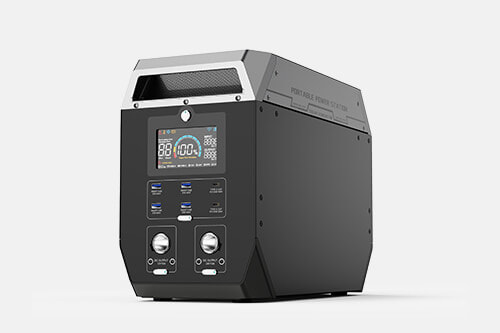
The integrated multi-functional output interface structure features standardized layout to adapt to all types of electrical equipment. The core application value of portable solar power generators lies in compatibility with various outdoor electrical equipment. The layout rationality, integration and protection performance of the interface structure directly determine the equipment’s adaptability and user convenience. Ordinary models have disorderly arranged and unprotected interfaces with crowded layout causing misplugging and idle damage, as well as single interface types that cannot meet diverse power supply needs. Adopting an integrated zoned output interface structure, this equipment arranges AC interfaces, DC interfaces, USB fast charging interfaces and solar charging interfaces in precise zones with regular layout and scientific spacing, ensuring non-interfering plugging operation and avoiding crowded collision and misplugging short circuits. All interfaces adopt an embedded reinforced structure with embedded base fixation to prevent loosening, falling off and poor contact caused by long-term plugging and unplugging, improving interface durability and stability. Equipped with multi-standard fast charging output structures, it supports multiple power supply modes including high-voltage DC, household AC and low-voltage fast charging, compatible with household appliances, digital products, outdoor lamps and small tools. Meanwhile, the integrated interface panel and body form an integrated molding structure without protruding exposed parts, balancing regular appearance and practicality with smooth and stable plugging performance for repeated long-term use, realizing the structural advantages of multi-device compatibility, efficient power supply and long-term durability.
The ergonomic portable mobile structure enables lightweight and easy handling to adapt to full-scenario mobile operation. Different from fixed power generation equipment, portability is the core differentiated advantage of solar power generators, and the humanized design of the portable structure directly determines the user experience of outdoor handling, movement and storage. Ordinary models mostly adopt a single fixed handle structure with bulky body and stiff grip, requiring great physical effort for long-distance handling and unable to adapt to frequent mobile outdoor operation. Equipped with an all-round ergonomic portable structure, this equipment has an integrated anti-slip folding handle on the top with an arc-fit palm design and thickened soft anti-slip rubber for comfortable grip without hand restraint. The handle can be folded to fit the body when idle, saving storage space and avoiding protruding collision. Embedded symmetrical auxiliary grip grooves on both sides of the body support single-person carrying and double-person lifting with multi-angle barrier-free handling adapted to diverse mobile scenarios. The regular square box structure supports vertical, horizontal and stacked storage, fitting narrow spaces such as car trunks, outdoor storage boxes and tent corners for flexible and space-saving storage. Meanwhile, the equipment features a centered gravity and symmetrical structure with uniform stress during handling, no unilateral deflection and reduced physical exertion for frequent outdoor movement, perfectly adapting to high-frequency mobile scenarios such as camping relocation, field position switching and emergency material transportation, realizing true portable convenience of random carrying and moving.
The built-in anti-vibration stable buffer structure absorbs shock and protects the machine to extend the service life stably. Bumpy outdoor transportation, uneven placement and slight vibration and collision will transmit to the interior of the equipment, causing loosening of sophisticated components, battery displacement and line falling off, resulting in latent failures. The anti-vibration buffer structure is the key detail to extend the equipment service life. Ordinary models have no built-in shock absorption structure with rigid fixed internal components, which are prone to loosening and damage after vibration, leading to high failure rate and short service life. Fully equipped with a built-in anti-vibration buffer structure, this equipment adopts flexible wrapping and fixing with high-elastic shock-absorbing buffer pads around and at the bottom of the battery pack to absorb impact force from bumping, vibration and collision, preventing battery displacement, friction and impact damage. Sophisticated components such as circuit boards and inverters adopt a suspended shock-absorbing fixing process with buffer gaskets at screw points to weaken external vibration transmission and protect stable operation of sophisticated circuits. The rounded passivated anti-collision corners abandon sharp right-angle design, improving grip safety while buffering impact force from falling and collision to reduce equipment damage probability. Forming a closed-loop protection system with external anti-collision, middle shock absorption and internal buffering structures, the equipment fully resists outdoor vibration damage, ensures long-term stable operation and greatly extends the overall service life, serving as a structurally stable professional equipment for outdoor off-grid power supply, emergency backup power and daily energy storage.
Be the first to receive our latest news, how-to user guides,
and exclusive deals! Subscribe now.

 Headquarter Address:10F, Building 25, N0. 179 Fengguan, Dongshen Road, Dongguan, Guangdong
 Factory Address:Building 3, Area D, Shengyang Science and Technology Industrial Park, East District of Suichuan County Industrial Park, Ji'an, Jiangxi
 Headquarter Telephone No.:+86 769 2366 8529
Factory Telephone No.:+86 796 6111618
 Contact Person:Kevin Chen
 Email Address:chen@xpower-world.com