Global layout
 +86 769 2366 8529




Time:2026-10-12 Views:88
In modern life, electricity has penetrated into almost every aspect of daily routine. Whether at home, in the office, or during camping and outdoor work, stable power supply directly affects normal operation. However, sudden outages, natural disasters, and extreme weather often catch people unprepared. A power outage not only brings inconvenience but can also cause food to spoil, equipment to shut down, and even interrupt the continuous operation of key devices such as medical equipment. At such moments, a portable emergency power station that can provide electricity anytime becomes a reliable backbone for maintaining order and safety in daily life.
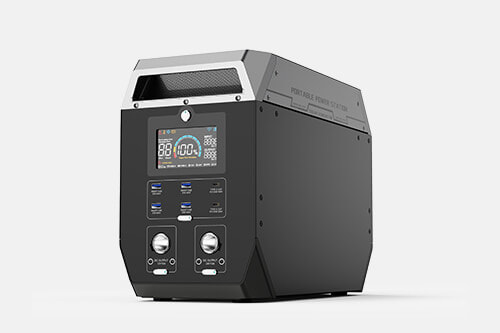
Unlike traditional fuel generators, a portable power station uses a lithium battery as the core energy storage unit and converts DC power into AC output through a built-in inverter, providing stable power for various household appliances and devices. It is compact, reasonably lightweight, and equipped with a carrying handle or wheels, so it can be easily moved to the living room, kitchen, balcony, or inside a vehicle. More importantly, it works quietly, without exhaust emissions, and can be safely used indoors without worrying about ventilation, making it very suitable for home emergencies and outdoor scenarios.
Large capacity and multiple output interfaces are the basis for meeting diverse needs. Mainstream emergency power stations typically offer capacity options ranging from several hundred watt-hours to several thousand watt-hours. They can power digital devices such as phones, routers, and laptops continuously for days, and can also drive refrigerators, lighting, fans, and televisions during an outage. Output interfaces cover AC, USB-A, USB-C, and car-charging DC, and can power multiple devices at the same time.
Pure sine wave output is a key point for ensuring device safety. Most high-quality emergency power stations adopt pure sine wave inverter technology, producing an AC waveform identical to mains power, so they can stably drive devices that are sensitive to waveform, such as refrigerators, water pumps, and power tools, avoiding heating, abnormal noise, or damage caused by waveform distortion. For medical and communication devices with high power quality requirements, pure sine wave output is especially important. When purchasing, it is recommended to choose products with pure sine wave output to ensure safe and stable operation of all devices.
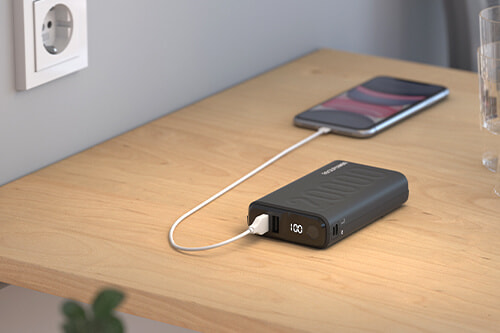
Power switching capability is the key difference between an emergency power station and an ordinary mobile power bank. Some emergency power stations feature UPS uninterruptible power switching, which can remain connected to mains power on standby and switch to battery power within milliseconds when an outage is detected, achieving uninterrupted power supply. This feature can avoid data loss, device restarts, or damage caused by sudden power cuts, and is significant for devices such as home security systems, routers, and monitors that need continuous power.
Diversified charging methods greatly enhance the practicality of an emergency power station. Mainstream products support mains charging, car charging, and solar panel charging. On a daily basis, they can be quickly recharged with household power to stay fully charged and ready; during outings or disasters, they can be charged through a car cigarette lighter or solar panels to further extend runtime. These diverse charging channels allow the power station to keep working in various scenarios.
Battery technology and safety protection are the core qualities of an emergency power station. More and more products adopt LiFePO4 cells, which offer higher thermal stability and a longer cycle life than traditional lithium batteries, providing significantly better safety. A built-in intelligent battery management system provides multiple protections against over-charge, over-discharge, over-current, short circuit, and temperature, automatically cutting off power under abnormal conditions to maximize safety. The body also uses flame-retardant and impact-resistant structures with sound heat dissipation, remaining stable and reliable even during long periods of high-power discharge. Choosing certified regular products is the premise for safe use.
From the perspective of application scenarios, portable power stations are widely used for home outage emergencies, camping, RV travel, outdoor work, emergency rescue, and community support. Whether maintaining basic household power during a sudden outage or supplementing power for devices outdoors far from the grid, they provide convenient, clean, and reliable electrical support. For families with elderly people, patients, or devices requiring continuous power, keeping an emergency power station at hand is also a real safety guarantee.
When selecting, users should choose the appropriate capacity and output power according to their actual needs. First calculate the power of key devices during an outage and the expected usage time, and then determine the capacity accordingly; at the same time, pay attention to whether the AC output power can meet the starting demand of high-power devices such as refrigerators. Reasonably matching solar panel charging accessories can further enhance emergency capability. Choosing a brand product with complete certification and good after-sales service brings more peace of mind.
It is foreseeable that, as lithium battery technology and inverter technology mature, portable emergency power stations will enter more and more homes and scenarios, becoming an indispensable emergency tool in modern life. A quieter, cleaner, and safer way of supplying power gives users more composure in the face of outages and disasters. Rational selection, correct use, and regular maintenance will enable this emergency power station to work reliably at critical moments and provide solid assurance for family safety and life stability.
Be the first to receive our latest news, how-to user guides,
and exclusive deals! Subscribe now.

 Headquarter Address:10F, Building 25, N0. 179 Fengguan, Dongshen Road, Dongguan, Guangdong
 Factory Address:Building 3, Area D, Shengyang Science and Technology Industrial Park, East District of Suichuan County Industrial Park, Ji'an, Jiangxi
 Headquarter Telephone No.:+86 769 2366 8529
Factory Telephone No.:+86 796 6111618
 Contact Person:Kevin Chen
 Email Address:chen@xpower-world.com