Global layout
 +86 769 2366 8529




Time:2026-10-10 Views:47
1. Introduction
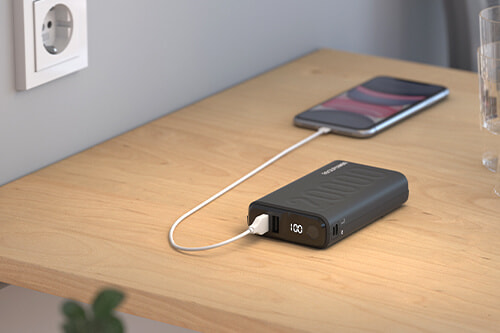
With the upgrading of national outdoor leisure consumption concepts, refined camping, self-driving travel, wilderness hiking and other lightweight outdoor formats have developed rapidly, completely transforming the traditional extensive outdoor travel mode. In the past, outdoor activities were dominated by short-term experiences and minimalist equipment without the support of continuous power supply. In contrast, modern refined outdoor life pursues home-style comfort, leading to surging demands for continuous power for outdoor lighting, audio-visual entertainment, food fresh-keeping, intelligent equipment endurance, and small cooking electrical appliances, which has created a broad market demand for outdoor independent energy storage equipment. Traditional dry batteries and small power banks have low power, short battery life and limited device adaptability, failing to meet the long-term, multi-category and high-power outdoor power consumption scenarios and becoming a core shortcoming restricting the upgrading of outdoor consumption.
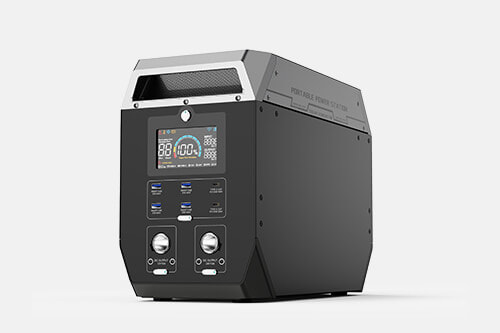
With the core advantages of large capacity, high power, multiple interfaces and recyclable charging, outdoor portable energy storage equipment perfectly adapts to full-scenario outdoor power demand and can supply power independently off the municipal grid, serving as a core supporting device for refined camping, long-distance self-driving and wilderness exploration. With the continuous heating up of the outdoor economy, the global market demand for outdoor energy storage products increases year by year, promoting the continuous improvement of the supply system composed of upstream and downstream manufacturers, OEM producers and brand service providers. Amid the rapid industrial expansion, prominent problems such as homogeneous market competition, inconsistent product safety standards, insufficient scenario adaptability and overseas certification barriers have emerged, putting forward higher requirements for the R&D and production, quality control, supply chain layout and market service capabilities of industrial suppliers.
The current outdoor energy storage industry has evolved from the incremental era of barbaric growth to the refined, standardized and branded stock competition stage. As the core subject of industrial development, suppliers’ R&D capability, quality control system and market adaptation strategy directly determine the overall industrial development quality. Combining the power consumption characteristics of outdoor camping scenarios, industrial market status and product technology iteration trends, this paper systematically analyzes the core competitive advantages, existing development pain points and refined operation paths of suppliers, providing references for the high-quality industrial development. Based on actual market conditions, focusing on technological innovation and industrial upgrading, this paper objectively analyzes the industrial development rules with strong engineering reference and commercial application value.
2. Characteristics of Outdoor Camping Power Scenarios and Core Product Requirements
The power consumption demand of outdoor camping scenarios is typically fragmented, diversified, all-weather and off-grid, which is significantly different from fixed household and industrial power consumption scenarios, and puts forward exclusive requirements for the performance, structure, safety and portability of energy storage products. In terms of power level, camping power consumption covers low, medium and full power ranges. Small devices such as mobile phones, Bluetooth headsets and camping lamps consume power from several watts to tens of watts; medium devices including projectors, air pumps and portable refrigerators work at hundreds of watts; high-power equipment such as electric cookers, ovens and heaters can reach kilowatt level, requiring products to support wide power adaptation.
In terms of battery life and energy supplement demand, short-term single-day camping has low requirements for endurance, while multi-day wilderness camping and off-grid RV living require products with large-capacity energy storage and diversified recharging methods, supporting AC mains, vehicle-mounted and solar photovoltaic charging to get rid of single charging restrictions and realize independent outdoor energy supplement. Meanwhile, the complex and variable outdoor environments with high and low temperature, rain and snow, and bumpy vibrations require equipment to possess good environmental adaptability, waterproof, dustproof, drop and vibration resistance to ensure stable operation under complex outdoor working conditions.
In terms of safety and convenience, outdoor areas feature dense personnel and limited ventilation, so products must be equipped with multiple safety protection mechanisms including overcharge, overdischarge, overload, short circuit and high-temperature protection to eliminate potential safety hazards such as fire and electric leakage. In addition, camping equipment pursues lightweight and portable design, so products need optimized size and weight configuration with portable handles and anti-slip structures, as well as multi-type universal interfaces compatible with various electrical equipment to improve universality. These scenario-based demands are the core basis for suppliers’ product R&D and iteration, and the key criteria to distinguish high-quality products from low-end homogeneous ones.
3. Industrial Market Development Status and Supplier Pattern
In recent years, the global outdoor portable energy storage market has maintained a rapid growth rate. With the continuous popularization of camping culture worldwide and the expansion of demand in self-driving travel, outdoor research, field rescue and other scenarios, the industrial market scale keeps expanding. Relying on the complete advantages of lithium battery manufacturing, electronic circuit processing and whole machine assembly, the domestic industrial chain occupies the mainstream global market share and has become the core production and export base of global outdoor energy storage products. Downstream market demands are continuously segmented, extending from general camping scenarios to professional field operation, outdoor live streaming, emergency power backup and RV residence, promoting products to upgrade from single energy storage power supply to intelligent and scenario-customized solutions.
The current industrial supplier pattern presents a hierarchical competition state divided into three echelons. The first echelon consists of head brand suppliers with independent R&D, self-developed core battery cells, full-process quality control, global certification and brand operation capabilities, covering full-range products and dominating the high-end outdoor and overseas high-end markets with stable quality and cutting-edge technologies. The second echelon is professional specialized manufacturers focusing on medium and large-capacity camping-specific products, engaging in OEM production and domestic mid-end markets with prominent cost performance to meet mass camping consumption demands. The third echelon includes small and medium-sized general suppliers focusing on low-capacity and low-cost entry-level products with severe homogeneity and low technical thresholds, dominating the low-end sinking market with price-oriented competition.
With the gradual improvement of industrial standards and increasingly strict market supervision, the living space of low-end inferior products continues to shrink, accelerating industrial survival of the fittest. Consumers’ escalating requirements for product safety, battery life, portability and intelligence force small and medium-sized suppliers to increase R&D investment and optimize product structure. Meanwhile, safety certification, energy efficiency standards and environmental regulations in overseas markets have further raised industrial export thresholds, driving suppliers to transform from extensive production to refined, standardized and compliant manufacturing with continuously improving industrial concentration.
4. Core Product Technologies and Suppliers’ Core Competitiveness
The core technologies of outdoor camping energy storage products focus on four dimensions: battery cell selection, inverter system, intelligent management and control, and structural design, which are also key areas for suppliers to build core competitiveness. As the energy storage core of products, lithium iron phosphate and ternary lithium batteries are the two mainstream options. Lithium iron phosphate batteries feature long cycle life, high safety, high temperature resistance and strong stability, making them the mainstream choice for large-capacity camping equipment suitable for long-term high-frequency outdoor use. Ternary lithium batteries have high energy density and smaller size, which are mostly applied to lightweight small-capacity portable products for short-term light camping scenarios. High-quality suppliers select materials differentially according to scenarios to balance safety and performance and eliminate potential safety hazards caused by inferior cells.
Inversion and voltage stabilization technologies determine power supply stability. Outdoor electrical equipment has high requirements for voltage and frequency stability, and inferior products are prone to voltage fluctuations that damage precision electronic equipment. Technologically advanced suppliers adopt pure sine wave inversion technology to output stable and pure current compatible with most household and outdoor electrical appliances, equipped with intelligent voltage stabilization systems to maintain stable power supply during load switching and power fluctuation. In addition, the intelligent battery management system serves as the core guarantee for product safety and endurance, which can monitor cell temperature, power and current in real time to realize all-round safety protection, optimize charge and discharge efficiency, reduce energy consumption loss and extend equipment service life.
Structural and intelligent design capabilities have become the key to differentiated competition. High-quality suppliers optimize product structures for camping scenarios, adopting lightweight shell materials and integral forming technology to balance waterproof, dustproof, drop and wear resistance, as well as optimized heat dissipation structures to solve heat dissipation problems under outdoor high-temperature conditions. In terms of intelligence, high-end products are equipped with Bluetooth connection, remote APP monitoring, intelligent power distribution and adaptive fast and slow charging functions, enabling real-time device status checking and customized power supply modes to meet refined outdoor power demands. Compared with traditional products with only basic power supply functions, intelligent upgrading greatly improves product user experience and scenario adaptability.
5. Existing Industrial Pain Points and Suppliers’ Development Bottlenecks
Despite the sound industrial development momentum, most suppliers still face multiple operational pain points restricting high-quality industrial upgrading. Firstly, industrial homogeneous competition is prominent. A large number of small and medium-sized suppliers lack independent R&D capabilities, copying and imitating head product designs and focusing on low-end price competition rather than technological innovation and quality upgrading, resulting in uneven quality of low-end market products and frequent problems such as electric leakage, spontaneous combustion and false battery life calibration, damaging the overall industrial reputation.
Secondly, scenario adaptation capability is insufficient. Most suppliers adopt generalized production modes without optimizing product performance for exclusive camping scenarios, leading to defects such as excessive weight and poor portability of large-capacity products, insufficient power of lightweight products unable to drive high-power equipment, sharp battery life decline in low-temperature environments and low solar energy supplement efficiency, which fail to meet the precise demands of refined camping and multi-day wilderness camping scenarios.
Thirdly, insufficient compliance and internationalization capabilities restrict market expansion. Some small and medium-sized suppliers lack complete overseas certification systems, making their products unable to meet the safety, environmental protection and energy efficiency standards of mainstream overseas markets in Europe, America and Southeast Asia, resulting in export restrictions. Meanwhile, the implementation of domestic industrial standards has become increasingly strict, eliminating suppliers without compliant production systems and perfect quality control processes. In addition, unstable supply chains and reliance on upstream suppliers for core components such as battery cells and inverter chips expose suppliers to operational risks caused by raw material price fluctuations and supply shortages.
6. Future Industrial Development Trends and Suppliers’ Upgrading Strategies
The outdoor camping energy storage industry will continue to upgrade in five major directions: safety, lightweight, intelligence, scenario customization and green energy conservation. Suppliers need to accurately grasp industrial trends, break through development bottlenecks and build long-term competitive advantages. In terms of products, continuously optimize cell and structural design, iterate new products with high safety, high energy density and wide temperature domain adaptation to solve pain points such as unstable battery life in high and low temperature environments and poor portability, and upgrade solar energy supplement and fast charging technologies to improve outdoor independent energy supplement efficiency for long-term wilderness camping scenarios.
In terms of technology, increase investment in intelligent R&D, upgrade intelligent battery management systems equipped with IoT monitoring, intelligent load identification and adaptive energy consumption adjustment to realize independent equipment management and control. Promote modular product design to expand battery capacity and interfaces according to user demands, improving product universality and customization capabilities to adapt to diversified camping scenarios. Meanwhile, deepen green energy-saving technologies to optimize charge and discharge energy loss and improve energy utilization efficiency in line with the global low-carbon environmental protection trend.
In terms of operation, suppliers should abandon low-price competition and adopt quality-oriented, branded and differentiated development strategies. Build a complete full-process system covering R&D, production and quality control to strictly guarantee product quality and eliminate unqualified products with false parameters. Deepen segmented camping scenarios and launch differentiated products including lightweight entry-level, large-capacity long-endurance and intelligent high-end models to cover different consumption levels and application scenarios. Improve compliance certification systems to break through domestic and foreign market access barriers and expand global sales channels. Meanwhile, build stable upstream supply chain systems and deepen strategic cooperation with core cell and chip manufacturers to reduce raw material fluctuation risks and ensure stable production capacity.
Be the first to receive our latest news, how-to user guides,
and exclusive deals! Subscribe now.

 Headquarter Address:10F, Building 25, N0. 179 Fengguan, Dongshen Road, Dongguan, Guangdong
 Factory Address:Building 3, Area D, Shengyang Science and Technology Industrial Park, East District of Suichuan County Industrial Park, Ji'an, Jiangxi
 Headquarter Telephone No.:+86 769 2366 8529
Factory Telephone No.:+86 796 6111618
 Contact Person:Kevin Chen
 Email Address:chen@xpower-world.com