Global layout
 +86 769 2366 8529




Time:2026-04-16 Views:67
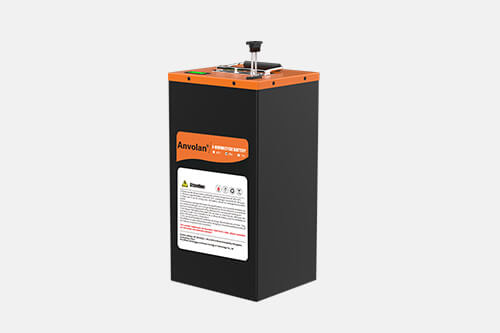
In the digital age, UPS (Uninterruptible Power Supply), as the core equipment for power protection, is widely used in key scenarios such as enterprise computer rooms, data centers, medical equipment, and office terminals. Its stable operation is directly related to equipment safety, data integrity, and production continuity. As the "energy storage core" of UPS, the self-discharge rate is the key indicator determining its standby reliability—ordinary lithium batteries have too fast self-discharge, which easily leads to power attenuation and inability to supply power immediately after long-term standby, seriously affecting the emergency protection capability of UPS. Low self discharge ion lithium batteries for ups are specially designed for UPS scenarios, solving industry pain points with ultra-low self-discharge technology, and providing all-weather, high-reliable power backup protection for various key equipment.
The core competitiveness of low self-discharge lithium-ion batteries lies in their extremely low self-discharge performance, which is also the core advantage distinguishing them from ordinary UPS batteries. This battery adopts special low self-discharge cells, combined with optimized electrode materials and electrolyte formulas, controlling the monthly self-discharge rate within 2% and the annual self-discharge rate below 20%, which is far superior to ordinary lithium-ion batteries (monthly self-discharge rate 5%-8%) and lead-acid batteries (monthly self-discharge rate 3%-5%). Even when in standby for a long time (no frequent charging), it can maintain stable power. After being placed for 12 months, it can still retain more than 80% of the rated capacity, ensuring that the UPS can start immediately and supply power stably in case of sudden power failure, completely solving the pain point of ordinary batteries "standby power loss and emergency failure", and building a solid power safety line for key equipment.
In addition to the advantage of ultra-low self-discharge, this battery also has excellent cycle life and stable discharge performance, adapting to the working characteristics of UPS long-term standby and occasional discharge. Adopting high-quality grade A power cells, after strict charge-discharge cycle testing, the cycle life can reach more than 3000 times, and the service life is as long as 8-10 years, which is 3-4 times that of traditional lead-acid UPS batteries, greatly reducing the frequency of battery replacement and long-term maintenance costs. At the same time, the battery supports stable high-current discharge, with stable discharge voltage and no obvious attenuation, which can meet the instantaneous high-current demand of UPS during emergency power supply. Whether it is computer room servers, precision medical equipment, office computers, or monitoring systems, it can provide continuous and stable power support, avoiding major losses such as equipment damage and data loss caused by voltage fluctuations and power outages.
The safety performance is fully upgraded to adapt to the multi-scenario installation and long-term operation needs of UPS. The battery adopts a sealed structure design, combined with a fireproof and leak-proof shell, effectively eliminating potential safety hazards such as leakage, corrosion, combustion and explosion. It can be directly installed in closed environments such as computer rooms and office areas without additional protective facilities. It has a built-in intelligent BMS battery management system, which real-time monitors core parameters such as battery voltage, current, temperature, and power, accurately realizing five-fold protection of overcharge, over-discharge, short circuit, over-temperature, and over-current, automatically adjusting the charge-discharge state, preventing excessive battery loss, extending service life, and ensuring safe and controllable operation throughout the process. In addition, the battery has excellent wide temperature adaptability, and can work stably in the environment of -15℃ to 55℃. Whether it is a high-temperature computer room environment or a low-temperature outdoor equipment room, it can maintain stable performance without being affected by extreme temperatures.
It balances convenience and adaptability to meet the needs of UPS equipment in different scenarios. This low self-discharge lithium-ion battery is small in size and light in weight. Compared with traditional lead-acid batteries, its weight is reduced by more than 40%, which is easy to install and disassemble. It can flexibly adapt to various small, medium and large UPS equipment, whether it is tower UPS, rack-mounted UPS, or modular UPS, it can be perfectly compatible. The battery covers mainstream UPS voltage specifications such as 12V, 24V, and 48V, with capacities ranging from 10Ah to 100Ah. It can be flexibly combined and matched according to the UPS equipment power and emergency power supply time requirements, without additional modification, with extremely strong adaptability. At the same time, the battery supports floating charge mode, which can be seamlessly connected with UPS equipment to realize automatic charging and automatic standby, without manual intervention, reducing operation and maintenance costs, and providing users with a worry-free and efficient power backup solution.
Today, with the acceleration of digital transformation, the reliability requirements of various key equipment for power protection are getting higher and higher. Low self discharge ion lithium batteries for ups have become the preferred energy storage solution for UPS equipment by virtue of their core advantages of ultra-low self-discharge, long service life, high safety, and strong adaptability. Whether it is the core servers in enterprise computer rooms, storage equipment in data centers, emergency equipment in hospitals, or transaction terminals in banks, this low self-discharge lithium-ion battery can provide all-weather emergency power support with stable performance, protecting equipment safety and data integrity. It not only solves the pain points of ordinary UPS batteries, but also reduces user operation and maintenance costs with its efficient, durable and safe characteristics, promoting the upgrading of the UPS energy storage field towards green, efficient and reliable direction, and escorting the power safety in the digital age.
Be the first to receive our latest news, how-to user guides,
and exclusive deals! Subscribe now.

 Headquarter Address:10F, Building 25, N0. 179 Fengguan, Dongshen Road, Dongguan, Guangdong
 Factory Address:Building 3, Area D, Shengyang Science and Technology Industrial Park, East District of Suichuan County Industrial Park, Ji'an, Jiangxi
 Headquarter Telephone No.:+86 769 2366 8529
Factory Telephone No.:+86 796 6111618
 Contact Person:Kevin Chen
 Email Address:chen@xpower-world.com