Global layout
 +86 769 2366 8529




Time:2026-04-17 Views:92
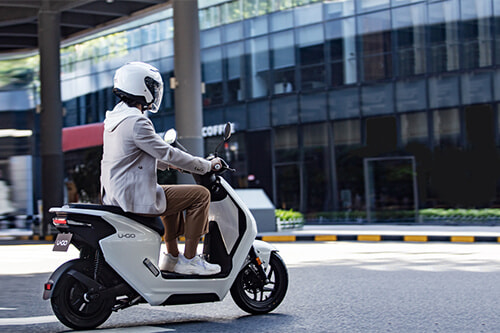
Lithium-ion batteries are the core driving force for the development of the electric vehicle industry. As the power heart of electric vehicles, their performance directly determines the vehicle's driving range, power output, charging efficiency and safety performance, and is also a key support for promoting electric vehicles to replace fuel vehicles and achieve the "dual carbon" goal. With the rapid iteration of the new energy vehicle industry, lithium-ion batteries for electric vehicles have continuously made breakthroughs in core indicators such as energy density, cycle life and safety, gradually solving industry pain points such as electric vehicle range anxiety and slow charging. They are widely used in various electric vehicles such as passenger cars, commercial vehicles and new energy logistics vehicles, becoming the core competitiveness of the high-quality development of the new energy vehicle industry.
Compared with ordinary energy storage and consumer batteries, lithium-ion batteries for electric vehicles have more stringent requirements for power output, driving range and safety. They need to adapt to vehicle usage scenarios such as high-speed driving, frequent start-stop and complex road conditions, while taking into account light weight and long service life. At present, the mainstream lithium-ion batteries supporting electric vehicles are mainly divided into two categories: ternary lithium batteries and lithium iron phosphate batteries. Each has its own focus and adapts to the needs of different models: ternary lithium batteries have high energy density, with conventional products reaching 180-260Wh/kg and high-end products exceeding 300Wh/kg, which can provide longer driving range for vehicles and are mainly suitable for mid-to-high-end passenger cars; lithium iron phosphate batteries have high safety, long cycle life, controllable cost and excellent thermal stability, which can withstand severe vibrations and complex working conditions during vehicle driving, and are mainly suitable for new energy commercial vehicles, household economical passenger cars and online car-hailing vehicles with high-frequency use scenarios.
Lithium-ion batteries for electric vehicles have multiple core advantages, accurately adapting to vehicle usage needs: in terms of driving range, electric vehicles equipped with high-quality batteries can achieve a comprehensive range of 400-1000 kilometers, completely relieving users' range anxiety and meeting diverse needs such as daily commuting and long-distance travel; in terms of power output, the battery has high power density, which can quickly release power, realizing rapid vehicle start-up and acceleration, and the power response speed is better than that of traditional fuel vehicles; in terms of charging efficiency, it supports fast charging technology. Mainstream products can be charged to 80% in 30 minutes, and some high-end batteries can shorten the fast charging time to 15-20 minutes, adapting to outdoor charging scenarios; in terms of cycle life, high-quality products can reach 2000-4000 cycles, which can meet the vehicle's 8-10 year use needs, greatly reducing the owner's later replacement cost. In addition, the battery is equipped with an intelligent BMS battery management system, which can real-time monitor the voltage, temperature and status of each battery cell, realize balanced charge and discharge control, and have multiple protection functions such as overcharge, over-discharge, short circuit and over-temperature to ensure vehicle driving safety; at the same time, it has no exhaust emissions and can be recycled, which conforms to the concept of green travel, helping the automotive industry transform to low-carbonization and electrification, and promoting new energy vehicles to become the mainstream choice for future travel.
Be the first to receive our latest news, how-to user guides,
and exclusive deals! Subscribe now.

 Headquarter Address:10F, Building 25, N0. 179 Fengguan, Dongshen Road, Dongguan, Guangdong
 Factory Address:Building 3, Area D, Shengyang Science and Technology Industrial Park, East District of Suichuan County Industrial Park, Ji'an, Jiangxi
 Headquarter Telephone No.:+86 769 2366 8529
Factory Telephone No.:+86 796 6111618
 Contact Person:Kevin Chen
 Email Address:chen@xpower-world.com