In
today's era of rapid technological iteration and global consensus on green
energy, lithium-ion batteries have long broken out of the limitations of
laboratories and penetrated every corner of our lives, becoming the core energy
carrier connecting technology and life and driving the progress of the times.
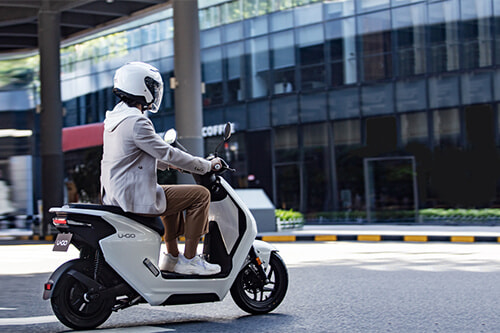
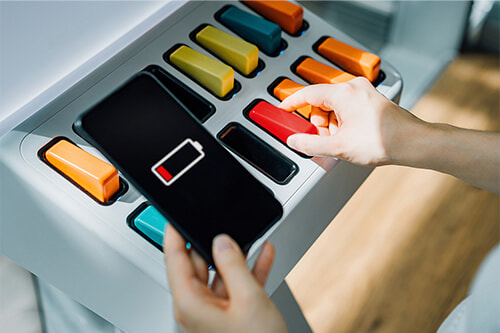
From smartphones and tablets in our pockets, to laptops and electric bicycles
essential for travel, to electric vehicles and large-scale energy storage
stations leading the energy revolution, and even high-end fields such as medical
equipment, smart wearables, and aerospace, lithium-ion batteries quietly change
our lifestyle with their small size, strong performance, and long battery life.
They also inject strong and lasting momentum into the realization of global
"dual carbon" goals, becoming the core engine for the development of the new
energy industry.
The rise of lithium-ion batteries is not accidental,
but an inevitable result of the continuous breakthrough and coordinated
development of materials science and engineering technology. Tracing its
development history, as early as the 1970s, scientists began to explore the
possibility of lithium ions as battery active materials. After 20 years of
repeated experiments and technological breakthroughs, the first commercial
lithium-ion battery was officially launched in 1991, which completely broke the
performance bottleneck of traditional rechargeable batteries and ushered in a
new era of rechargeable batteries. In 2019, John Goodenough, Akira Yoshino, and
M. Stanley Whittingham were awarded the Nobel Prize in Chemistry for their
pioneering contributions to the research and development of lithium-ion
batteries. This honor is not only an affirmation of the three scientists, but
also a sign that lithium-ion battery technology has been highly recognized by
the global scientific and industrial communities. After more than 30 years of
technological iteration and industrial upgrading, lithium-ion batteries have
achieved a qualitative leap in core indicators such as energy density, cycle
life, charging speed, and safety, evolving from an initial laboratory product to
a key core component supporting the upgrading of the global technology industry
and the transformation of the energy structure, profoundly affecting the global
industrial pattern.
Compared with traditional nickel-cadmium batteries and
lead-acid batteries, lithium-ion batteries have irreplaceable core advantages,
which is the core reason for their rapid popularization and wide application.
First, they have high energy density. Under the same volume and weight, the
power storage capacity of lithium-ion batteries is 3-4 times that of lead-acid
batteries and more than twice that of nickel-cadmium batteries. This advantage
enables various devices to achieve a thinner, lighter and smaller design, while
having a longer battery life—smartphones can support all-day heavy use and bid
farewell to frequent charging, electric vehicles can achieve a cruising range of
hundreds or even thousands of kilometers and break range anxiety, and portable
medical equipment can work continuously and stably to ensure diagnosis and
treatment needs, all relying on the strong support of lithium-ion batteries.
Second, they have a long cycle life. High-quality lithium-ion batteries can have
more than 1,000 charge-discharge cycles, and some high-end power batteries can
even reach 2,500 cycles, with a service life far exceeding that of traditional
batteries. This not only greatly reduces the user's use cost, reduces the
frequency of battery replacement, but also effectively reduces the environmental
pressure caused by battery waste, in line with the concept of green development.
Third, they have high charging efficiency. With the continuous upgrading of fast
charging technology and flash charging technology, today's lithium-ion batteries
can achieve "fast energy replenishment". For example, some new energy vehicle
power batteries can replenish 500 kilometers of energy in 10 minutes, and
consumer-grade mobile phone batteries can be charged to 80% in 9 minutes, which
greatly shortens the charging waiting time and improves the user experience. In
addition, lithium-ion batteries also have the advantages of no memory effect and
low self-discharge rate, which can be charged without being fully discharged,
and the power loss is small when idle, further improving their usability.
Safety and environmental protection are even more the
core competitiveness of lithium-ion batteries to stand out in the market
competition, and also an important guarantee for their adaptation to multi-field
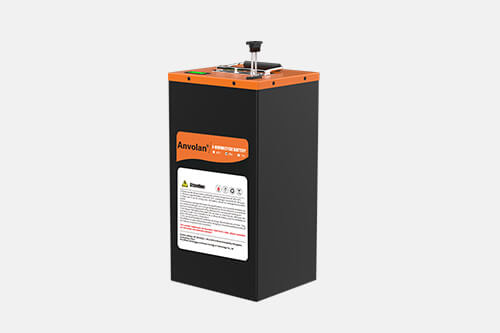
applications. Modern lithium-ion batteries are generally equipped with an
intelligent Battery Management System (BMS), which can accurately monitor
changes in the battery's voltage, temperature, and current in real time, timely
identify and avoid safety hazards such as overcharging, over-discharging, short
circuits, and overheating. At the same time, they have multiple protection
functions such as over-temperature protection, over-current protection, and
over-voltage protection, comprehensively ensuring safety during use. At the same
time, lithium-ion batteries do not contain toxic heavy metals such as lead and
cadmium, and their pollution to the environment during production and use is
much lower than that of traditional nickel-cadmium batteries and lead-acid
batteries. Moreover, the positive and negative electrode materials and
electrolytes of the batteries can be recycled and reused through professional
technologies, realizing the recycling of resources, which is in line with the
global trend of green development and low-carbon environmental protection.
According to authoritative statistics, a set of standard lithium-ion batteries
can replace about 450 disposable dry batteries, reducing 10.35 kilograms of
solid waste and 43.45 kilograms of carbon dioxide emissions within 5 years,
contributing to the cause of environmental protection and helping the global
"dual carbon" goals to land.
Today, with the continuous maturity of technology and
the continuous upgrading of the industry, the application scenarios of
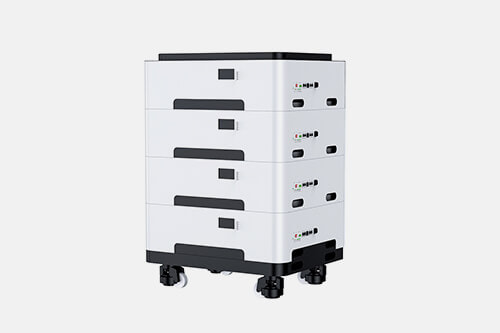
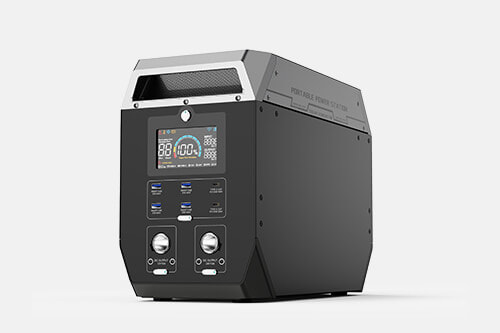
lithium-ion batteries are constantly expanding, forming a full-scenario
application matrix covering consumer electronics, new energy vehicles, energy
storage systems, industrial equipment, aerospace, medical and health and other
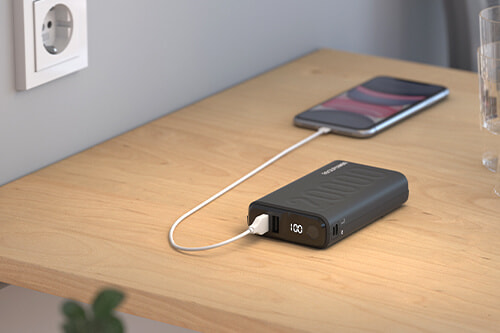
fields, penetrating into all aspects of production and life. In the field of
consumer electronics, it is the core power source for devices such as
smartphones, laptops, smart watches, tablets, and Bluetooth headsets, supporting
the rapid development of the mobile Internet and the popularization of smart
terminals. In the field of new energy vehicles, high-power, long-range, and
high-safety lithium-ion batteries have broken the monopoly of traditional fuel
vehicles, promoting the transformation of the automotive industry from the fuel
era to the electric era. With its empowerment, the global electric tool market
is also moving towards a 100-billion-level scale at an annual growth rate of
9.2%. In the field of energy storage, lithium-ion batteries, with their
efficient energy storage capacity, have become the "energy storage partner" for
renewable energy such as photovoltaic and wind power, effectively solving the
problems of unstable new energy power generation and unbalanced supply and
demand, helping to build a new power system and promoting the transformation of
the energy structure towards cleanliness and low carbon. In the field of
aerospace, high-energy-density and high-reliability lithium-ion batteries
provide stable power for devices such as UAVs, artificial satellites, and space
stations, promoting the rapid development of the low-altitude economy and the
aerospace industry. In the field of medical and health, miniaturized and
high-safety lithium-ion batteries provide continuous power for portable medical
equipment and implantable medical devices, ensuring the smooth development of
medical diagnosis and treatment work.
Looking to the future, with the continuous advancement
of material research and development, process upgrading, and technological
innovation, lithium-ion batteries will usher in a broader development space,
gradually break through the current technical bottlenecks, and achieve
higher-quality development. The continuous breakthrough of solid-state battery
technology will greatly improve the energy density and safety of batteries,
solving the safety hazards caused by liquid electrolytes. The continuous
optimization of flash charging technology and wireless charging technology will
further shorten the charging time and improve the convenience of energy
replenishment. The research and application of new electrode materials and
electrolyte materials will realize the continuous reduction of battery costs,
making lithium-ion batteries more cost-effective and further promoting their
popularization in various fields. At the same time, the continuous improvement
of battery recycling technology will realize the green closed-loop of the entire
life cycle of lithium-ion batteries, reduce resource waste and environmental
pollution, and promote the sustainable development of the new energy industry.
From consumer electronics to new energy vehicles, from energy storage systems to
aerospace, lithium-ion batteries are driving technological progress and social
development with strong energy, becoming the core pillar of the future green
energy era, guarding every bit of convenience and peace of mind, and helping
humanity move towards a cleaner, more efficient and more sustainable energy
future.
 Global layout
 +86 769 2366 8529





 Headquarter Address:10F, Building 25, N0. 179 Fengguan, Dongshen Road, Dongguan, Guangdong
 Factory Address:Building 3, Area D, Shengyang Science and Technology Industrial Park, East District of Suichuan County Industrial Park, Ji'an, Jiangxi
 Headquarter Telephone No.:+86 769 2366 8529
 Contact Person:Kevin Chen
 Email Address:chen@xpower-world.com