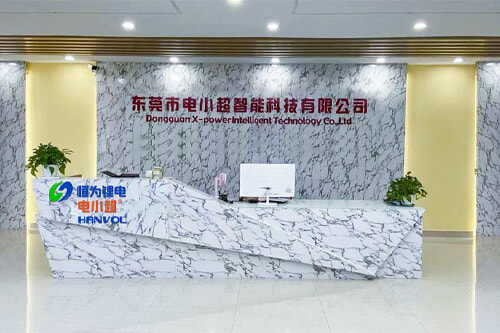
Global layout
 +86 769 2366 8529




Time:2026-07-11 Views:163
Against the backdrop of the comprehensive popularization of a low-carbon economy and the rapid iteration of intelligent mobility equipment, golf carts, as core short-distance transportation tools in scenarios such as golf courses, high-end communities, tourist scenic spots, and hotel parks, are undergoing an overall innovation in power systems. Traditional golf carts have long been powered by lead-acid batteries, which have many drawbacks including insufficient battery life, short service life, cumbersome maintenance, and potential pollution risks, failing to meet the efficient, environmentally friendly and low-cost operation requirements of modern scenarios. In contrast, lithium battery for golf cart has gradually and comprehensively replaced traditional lead-acid batteries with core advantages such as high energy density, ultra-long cycle life, zero maintenance, fast charging efficiency, stable safety performance and environmental friendliness. It has become the mainstream solution for golf cart power upgrading and a core driving force for the quality improvement, efficiency enhancement and green transformation of the entire low-speed mobility vehicle industry. This paper comprehensively analyzes the core value and application advantages of lithium batteries for golf carts from multiple dimensions including technical advantages, scenario adaptation, cost value, safety performance and industry development trends, providing a comprehensive reference for industry practitioners, equipment operation and maintenance personnel and purchasers.
Compared with traditional lead-acid batteries, lithium battery for golf cart achieves all-round upgrades throughout the entire equipment life cycle in terms of service experience, operating efficiency and subsequent operation and maintenance. Firstly, in terms of battery life and power performance, lithium batteries have a much higher energy density than lead-acid batteries. Under the same volume and weight specifications, the power storage capacity of lithium batteries can be increased by more than 50%, which can effectively extend the single-charge cruising range of golf carts. The single-charge cruising range of conventional 48V lead-acid batteries for golf carts is generally 40-50 kilometers, while the cruising range of lithium iron phosphate batteries for golf carts of the same specification can reach 60-80 kilometers, perfectly adapting to the long-distance and high-frequency driving needs of large golf courses, full-area scenic spots and large industrial parks. At the same time, lithium batteries deliver stable discharge performance and support continuous high-current discharge and peak power output. There is no problem of declining voltage and weak power in the later service stage that is common with lead-acid batteries during vehicle climbing, acceleration, manned and loaded driving conditions, greatly improving the riding experience and equipment operation stability.
Ultra-long service life and cycle times are the core advantages of lithium battery for golf cart over traditional batteries, as well as the key to reducing long-term operating costs. Industry data shows that the effective charge-discharge cycle times of ordinary lead-acid batteries are only 300-500, with a normal service cycle of only 1-3 years, and they may need to be replaced in less than 1 year in high-frequency usage scenarios. In contrast, special lithium batteries for golf carts adopt high-quality lithium iron phosphate cells and mature structural design, with effective cycle times reaching 2000-5000. High-quality products can still maintain more than 80% capacity after 5000 full-charge cycles, and have a service life of 8-12 years with normal operation and maintenance, more than 4 times that of lead-acid batteries. The ultra-long service life greatly reduces the frequency of battery replacement, avoids additional costs such as equipment shutdown, manual disassembly and assembly, and consumable procurement caused by frequent battery replacement, and significantly improves the continuous operation efficiency of golf carts.
The convenience of operation and maintenance enables lithium battery for golf cart to perfectly adapt to commercial scenarios, completely solving the cumbersome maintenance pain points of traditional lead-acid batteries. Traditional lead-acid batteries have severe self-discharge phenomenon, which will cause power loss and sulfation damage if left idle for more than a week, requiring regular power supplement and water maintenance. In addition, lead-acid batteries are bulky and heavy, with a single set weighing up to hundreds of kilograms, making disassembly, handling and maintenance time-consuming and labor-intensive and requiring special personnel for regular maintenance, resulting in high labor costs. In contrast, lithium batteries for golf carts have an extremely low self-discharge rate of less than 3% per month, and will not be easily damaged by power loss after long-term idling without frequent power supplement maintenance. Meanwhile, lithium batteries have significant lightweight advantages, weighing only 1/3 of lead-acid batteries with the same capacity, with smaller volume and convenient installation without complex fixing structures. They greatly reduce equipment self-weight and vehicle driving energy consumption to further improve battery life. In addition, lithium batteries adopt an integrated fully sealed design with no electrolyte leakage, no bulging deformation and no corrosion pollution, realizing truly zero maintenance and zero upkeep, which greatly saves operation and maintenance labor and adapts to the large-scale and intensive equipment operation mode of scenic spots, stadiums and hotels.
The upgraded fast charging efficiency enables lithium battery for golf cart to perfectly meet the high-frequency and non-stop commercial operation needs. Traditional lead-acid batteries have slow charging speed, requiring 8-10 hours to be fully charged, with high heat generation during charging. They do not support fast charging and mixed charging. Once the equipment runs out of power, long-term shutdown for charging will directly affect the site operation efficiency, especially during holidays and peak passenger flow periods, easily leading to insufficient equipment supply. In contrast, lithium batteries for golf carts support intelligent fast charging technology, which can be fully charged in 2-3 hours under conventional fast charging mode, and some high-end models support ultra-fast charging, reaching 80% power in 1 hour with instant charging and no long waiting. At the same time, lithium batteries support shallow charging and shallow discharging without memory effect. Fragmented supplementary charging in daily use will not damage the cells, and flexible charging can be carried out according to site operation needs, completely solving the problem of long charging time and shutdown work delay of traditional batteries, maximizing the utilization rate of golf carts and empowering site operation revenue.
In terms of safety performance and intelligent protection, lithium battery for golf cart is equipped with a dedicated BMS battery management system to build an all-round safety protection system, completely avoiding the potential safety hazards of traditional batteries. Traditional lead-acid batteries are prone to heating, fire and bulging during charging, and faults such as electrolyte leakage, plate aging and short circuit will occur after long-term use, with great potential safety hazards and no intelligent protection mechanism for early fault warning. In contrast, special lithium batteries for golf carts are built with high-precision BMS intelligent management chips, which can real-time monitor core data such as cell voltage, working current, battery temperature and remaining power, and accurately realize multiple intelligent protections including overcharge, overdischarge, overcurrent, short circuit, high temperature and low voltage protection. The system will automatically cut off power for protection and trigger fault early warning when abnormal battery working conditions occur, eliminating safety accidents. Meanwhile, the battery adopts a fully sealed waterproof and dustproof structure, with mainstream products reaching IP65 protection level, which can adapt to complex outdoor environments such as rainy, humid and dusty conditions, resisting erosion from harsh outdoor environments and adapting to the open-air operation of golf courses and all-weather operation of scenic spots. Some high-end batteries are also equipped with RS485 communication interface, which can connect with vehicle control systems to realize accurate SOC display, remote data upload and intelligent fault tracing, facilitating operation and maintenance personnel to intelligently manage and control equipment status in real time.
From the perspective of application scenarios, lithium battery for golf cart has strong adaptability and has long broken through the single application scenario of traditional golf courses to achieve wide application in multiple fields. In professional golf courses, golf carts equipped with lithium batteries provide players with a comfortable travel experience relying on stable power, ultra-long battery life and silent operation. Meanwhile, the characteristics of zero exhaust emission and low noise are in line with the green ecological environment positioning of golf courses. In high-end cultural and tourism scenarios, scenic spot sightseeing vehicles, park mobility vehicles and amusement park shuttle vehicles adopt lithium batteries for golf carts as core power, realizing all-day uninterrupted operation and adapting to the needs of large passenger flow and long-distance sightseeing. Their green and pollution-free features support the ecological construction of cultural and tourism scenic spots. In commercial supporting scenarios, short-distance shuttle vehicles, patrol vehicles in star hotels, high-end villa communities, industrial parks and airport factories all adopt such lithium batteries as core power, reducing park operation and maintenance costs and improving service quality by virtue of zero maintenance, high stability and long service life. In addition, small on-site operation vehicles, leisure mobility vehicles, short-distance logistics transportation equipment and other devices also widely adopt special lithium batteries for golf carts, with continuously expanding market application scenarios and increasing market penetration rate year by year.
Cost performance is the core incentive for the rapid popularization of lithium battery for golf cart. Although the one-time procurement cost of lithium batteries is higher than that of lead-acid batteries, the comprehensive operating cost is greatly reduced and the cost performance advantage is extremely prominent when calculated based on the entire equipment life cycle. In terms of direct costs, lead-acid batteries need to be replaced every 3 years on average, requiring 3-4 groups of replacements within a 10-year operation cycle, with high overall investment including manual operation and maintenance, consumable loss and power consumption costs. In contrast, lithium batteries for golf carts have a service life of 8-12 years with no replacement required throughout the life cycle, and achieve zero maintenance and low energy consumption with no additional investment in operation and maintenance labor and consumables. In terms of indirect costs, lithium battery equipment has an extremely low failure rate, greatly reducing losses caused by equipment failure shutdown and maintenance delays. The fast charging feature ensures efficient all-weather operation of equipment and maximizes equipment operation value. According to industry calculations, the comprehensive operating cost of mobility equipment equipped with lithium battery for golf cart can be reduced by more than 40% throughout the life cycle, with far better long-term commercial value than traditional lead-acid battery solutions.
Under the general trend of green and low-carbon development, lithium battery for golf cart conforms to the global environmental protection policy orientation and is an inevitable choice for the green transformation of the industry. Traditional lead-acid batteries contain heavy metal lead and sulfuric acid electrolyte, which will cause soil and water heavy metal pollution if improperly disposed after abandonment, belonging to high-pollution energy storage equipment with cumbersome recycling and high environmental protection costs. Many regions have issued policies to restrict the large-scale application of lead-acid batteries. In contrast, lithium batteries for golf carts adopt environmentally friendly lithium iron phosphate cells with no heavy metals or toxic and harmful substances, achieving zero pollution in the whole process of production, use and abandonment and recyclable reuse, with outstanding environmental protection attributes. Meanwhile, the energy conversion rate of lithium batteries is as high as over 95%, much higher than the 70% of lead-acid batteries, with higher energy utilization efficiency and lower energy consumption loss. They can effectively reduce site power consumption and help enterprises achieve energy conservation, emission reduction and green operation, conforming to the industry development requirements under the dual-carbon policy, and serve as core supporting equipment for major stadiums, scenic spots and parks to build green and low-carbon scenarios.
Looking at the development trend of the entire low-speed mobility vehicle industry, the comprehensive popularization of lithium battery for golf cart is an irresistible trend. With the continuous iteration and upgrading of lithium battery technology and the continuous decline of cell costs, the price gap between lithium batteries and lead-acid batteries is gradually narrowing, further highlighting the cost performance advantage. At the same time, the market has increasingly higher requirements for the intelligence, long-term effectiveness and environmental protection of mobility equipment, and the performance shortcomings of traditional lead-acid batteries can no longer adapt to industry upgrading needs. The lithiumization of power systems has become an industry consensus. In the future, with the continuous optimization of intelligent monitoring, remote operation and maintenance and fast charging technologies, lithium batteries for golf carts will continue to upgrade towards high safety, long battery life, intelligence and lightweight. They will not only completely replace traditional lead-acid batteries, but also further expand more segmented application scenarios, becoming a core power benchmark for low-speed and short-distance mobility equipment. For major site operation enterprises and equipment purchasers, upgrading the power system equipped with lithium battery for golf cart is not only a practical choice to reduce long-term operating costs and improve equipment operation efficiency, but also an inevitable measure to conform to the industry's green upgrading and intelligent development trend.
In conclusion, lithium battery for golf cart has completely revolutionized the power system of golf carts and similar low-speed mobility equipment with six core advantages including superior performance, long service life, convenient maintenance, high safety, environmental protection and cost savings, solving many long-standing industry pain points of traditional batteries. Driven by multiple factors including consumption upgrading, policy empowerment and technological iteration, the wave of lithiumization of golf carts continues to advance, which will continuously lead the high-quality, green and intelligent development of the low-speed mobility industry and provide solid power support for the efficient operation and low-carbon development of various commercial scenarios.
Be the first to receive our latest news, how-to user guides,
and exclusive deals! Subscribe now.

 Headquarter Address:10F, Building 25, N0. 179 Fengguan, Dongshen Road, Dongguan, Guangdong
 Factory Address:Building 3, Area D, Shengyang Science and Technology Industrial Park, East District of Suichuan County Industrial Park, Ji'an, Jiangxi
 Headquarter Telephone No.:+86 769 2366 8529
Factory Telephone No.:+86 796 6111618
 Contact Person:Kevin Chen
 Email Address:chen@xpower-world.com