Global layout
 +86 769 2366 8529




Time:2026-09-14 Views:30
Empowering a New Green Travel Ecosystem with Advanced Intelligent Manufacturing by Deeply Cultivating the Light Electric Vehicle Battery Track
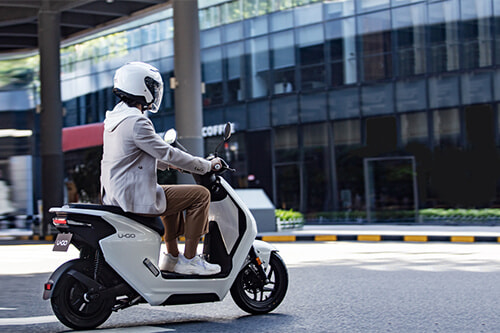
Driven by the global green low-carbon transformation and the intelligent upgrading of short-distance transportation, light electric vehicles (LEVs) have become the mainstream means of transportation for urban and rural commuting, intra-city distribution and short-distance travel due to their flexibility, convenience, low carbon emission and high cost performance. As the core power component of light electric vehicles, batteries directly determine the driving experience and travel safety by virtue of their safety performance, cruising range, service life and environmental adaptability, promoting the light electric vehicle battery industry to enter a new stage of high-quality development featuring technological iteration, quality upgrading and pattern optimization. Rooted in the booming blue ocean market of tens of billions of scale, professional light electric vehicle battery manufacturers continuously deepen the research, development and iteration of power batteries with technological innovation as the core, lean intelligent manufacturing as the support, safety compliance as the bottom line and full-scenario adaptation as the guidance, providing reliable, efficient and safe core power solutions for the development of the global light electric vehicle industry.
In recent years, China's light electric vehicle battery industry has achieved structural explosive growth with continuous release of development momentum. Statistics show that the market scale of China's light electric vehicle batteries continues to expand in 2025, and the shipment of power batteries has increased significantly year-on-year, with the growth rate far exceeding the average level of the overall power battery industry, showing a strong prosperity of the segmented track. With the full implementation of new national standards, increasingly stringent environmental supervision and upgrading consumer demand, traditional lead-acid batteries are gradually replaced by new energy batteries such as lithium batteries and sodium-ion batteries. The lithium battery replacement process continues to accelerate, and the lithium battery penetration rate in many regions has exceeded 50%, marking that the industry has officially entered a new cycle of alternating old and new technologies and comprehensive quality upgrading. At the same time, the rapid popularization of segmented scenarios such as shared electric vehicles, food delivery vehicles, low-speed four-wheel scooters and intelligent balance cars has put forward higher requirements for batteries in terms of high-frequency charge-discharge, low-temperature stability, safety protection and fast charging capability, bringing new development opportunities and technical research directions for professional battery manufacturers.
As a core participant in the industry, professional light electric vehicle battery manufacturers always adhere to the development philosophy of "safety first, technology-oriented and scenario-adaptive". Focusing on the field of light power batteries, they abandon the industry chaos of extensive production, false parameter labeling and non-standard assembly, and target the pain points of full-scenario travel to build a full-series, highly adaptive and high-safety battery product matrix. Compared with traditional power battery manufacturers, professional manufacturers have a deeper understanding of the operating characteristics and usage scenarios of light electric vehicles. Aiming at the core working conditions such as short-distance and high-frequency use, outdoor high and low temperature environment, frequent start-stop and bumpy road conditions, they continuously optimize the battery material system, structural design and electronic control system, thoroughly solve the industry pain points of traditional batteries such as reduced cruising range in low temperature, thermal runaway risk and short cycle life, and fully adapt to diverse application scenarios including civilian commuting, commercial distribution, shared travel and urban-rural transportation.
Technological innovation is the fundamental foundation for enterprises to gain a foothold in the industry and the core driving force for the quality upgrading of light electric vehicle batteries. Relying on a complete R&D system and professional technical team, manufacturers continuously deepen the two mainstream technical routes of lithium batteries and sodium-ion batteries to realize technical complementarity and full scenario coverage. In the field of lithium batteries, enterprises optimize cell formulas and packaging processes, upgrade high-density single-cell design, achieve comprehensive breakthroughs in lightweight, long cruising range and long cycle life, balance energy density and portability, and perfectly adapt to the scenario needs of household two-wheeled electric vehicles and intelligent scooters. In the emerging field of sodium-ion batteries, enterprises take the lead in realizing technological implementation and mass production. Relying on the inherent advantages of sodium-ion batteries including intrinsic safety, excellent low-temperature performance, abundant resources and controllable mass production costs, they solve many shortcomings of traditional batteries. Data shows that sodium-ion batteries maintain a capacity retention rate of over 90% at extremely low temperatures ranging from -20℃ to -40℃, completely solving the problem of significant cruising range attenuation of lithium batteries in northern winters. With a higher thermal runaway temperature threshold, sodium-ion batteries pass stringent national standard tests including acupuncture and extrusion, and are not prone to fire and explosion, greatly improving the safety of high-frequency commercial travel. Meanwhile, some high-rate battery models support ultra-fast charging, greatly shortening the energy replenishment time and perfectly adapting to the high-frequency rigid scenarios of food delivery and express delivery.
Lean intelligent manufacturing is the core support for stable product quality and large-scale delivery. Formal light electric vehicle battery manufacturers have built standardized, intelligent and compliant production bases, introduced fully automatic cell sorting, laser welding, intelligent packaging and precise testing production lines, and realized full-process intelligent management from raw material screening, cell assembly and BMS management system matching to finished product testing. On the raw material side, enterprises establish a strict market access system for supply chains, select high-quality positive and negative electrode materials, separators and electrolytes, eliminate inferior raw materials from entering the production link from the source, and ensure the basic performance and stability of batteries. In the production link, all processes fully comply with national new energy battery production standards and CCC compulsory certification requirements, strictly control the precision of each production process, and avoid common industry problems such as non-standard assembly and process defects. In the finished product testing link, dozens of stringent tests including high and low temperature cycle test, charge-discharge aging test, shockproof and waterproof test, short circuit and extrusion test are carried out to ensure that every factory-produced battery has high stability, high safety and high durability, and the product qualification rate always maintains a leading level in the industry.
To meet diverse market demands, enterprises continuously improve their product matrix to achieve full-category and full-specification coverage. For household commuting scenarios, lightweight, long-cycle and low self-discharge batteries are launched with solid cruising range and long service life, avoiding frequent charging for daily commuting and reducing user replacement costs with a far longer cycle life than ordinary industry products. For commercial high-frequency scenarios, special batteries with high rate, high durability and ultra-fast energy replenishment are developed, which support frequent charge and discharge with strong attenuation resistance to adapt to all-weather high-intensity operation needs. For special regional scenarios such as extreme cold and high temperature, full-temperature adaptive batteries are launched to ensure stable output in different regions and seasons relying on excellent high and low temperature resistance. At the same time, enterprises adopt self-optimized intelligent BMS battery management system, which can real-timely monitor battery temperature, voltage, current and remaining power, and realize multiple protections against overcharging, overdischarging, short circuit, high temperature and overcurrent, effectively avoiding battery thermal runaway risks and eliminating the common industry problem of false cruising range labeling, making power display more accurate and travel more reassuring.
Compliance, standardization and sustainable development are the core advantages of enterprises in the industry. With the continuous improvement of the new energy industry supervision system, the light electric vehicle battery industry has bid farewell to extensive development, and compliance traceability, reliable safety and green environmental protection have become the core industry access standards. As a formal manufacturer, all series of products have passed national compulsory CCC certification, quality inspection certification and environmental protection certification, fully meeting the new national standard production requirements for light electric vehicles. The traceable and high-quality products perfectly adapt to diverse cooperation modes including complete vehicle factory supporting, terminal retail and battery swapping services. Meanwhile, enterprises actively respond to the national "dual carbon" strategy, adhere to the green production concept, optimize production processes, reduce energy consumption and emissions, build a closed-loop system for battery recycling and echelon utilization, promote the resource recycling of waste batteries, and support the green and low-carbon sustainable development of short-distance transportation.
In terms of market services and cooperation, enterprises adhere to the cooperation concept of "quality foundation and service empowerment" to provide one-stop power solutions for global partners. Relying on large-scale production capacity and flexible production systems, enterprises can meet diverse needs such as batch customization for complete vehicle factories, hierarchical supply for distributors and customized adaptation for battery swapping enterprises, and support personalized services including specification customization, performance optimization and scheme adaptation. Meanwhile, a complete pre-sales, in-sales and after-sales service system is built to provide full-process services including technical docking, scheme commissioning, after-sales maintenance and quality warranty, quickly respond to market demands, reduce cooperation costs for partners and enhance product competitiveness. With excellent product quality and high-quality service system, the products cover major domestic provinces and cities, and are exported to many countries and regions around the world, winning wide recognition and trust from domestic and foreign vehicle enterprises, distributors and end users.
Looking ahead, the light electric vehicle battery industry will maintain a rapid development trend, with technological iteration, quality upgrading and green compliance becoming the long-term development theme of the industry. As a professional light electric vehicle battery manufacturer, the enterprise will continue to focus on technological innovation, deepen the core technologies of lithium batteries and sodium-ion batteries, continuously optimize product performance and iterate product matrices, and tackle core technical problems such as low-temperature cruising range, fast charging safety, cycle life and lightweight. At the same time, it will continuously upgrade the intelligent manufacturing system, strictly control product quality, optimize service modes, and empower the high-quality development of the light electric vehicle industry with safer, more efficient and more scenario-adaptive power battery products. In the future, the enterprise will continue to take root in the segmented track, adhere to ingenuity quality and innovation original intention, and help upgrade the global green short-distance travel ecosystem with hard-core technology, lean manufacturing and high-quality services, striving to become a trusted core supplier of power batteries for light electric vehicles.
Be the first to receive our latest news, how-to user guides,
and exclusive deals! Subscribe now.

 Headquarter Address:10F, Building 25, N0. 179 Fengguan, Dongshen Road, Dongguan, Guangdong
 Factory Address:Building 3, Area D, Shengyang Science and Technology Industrial Park, East District of Suichuan County Industrial Park, Ji'an, Jiangxi
 Headquarter Telephone No.:+86 769 2366 8529
Factory Telephone No.:+86 796 6111618
 Contact Person:Kevin Chen
 Email Address:chen@xpower-world.com