Global layout
 +86 769 2366 8529




Time:2026-05-16 Views:47
LiFePO4 12V 100Ah Battery: An Efficient Energy Storage Universal Power Solution
1. Product Basic Overview: Core Parameter Analysis
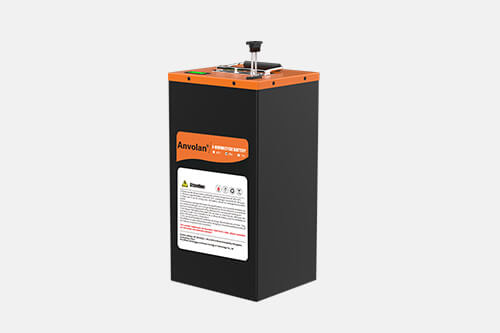
In the field of energy storage and backup power supply, the LiFePO4 12V 100Ah lithium iron phosphate battery has become a mainstream energy storage product with strong universality. This battery has a standard nominal voltage of 12.8V (commonly known as a 12V battery in the industry), a rated capacity of 100Ah, and a rated energy storage capacity of 1280Wh. It can output power stably and is compatible with most 12V low-voltage electrical equipment. Adopting a 4S1P cell combination structure, the product is equipped with Grade A large LiFePO4 cells and a professional intelligent Battery Management System (BMS). Its internal resistance is controlled within 30mΩ, featuring stable discharge performance and excellent energy conversion efficiency. Different from traditional lead-acid batteries, this lithium battery is optimized and upgraded in terms of structural design and material selection, focusing on durability, safety and practicality. It is suitable for diverse application scenarios including civil, commercial and outdoor industrial use, serving as a high-quality upgraded product to replace traditional energy storage batteries.
2. Core Material Advantages: Essential Characteristics of LiFePO4
LiFePO4 (Lithium Iron Phosphate) is a universally recognized safe lithium battery material in the energy storage industry and the core material of the 12V 100Ah battery. In terms of chemical properties, LiFePO4 has a stable lattice structure, high temperature resistance, impact resistance and low risk of thermal runaway, eliminating potential safety hazards such as battery bulging, spontaneous combustion and explosion. Its safety performance is far better than ternary lithium batteries and lead-acid batteries. Meanwhile, the material is environmentally friendly and pollution-free, without heavy metal harmful substances during production and use, and can be recycled compliantly after abandonment, conforming to the current development trend of green energy storage. In terms of weather resistance, the battery operates stably within a wide temperature range from -20℃ to 60℃, maintaining normal discharge in both severely cold outdoor environments and high-temperature closed cabins with strong environmental adaptability. Compared with other lithium battery materials, although LiFePO4 has a moderate energy density, it achieves a higher comprehensive cost performance in terms of cycle life, safety factor and use cost, perfectly adapting to low-frequency, long-term and stable energy storage power supply demands.
3. Product Performance Highlights: All-round Optimization and Upgrade
The 12V 100Ah LiFePO4 battery solves the pain points of traditional batteries with multiple performance advantages. Firstly, it has an ultra-long cycle life. Under the standard working condition of 80% Depth of Discharge (DOD), the battery can achieve more than 5,000 charge-discharge cycles with a service life of 8 to 10 years under normal use. In contrast, ordinary lead-acid batteries only have 500 to 800 cycles and a service life of less than 2 years, greatly reducing long-term replacement costs. Secondly, it adopts a lightweight and portable design. With the same capacity, the weight of this lithium battery is only 40%-50% of that of a lead-acid battery, featuring a compact size of 330×172×215mm for easy transportation, installation and storage without complex fixing structures. Thirdly, it is equipped with an intelligent protection system. The built-in high-precision BMS protection board provides multiple protections including overcharge, overdischarge, overcurrent, short circuit, high and low temperature resistance and cell balance. Some upgraded versions are embedded with Bluetooth monitoring and active balancing modules to view real-time data such as battery voltage, power and temperature for accurate operation monitoring. Fourthly, it has a low self-discharge loss. At room temperature, the monthly self-discharge rate is lower than 3%, requiring no frequent charging during idle storage to maintain sufficient power. In addition, the battery supports fast charging with a stable charging rate and a charging conversion efficiency of over 95%, much higher than the 70% conversion efficiency of lead-acid batteries, greatly improving electric energy utilization.
4. Scenario Adaptation: Multi-field Universal Energy Storage
Relying on stable performance and compatibility, the 12V 100Ah LiFePO4 battery is widely used in various low-voltage energy storage scenarios. Firstly, it is applied to outdoor off-grid energy storage, compatible with mobile equipment such as RVs, campers, yachts and fishing boats, continuously supplying power for vehicle-mounted refrigerators, lighting, water pumps and propulsion motors. Its lightweight feature reduces the load pressure of equipment and adapts to long-distance outdoor travel. Secondly, it is suitable for photovoltaic energy storage systems, matching solar panels to form off-grid power generation sets for remote residential buildings, outdoor base stations and grid-free construction sites, storing solar energy during the day and supplying power stably at night to solve power supply problems in areas without mains electricity. Thirdly, it serves as a civil backup power supply, applicable to household power failure emergency, access control security, monitoring equipment and uninterruptible power supplies, realizing seamless power switching during power outages to ensure continuous equipment operation. Moreover, the battery is also suitable for small and medium-sized power equipment such as golf carts, small mobility vehicles, agricultural irrigation equipment and communication energy storage base stations. Its 1280Wh energy storage capacity meets the long-distance endurance demand of small and medium-sized equipment with strong universality. In addition, the battery supports series and parallel expansion, and multiple batteries can be combined to expand voltage and capacity to flexibly adapt to high-power power supply demands.
5. Industry Comparison: Surpassing Traditional Energy Storage Batteries
To intuitively reflect product advantages, the 12V 100Ah LiFePO4 battery is compared with lead-acid batteries and ordinary lithium batteries of the same specification. In terms of safety, LiFePO4 features stable material without flammable and explosive risks, while lead-acid batteries are prone to liquid leakage and corrosion, and ordinary ternary lithium batteries have poor high-temperature resistance. In terms of service life, lithium batteries have over 5,000 cycles versus less than 800 cycles of lead-acid batteries. In terms of weight and volume, lithium batteries are half lighter and smaller with higher installation flexibility. In terms of maintenance cost, lithium batteries adopt a maintenance-free design without electrolyte addition, while lead-acid batteries require regular maintenance and liquid leakage inspection. In terms of discharge performance, lithium batteries maintain stable voltage without sharp voltage drop, whereas lead-acid batteries suffer obvious late voltage attenuation causing equipment stuttering. Although the one-time procurement cost of this lithium battery is higher than that of lead-acid batteries, the long-term total use cost can be reduced by more than 60% considering service life, maintenance cost and power consumption loss, presenting significant economic cost performance advantages.
6. Purchase and Usage Suggestions
When purchasing a 12V 100Ah LiFePO4 battery, prioritize products with Grade A cells and formal built-in BMS protection boards to avoid potential safety hazards caused by inferior recycled cells. During use, match a dedicated lithium battery charger and avoid mixing lead-acid chargers to prevent cell damage. Store the battery in a dry and ventilated place, avoiding long-term exposure to sunlight and water immersion. Adopt batteries of the same brand, specification and aging degree for series and parallel connection to ensure power supply stability. There is no need for deliberate shallow charging and discharging during daily use; the battery supports 100% deep discharge without redundant power reservation to adapt to high-intensity power consumption demands. For long-term standby equipment, it is recommended to check the power every 3 months and maintain the power between 50% and 80% to extend the battery service life.
7. Conclusion: Preferred High-cost-performance Energy Storage Product
In conclusion, the 12V 100Ah LiFePO4 battery has become a benchmark product in the low-voltage energy storage market by virtue of stable cell materials, intelligent protection system, ultra-long service life and wide scenario adaptability. It solves the industry pain points of traditional batteries such as short service life, heavy weight, poor safety and cumbersome maintenance, balancing civil convenience and industrial stability. It can output stable, efficient and safe power in outdoor travel, photovoltaic energy storage, emergency backup and small power equipment power supply scenarios. Against the backdrop of popular green energy, this energy storage battery with high cost performance, low loss and long endurance will gradually replace traditional lead-acid batteries, becoming the mainstream choice for personal, enterprise and engineering energy storage, and continuously empowering the high-quality development of the low-voltage energy storage industry.
Be the first to receive our latest news, how-to user guides,
and exclusive deals! Subscribe now.

 Headquarter Address:10F, Building 25, N0. 179 Fengguan, Dongshen Road, Dongguan, Guangdong
 Factory Address:Building 3, Area D, Shengyang Science and Technology Industrial Park, East District of Suichuan County Industrial Park, Ji'an, Jiangxi
 Headquarter Telephone No.:+86 769 2366 8529
Factory Telephone No.:+86 796 6111618
 Contact Person:Kevin Chen
 Email Address:chen@xpower-world.com