Global layout

 +86 769 2366 8529





Time:2026-11-23 Views:54
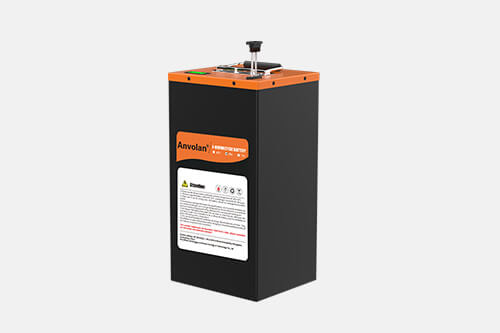
Lead-acid packs lose capacity, weigh heavily and offer limited cycle life, yet the equipment around them is often still serviceable when the battery reaches the end of its run. A factory direct LiFePO4 replacement battery is useful precisely there: it drops into the same footprint and voltage class, while delivering more cycles and less weight. Different applications ask for different things, so understanding the use case before choosing a specification is more practical than comparing capacity figures alone.
1. Electric tricycles and low-speed four-wheelers
These vehicles haul goods, carry passengers and run short delivery rounds, so they are used often and charged frequently. Lead-acid packs typically lose noticeable range within a year or two, while a LiFePO4 pack fits more usable capacity into the same installation space, and the weight saving eases the chassis. One caution: the original charger is usually designed for lead-acid, so it should be replaced with a matching unit at the same time, otherwise the pack may be undercharged or overcharged. The controller's low-voltage cutoff also needs adjusting to the new discharge curve so that the vehicle does not cut out early.
2. Forklifts, stackers and warehouse handling equipment
In warehousing, the demand centres on converting lead-acid fleets to lithium. Lead-acid banks need watering, occupy a charging room and take time to swap. A LiFePO4 replacement supports opportunity charging during breaks and shift changes, without waiting for a full discharge before changing the whole bank. Because these machines draw heavy continuous current, check the continuous discharge rate and peak current, and confirm compartment dimensions, counterweight and lifting arrangement so that the change of centre of gravity does not affect stability.
3. Motorhomes, campervans and road trips
Power on board goes to lighting, refrigeration, water pumps, air conditioning and inverters. Lead-acid capacity is limited and degrades quickly under deep discharge. With lithium, more energy fits in the same volume and deeper discharge is tolerated better. Cold-weather charging protection matters most here: charging a pack in low temperature can damage cells, so a BMS with a low-temperature cutoff is reassuring. The charging profile of the inverter and charger also needs to match the new pack, especially the current limit during high-rate charging.
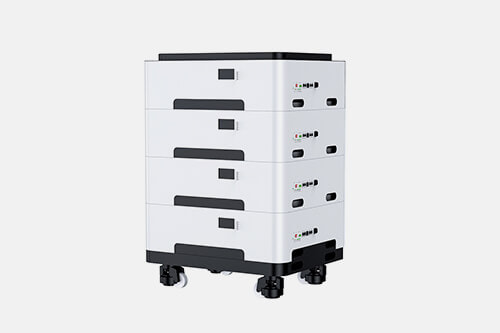
4. Solar storage and off-grid supply
Household PV, telecom backup and remote off-grid systems often start on lead-acid and look for a replacement once capacity fades. LiFePO4 cycles longer and occupies less space, which suits tight equipment rooms and rooftops. Confirm whether the pack communicates with the existing inverter and controller, whether a communication module is needed, and whether balancing and overcurrent protection have been recalculated when the number of series and parallel strings changes.
5. Golf carts, sightseeing vehicles and site fleets
Fleet operators at resorts, parks and courses care about availability and maintenance cost. Lead-acid packs are heavy and perform modestly on slopes; after replacement the vehicle is lighter and both range and acceleration improve. For fleets, standardising on one model and specification simplifies central charging, rotation and spares, and it is worth confirming that charger count and charging bay layout can keep up with vehicle turnaround.
6. Marine, fishing and outdoor work
Small boats use power for electric propulsion, starting and house loads, in damp and vibrating conditions. Lead-acid banks are bulky and constrained by installation space. A replacement should be judged on ingress protection, terminal corrosion treatment and mounting strength: in salt spray, the corrosion resistance of the housing and wiring matters more than capacity numbers. On the water, also confirm how the BMS responds to overcurrent and short circuit, so that a single fault does not black out the whole boat.
What all cases share
Whatever the application, four sets of data are worth checking before replacement: the voltage and dimensions of the original bank, the continuous and peak current of the equipment, the output characteristics of the charger, and the temperature and protection requirements of the installation. The advantage of buying direct from the factory is that specifications can be combined to suit the job, but only if this information reaches the supplier, which is what prevents a pack that fits but does not work well. Supplying this data before ordering also shortens the customisation cycle, because fit and electrical limits can be confirmed in a single round rather than several.
Be the first to receive our latest news, how-to user guides,
and exclusive deals! Subscribe now.

 Headquarter Address:10F, Building 25, N0. 179 Fengguan, Dongshen Road, Dongguan, Guangdong
 Factory Address:Building 3, Area D, Shengyang Science and Technology Industrial Park, East District of Suichuan County Industrial Park, Ji'an, Jiangxi
 Headquarter Telephone No.:+86 769 2366 8529
Factory Telephone No.:+86 796 6111618
 Contact Person:Kevin Chen
 Email Address:chen@xpower-world.com