Global layout
 +86 769 2366 8529




Time:2026-07-02 Views:30
In diverse scenarios such as urban and rural short-distance commuting, freight distribution, and convenient public services, electric tricycles have become core tools for people's livelihood travel and small and micro commercial transportation due to their flexibility, high cost performance and strong adaptability. With the iterative upgrading of new energy power battery technology, electric tricycle lithium battery has gradually replaced traditional lead-acid batteries and become a core standard configuration for the transformation and upgrading of the electric tricycle industry. Compared with traditional batteries, electric tricycle lithium batteries solve the long-standing industry pain points of traditional electric tricycles such as weak power, short battery life, heavy weight and high pollution with multiple advantages including light weight, high energy density, long service life, fast charging, energy saving and environmental friendliness. They comprehensively improve the driving performance, user experience and practical value of electric tricycles, promoting the iterative upgrade of electric tricycles from basic means of transportation to efficient, durable, safe and intelligent new energy vehicles. Starting from the actual application scenarios, performance requirements and usage pain points of electric tricycles, this article comprehensively analyzes the core advantages, technical characteristics, selection standards, maintenance guidelines and industrial application value of electric tricycle lithium batteries, providing a comprehensive reference for electric tricycle users, dealers and manufacturers.
Electric tricycles have highly diversified and practical application scenarios, covering rural transportation, township freight, community cleaning, express delivery, stall transportation, factory short-distance transit and many other fields. Different scenarios put forward differentiated requirements for vehicle power output, endurance capacity, body flexibility and load performance. Traditional electric tricycles equipped with lead-acid batteries have mature technology but prominent shortcomings, which have become key bottlenecks restricting the improvement of vehicle performance. Lead-acid batteries have extremely low energy density, large size and heavy weight under the same capacity, which greatly increases the overall weight of electric tricycles. This not only increases the operating load and power consumption of the motor, but also reduces the steering flexibility and climbing performance of the vehicle, resulting in weak power and reduced endurance when fully loaded. Meanwhile, the cycle life of lead-acid batteries is only 300-500 times. Under daily frequent charging and discharging, their service life is merely 1-2 years, leading to high replacement frequency and long-term use costs. In addition, lead-acid batteries take 8-10 hours to charge with low efficiency, failing to meet the high-frequency use needs of freight and distribution electric tricycles. Moreover, lead-acid batteries contain heavy metal lead, which will cause serious soil and water pollution if improperly disposed after abandonment, inconsistent with the current green and low-carbon industry development trend.
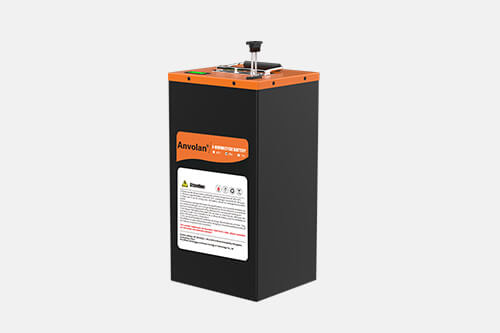
Tailored for the working conditions of electric tricycles, electric tricycle lithium batteries perfectly adapt to the power demands and application scenarios of various electric tricycles, making up for the performance shortcomings of traditional electric tricycles from the core power level and becoming a core support for vehicle performance upgrading. Firstly, electric tricycle lithium batteries show outstanding advantages in lightweight and energy efficiency. Under the same power specification, the weight of a lithium battery is only 1/3 of that of a lead-acid battery, and its volume is nearly halved, greatly reducing the overall weight of electric tricycles. The lightweight body effectively reduces the operating load of motors and controllers, cuts down energy consumption during driving, enabling electric tricycles to start more smoothly, accelerate faster, and have significantly improved climbing and load-bearing capacity with stronger adaptability to complex road conditions. At the same time, lower energy consumption greatly improves the vehicle's endurance. With the same battery capacity, the mileage of electric tricycles equipped with lithium batteries is 30%-50% longer than that of lead-acid battery models, completely solving the problems of frequent charging for short-distance travel and insufficient endurance for long-distance operation, and greatly improving the operational efficiency and convenience of vehicles.
In terms of service life and cost performance, electric tricycle lithium batteries completely break the cost constraint of short-term replacement of traditional batteries. At present, the mainstream lithium iron phosphate batteries for electric tricycles adopt high-quality automotive-grade A-grade cells, processed through precise voltage and internal resistance grading technology with stable and consistent battery performance. Their cycle life exceeds 2000 times, and the service life can reach 8-10 years under standardized use, 4-5 times that of lead-acid batteries. In terms of long-term use cost, although the initial purchase price of lithium batteries is higher than that of lead-acid batteries, their ultra-long service life eliminates frequent replacement, greatly reducing later maintenance and replacement costs with far higher comprehensive cost performance. Meanwhile, lithium batteries have high charging and discharging efficiency and support fast charging technology. The charging time of conventional lithium batteries is shortened to 2-4 hours, and some high-power fast-charging models can achieve half power replenishment within 1 hour, perfectly adapting to the high-frequency and high-intensity operation scenarios of electric tricycles such as express delivery, market freight and factory transit, effectively improving daily operational efficiency.
Safety performance is the core concern of electric tricycle users and one of the core technical advantages of electric tricycle lithium batteries. Regular and compliant electric tricycle lithium batteries are equipped with an intelligent BMS (Battery Management System), which has seven intelligent protection functions including over-charging, over-discharging, over-current, short circuit, high temperature, low voltage and over-power protection. It can real-timely monitor core battery data such as cell voltage, temperature and current, and automatically power off in case of abnormal working conditions to eliminate potential safety hazards. In addition, high-quality electric tricycle lithium batteries adopt fully sealed explosion-proof structure design, high-temperature resistant and flame-retardant shell materials, and stable lithium iron phosphate cells with excellent thermal stability, which are not prone to thermal runaway under high temperature. They have excellent impact resistance, extrusion resistance, water and moisture resistance, adapting to complex outdoor working conditions such as rain, high temperature and low temperature, completely solving the safety problems of bulging, liquid leakage and fire of traditional lead-acid batteries. Compared with lead-acid batteries that are prone to aging, rapid performance attenuation and increased potential safety hazards in the later stage, lithium batteries maintain stable performance throughout the service life with higher safety.
The upgrade of adaptability and portability further optimizes the user experience of electric tricycle lithium batteries. Adopting modular and standardized design, electric tricycle lithium batteries cover a full range of voltage specifications such as 24V, 48V, 60V and 72V, compatible with all types of electric tricycles including household commuting, load-carrying freight and special operation models. They can directly replace traditional batteries without vehicle circuit modification with strong compatibility. Meanwhile, the battery is equipped with a portable non-slip handle, and the lightweight design makes disassembly, handling and installation more convenient, supporting indoor charging and solving the pain points of no outdoor charging sites and unsafe open-air charging. Some high-end models are also equipped with intelligent Bluetooth and GPS positioning functions, allowing users to real-timely check the remaining battery power, cruising range, charging status and battery health through mobile APPs, accurately grasp vehicle usage status, avoid improper use such as low-power driving and over-charging, extend the service life of batteries and vehicles, and make the use of electric tricycles more intelligent and worry-free.
From the perspective of industrial development, electric tricycle lithium batteries are the core driving force for the green upgrading and high-quality development of the electric tricycle industry. At present, the domestic new energy industry continues to promote green and low-carbon transformation, environmental protection policies are increasingly stringent, and high-pollution and high-energy-consumption lead-acid batteries are gradually phased out of the market. Lightweight, low-energy-consumption and zero-pollution lithium batteries have become the mainstream supporting solution for the electric tricycle industry. Equipped with lithium batteries, electric tricycles not only achieve greatly reduced overall energy consumption and comprehensive performance upgrading, but also effectively reduce environmental pollution caused by waste batteries, conforming to the national development concept of green travel and low-carbon transportation. In addition, lithium batteries have excellent low-temperature performance, with far lower power attenuation than lead-acid batteries in cold winter environments. Electric tricycles maintain stable endurance and power in northern cold regions, greatly expanding the applicable regions and scenarios of electric tricycles and promoting the full-domain and high-quality development of the industry.
To give full play to the performance advantages of electric tricycle lithium batteries and extend the overall service life of electric tricycles, standardized daily use and scientific maintenance are essential. In terms of charging, special original chargers matching the battery shall be used, and mixed use of high-power and inferior chargers is prohibited to avoid cell damage caused by over-charging and fast charging. It is recommended to avoid charging only after the battery is completely exhausted, and maintain the habit of shallow charging and shallow discharging to improve battery activity. For storage, when the electric tricycle is idle for a long time, the battery power shall be maintained at 50%-70%, and regular power supplementation is required to prevent battery aging caused by power deficit; avoid placing the battery in environments with long-term high-temperature exposure, water accumulation and extreme low temperature. In use, try to avoid overloaded start and frequent rapid acceleration to reduce battery loss caused by instantaneous high-current discharge; regularly check the battery terminals to keep them dry and firm and prevent poor conductivity caused by looseness and oxidation. Meanwhile, private disassembly and modification of batteries are prohibited to avoid damaging the battery protection structure and causing potential safety hazards.
Judging from the development trend of the electric tricycle industry, energy saving, long service life, safety and intelligence are inevitable development directions. As the core power component of electric tricycles, electric tricycle lithium batteries are the key to promoting vehicle performance upgrading and industrial iterative innovation. Compared with traditional lead-acid batteries, electric tricycle lithium batteries achieve comprehensive transcendence in power performance, endurance capacity, service life, safety factor, environmental protection attribute and user experience, perfectly adapting to the diversified, high-intensity and long-term use needs of modern electric tricycles. Whether it is a lightweight electric tricycle for household transportation or a multi-functional electric tricycle for commercial load-carrying, equipping with high-quality lithium batteries can achieve qualitative performance improvement, reduce long-term use costs and improve travel and operational efficiency. In the future, with the continuous iteration of lithium battery technology and gradual cost optimization, electric tricycle lithium batteries will be fully popularized and become the standard configuration of electric tricycles, continuously empowering the high-quality and green development of urban and rural short-distance transportation and small and micro logistics transportation industries.
Be the first to receive our latest news, how-to user guides,
and exclusive deals! Subscribe now.

 Headquarter Address:10F, Building 25, N0. 179 Fengguan, Dongshen Road, Dongguan, Guangdong
 Factory Address:Building 3, Area D, Shengyang Science and Technology Industrial Park, East District of Suichuan County Industrial Park, Ji'an, Jiangxi
 Headquarter Telephone No.:+86 769 2366 8529
Factory Telephone No.:+86 796 6111618
 Contact Person:Kevin Chen
 Email Address:chen@xpower-world.com