Global layout
 +86 769 2366 8529




Time:2026-09-24 Views:190
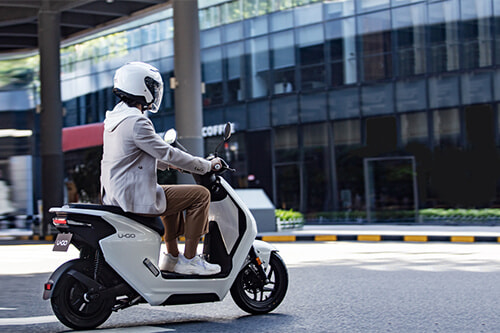
With the advantages of sensitive acceleration, efficient passage and economical energy consumption, electric motorcycles have become mainstream means of transportation for urban commuting, short-distance travel and daily transportation, and are widely used in personal travel and light short-distance distribution scenarios. The dynamic stability, cruising accuracy, acceleration performance and long-term service life of the whole vehicle depend entirely on the working state of energy storage cells. As the basic unit of daily battery operation, the charge and discharge cycle is the core key that determines the battery attenuation speed and service life. Most vehicle owners encounter problems such as virtual cruising range, fluctuating power, abnormal charging speed and premature battery aging during use. In most cases, these are not caused by product quality failures, but irreversible performance loss of cells resulting from long-term irregular charge and discharge cycles and extensive operation habits. An in-depth understanding of the underlying principles of lithium battery charge and discharge cycles, avoidance of daily use misunderstandings, and compliance with standardized cycle operation processes can maximize the retention of cell activity, delay capacity attenuation, greatly extend the battery service cycle, and reduce long-term vehicle use and replacement costs.
To scientifically maintain batteries, it is first necessary to clarify the core definition and operation logic of charge and discharge cycles. Different from the common misunderstanding that "one charge equals one cycle" , the industry-standard charge and discharge cycle refers to a complete energy intake and release of the battery within a specific power range, and one effective cycle is counted only when the rated capacity is cumulatively released. The mainstream lithium batteries equipped in electric motorcycles are divided into lithium iron phosphate and ternary lithium, with obvious differences in cycle characteristics. Lithium iron phosphate cells have stronger chemical stability, with a standard effective cycle life of more than 2,000 times, and can be used stably for six to eight years under standardized maintenance. Ternary lithium cells feature faster dynamic response and higher energy density, but their chemical activity is more active, with a standard cycle life of 800 to 1,500 times, making them more sensitive to charge and discharge working conditions and temperature environments. During each standard cycle, lithium ions are smoothly deintercalated, migrated and embedded between positive and negative electrodes, with mild and controllable internal chemical reactions and extremely low cell loss. In contrast, non-standard cycles will break the chemical balance, accelerate internal side reactions, and cause continuous cell aging.
Irregular discharge cycles are the primary factor inducing premature battery aging and capacity attenuation, among which deep discharge and instantaneous overload discharge cause the greatest harm. Most vehicle owners keep the wrong habit of charging only after the power is exhausted, draining the battery until the vehicle shuts down forcibly. This deep power deficit state will directly damage the lattice structure of the battery negative electrode, causing a large number of lithium ions to be permanently inactivated and unable to participate in subsequent electrochemical reactions, forming irreversible capacity loss. At the same time, electric motorcycles have excellent acceleration performance. Frequent rapid acceleration, high-speed sprint, full-load climbing and long-term full-load driving during daily riding will generate instantaneous high-current discharge, leading to a sharp rise in internal cell temperature, accelerated electrolyte decomposition and continuous thickening of the negative electrode passivation layer. Long-term high-frequency high-intensity discharge cycles will intensify the voltage difference differentiation of single cells, causing premature attenuation of some cells, thereby dragging down the performance of the entire battery pack, resulting in continuous reduced cruising range, weak power output and acceleration stuttering, and seriously shortening the battery service life.
Unreasonable charging cycle methods will also continuously overdraw battery performance and bury hidden dangers of safety and loss. Many subtle misunderstandings in daily charging will quietly destroy the stability of cycle operation and accelerate cell aging. The first is long-term full-power storage and overcharging. Many vehicle owners charge the battery overnight without cutting off the power after full charging. Long-term floating charging keeps the cells in a continuous high-pressure saturated state, constantly triggering internal side reactions, consuming active substances and accelerating cell aging. The second is the abuse of non-original fast charging equipment. High-power fast charging replenishes energy with ultra-high current, breaking the standard constant current and constant voltage charging logic, causing abnormal cell temperature rise and unbalanced charging, resulting in overcharging of some cells and insufficient charging of others. Long-term accumulation will aggravate cell performance differentiation and trigger faults such as battery heating, bulging and electric leakage. In addition, frequent shallow charging and discharging without calibration will cause power statistics deviation of the battery management system, leading to power jump, virtual high cruising range and inaccurate display, affecting riding judgment and battery health.
Improper temperature adaptation is an invisible inducement that affects the stability of charge and discharge cycles and is easily ignored. Lithium battery cells are highly sensitive to ambient temperature, and charge and discharge cycles under extreme temperatures will cause permanent cell damage. In hot summer weather, after the vehicle is exposed to the sun for a long time outdoors, the cell temperature rises significantly. Immediate charging or high-speed riding and discharging at this time will sharply accelerate electrolyte aging and internal side reactions, greatly increase the cell attenuation rate, and raise the risk of thermal runaway. In low-temperature winter environments, electrolyte viscosity increases, the migration resistance of lithium ions rises, and cell activity decreases significantly. Forcing full-power acceleration, heavy-load discharge or direct low-temperature charging will easily cause lithium precipitation on the negative electrode, forming irreversible metallic lithium deposition, which directly leads to a sharp drop in battery capacity and a great reduction in cycle life. Therefore, high-intensity charge and discharge operations should be avoided under extreme temperatures, and energy replenishment should be carried out after the cell temperature returns to normal.
Standardized charge and discharge cycles and regular calibration maintenance are core means to maintain battery health and extend service life. Daily commuting should follow scientific cycle principles, prioritize maintaining the optimal power range of 20% to 80%, adhere to shallow charging and shallow discharging, avoid deep power deficit and long-term full power, and minimize cell chemical stress loss. Daily short-distance travel does not require full charging every time; charging to 80% is sufficient. Full charging is only required before long-distance riding and all-day travel. Cut off the power immediately after full charging to avoid long-term floating charging. Maintain a uniform and stable speed during riding, reduce high-load discharge behaviors such as rapid acceleration, high-speed sprint and heavy-load climbing, and ensure mild and stable discharge cycles. It is recommended to carry out a complete calibration cycle every month: slowly release the power to about 15%, let it stand for twenty minutes for voltage stabilization, perform slow full charging with the original charger, cut off the power and let it stand for one hour after floating charging, which can effectively correct system power errors, balance the voltage difference of single cells and restore the real battery capacity.
Cycle maintenance during idle periods is equally crucial, which can effectively avoid cell dormancy and static attenuation. When electric motorcycles are left idle for a long time, storage with full power or zero power is prohibited. Static storage with full power will continuously consume active substances, while static storage with insufficient power easily causes deep cell dormancy and permanent scrapping due to power deficit. The optimal maintenance method is to maintain the battery power at a medium stable range of 40% to 60% and store it in a cool, dry, ventilated and constant temperature environment. Complete a small full charge and discharge cycle every two to three months to awaken dormant cell activity, balance the working state of the entire battery pack, and prevent capacity attenuation and voltage difference imbalance caused by long-term static placement. Regularly inspect the state of charging interfaces and circuits, clean dust and oxidation corrosion, ensure stable circuit conduction, and eliminate hidden losses caused by local micro-discharge.
In short, the service life and performance stability of electric motorcycle lithium batteries depend entirely on long-term charge and discharge cycle habits and refined maintenance. Abandoning bad operations such as deep discharge, overtime overcharging, high-temperature charging and discharging, and abuse of fast charging, adhering to standardized and regular charge and discharge cycle modes, combined with regular calibration and idle maintenance, can continuously stabilize the chemical state of cells, delay the speed of capacity attenuation, and maximize the rated cycle life of batteries. The scientific and standardized cycle maintenance method can not only effectively solve common problems such as virtual cruising range, insufficient power and premature battery aging, reduce equipment operation and maintenance and replacement costs, but also continuously ensure stable and safe riding power, providing long-term power support for various daily commuting and short-distance travel.
Be the first to receive our latest news, how-to user guides,
and exclusive deals! Subscribe now.

 Headquarter Address:10F, Building 25, N0. 179 Fengguan, Dongshen Road, Dongguan, Guangdong
 Factory Address:Building 3, Area D, Shengyang Science and Technology Industrial Park, East District of Suichuan County Industrial Park, Ji'an, Jiangxi
 Headquarter Telephone No.:+86 769 2366 8529
Factory Telephone No.:+86 796 6111618
 Contact Person:Kevin Chen
 Email Address:chen@xpower-world.com