Global layout
 +86 769 2366 8529




Time:2026-07-18 Views:174
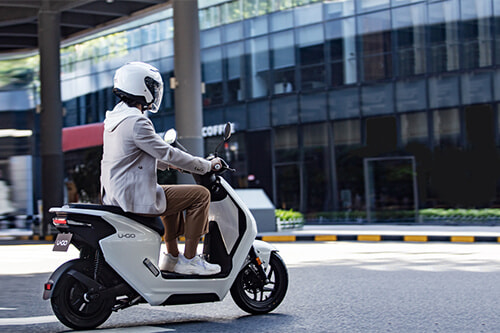
As the core power component of electric motorcycles, the performance stability and service life of electric motorcycle lithium battery directly affect driving safety, riding experience and overall use cost. Compared with traditional lead-acid batteries, lithium batteries for electric motorcycles have outstanding advantages such as high energy density, light weight, long cruising range and stable power output. However, lithium batteries have stricter requirements on service environment, charging habits, daily maintenance and fault troubleshooting. Most users and operation and maintenance personnel suffer from problems such as battery bulging, sudden range drop, abnormal charging and discharging, and premature performance attenuation due to insufficient professional operation and maintenance knowledge, which greatly shorten the service life of batteries. Therefore, establishing a standardized and systematic operation and maintenance system for electric motorcycle lithium battery, and completing daily maintenance, regular inspection, fault disposal and warehouse management are the core keys to extending battery life, ensuring riding safety and reducing equipment replacement costs.
Standardized daily operation and maintenance is the foundation to delay the aging of electric motorcycle lithium battery, focusing on standardizing charging habits and daily usage details. In terms of charging operation and maintenance first, it is necessary to strictly use original matching chargers, and prohibit mixing non-standard chargers with high voltage and high power, so as to avoid cell damage and BMS protection board failure caused by unstable current and voltage. Charging should be carried out in a ventilated and dry environment, and charging in high-temperature sun exposure, rainy and humid conditions or closed narrow spaces is forbidden to prevent potential safety hazards such as thermal runaway, short circuit and fire. Meanwhile, follow the principle of shallow charging and shallow discharging. There is no need to exhaust the power before recharging. Timely recharge when the remaining power is 20%-30%, and avoid long-term storage with insufficient power. Long-term power deficit will cause irreversible attenuation of cell capacity, directly reducing the battery’s cruising range and service life. In daily riding, frequent rapid acceleration, full-load climbing and long-term high-speed driving should be avoided, as such high-intensity working conditions will aggravate high-current discharge of the battery and accelerate cell aging and loss.
Regular special inspection and operation and maintenance are key links to eliminate hidden dangers in a timely manner and ensure stable battery operation. For electric motorcycle lithium battery, operation and maintenance personnel need to establish a periodic inspection mechanism, conduct basic inspections monthly and in-depth operation and maintenance inspections quarterly. Basic inspections include appearance and interface checks, observing whether the battery shell has damage, bulging, deformation or liquid leakage, and checking whether charging ports and wiring terminals are loose, oxidized or blackened. Clean oxidized impurities and fasten loose interfaces in a timely manner to avoid charging faults and driving power failure caused by poor contact. In-depth inspections require professional equipment to detect the voltage of single cells, overall internal resistance and charge-discharge efficiency of the battery, verify various parameters of the BMS battery management system, and check whether the overcharge, overdischarge and over-temperature protection functions work normally. For high-frequency used electric motorcycles for food delivery, daily commuting and commercial operation, the inspection cycle should be shortened to detect hidden faults in a timely manner and prevent minor problems from evolving into major issues such as battery scrapping and safety accidents.
Idle storage and seasonal special operation and maintenance are easily ignored by most users and are also important factors affecting battery life. When electric motorcycles are left idle for a long time, standardized warehouse operation and maintenance shall be carried out for electric motorcycle lithium battery. Long-term storage with full power or no power is prohibited, and the optimal storage power is 50%-60% to maximize the maintenance of cell activity. During idle storage, supplementary power calibration shall be conducted monthly to prevent battery dormancy and cell damage caused by self-discharge and power deficit. Meanwhile, the storage environment shall be dry, cool and ventilated with the ambient temperature controlled at 10℃-25℃, kept away from fire sources, heat sources and corrosive substances, so as to avoid battery aging accelerated by high temperature and cell activity decline caused by low temperature. Seasonal operation and maintenance is particularly important. In high-temperature summer seasons, allow the battery to cool down naturally after riding before recharging, and avoid immediate charging under high temperature conditions. In low-temperature winter environments, the battery cruising range will naturally attenuate; avoid charging outdoors at low temperature, recharge indoors at room temperature as much as possible, and reduce full-load and high-power riding to lower battery loss.
Targeted disposal of common faults is a core method to ensure normal battery reuse and reduce replacement costs. In daily use, common faults of electric motorcycle lithium battery are concentrated in four categories: abnormal charging, sudden range drop, insufficient power and failure to start. For faults such as failure to charge and sudden charging jump, first check the charger, charging interface and line faults. After eliminating peripheral equipment problems, detect whether the BMS protection board triggers the protection mechanism, and restore the normal battery function through professional reset operation. For problems such as sudden range drop and weak power, they are mostly caused by cell aging, increased internal resistance or excessive voltage difference of single cells. Professional equalization repair equipment can be used for cell equalization maintenance to repair battery capacity and restore cruising performance. In case of high-risk faults such as battery bulging, abnormal heating and peculiar smell, stop use and charging immediately, store the battery in isolation and conduct professional maintenance in a timely manner. It is strictly prohibited to ride with faulty batteries or disassemble and repair the battery privately to avoid safety risks.
A complete operation and maintenance system can not only fully guarantee the operational safety and performance stability of electric motorcycle lithium battery, but also greatly extend the cycle service life of the battery and reduce the long-term vehicle use cost for users. Compared with random use and unmaintained usage modes, standardized and scientific operation and maintenance management can increase the service life of lithium batteries by more than 30%, and effectively eliminate potential battery safety hazards. For individual users, vehicle store operation and maintenance personnel and fleet operation managers, the standardized lithium battery operation and maintenance process is simple and easy to implement, with both safety and economy. Adhering to normalized maintenance, periodic inspection and targeted fault disposal can keep the electric motorcycle lithium battery in the best working state for a long time, and provide safe, stable and long-term power support for all types of electric motorcycles.
Be the first to receive our latest news, how-to user guides,
and exclusive deals! Subscribe now.

 Headquarter Address:10F, Building 25, N0. 179 Fengguan, Dongshen Road, Dongguan, Guangdong
 Factory Address:Building 3, Area D, Shengyang Science and Technology Industrial Park, East District of Suichuan County Industrial Park, Ji'an, Jiangxi
 Headquarter Telephone No.:+86 769 2366 8529
Factory Telephone No.:+86 796 6111618
 Contact Person:Kevin Chen
 Email Address:chen@xpower-world.com