Global layout
 +86 769 2366 8529




Time:2026-10-10 Views:30
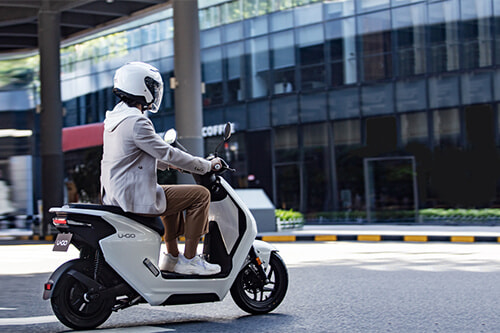
Driven by the global wave of green travel, electric motorcycles have become a core means of transportation for urban commuting, short-distance travel and logistics distribution by virtue of their advantages of convenience, flexibility and low-carbon energy conservation, with continuous growth in market ownership and production and sales volume. As the industry transforms towards high-end, intelligent and safe development, the core demands of users and vehicle manufacturers are no longer limited to the improvement of cruising range, but focus more on dimensional aspects such as battery operation stability, driving safety management and control, intelligent interactive experience and long-term service life. As the core power component of electric motorcycles, the intelligence level of batteries directly determines the performance limit of the whole vehicle, and the integration of intelligent communication technology has become a key core driving the iterative upgrading of the two-wheeled electric vehicle industry.
Most traditional electric motorcycle batteries adopt basic battery management systems, which can only realize simple overcharge, overdischarge and overcurrent protection with single data collection and delayed transmission, failing to timely perceive problems such as abnormal battery temperature, voltage fluctuation and cell attenuation under complex working conditions such as high-speed driving, heavy-load climbing and low-temperature cruising. This not only affects the riding experience, but may also cause potential safety hazards. Meanwhile, traditional battery equipment has weak data interaction capabilities with vehicle controllers, dashboards and vehicle-mounted terminals, making it impossible to realize intelligent linkage of the whole vehicle and difficult to adapt to the current development trend of intelligent travel.
The application of intelligent communication technology has completely broken the technical bottleneck of traditional batteries and built an efficient and stable data transmission system for electric motorcycle batteries. This communication method has the core advantages of strong anti-interference ability, high real-time performance, stable transmission and wide compatibility, and can operate stably in the complex electromagnetic environment of vehicles, effectively avoiding data distortion and transmission interruption caused by driving vibration and electromagnetic interference. Relying on mature communication protocols, the battery management system can accurately collect core data such as cell voltage, operating temperature, charge and discharge current, remaining power and health status all day long, realizing comprehensive and refined battery status monitoring.
Compared with traditional transmission modes, batteries equipped with intelligent communication systems can realize the collaborative linkage of multiple components of the whole vehicle. The real-time data collected by the battery can be synchronously transmitted to the vehicle controller and intelligent dashboard, accurately displaying the remaining cruising range, battery temperature, operating status and other information, allowing riders to grasp the vehicle power condition in real time and get rid of inaccurate power estimation. At the same time, the system can realize millisecond-level fault response. Once it detects risks such as abnormal battery overheating, current and circuit faults, it can quickly send early warning signals to the whole vehicle system and trigger protection mechanisms such as power limiting and power-off protection, avoiding safety accidents such as fire and short circuit from the source and greatly improving riding safety.
In terms of vehicle manufacturing and after-sales operation and maintenance, intelligent communication batteries have strong industrialization advantages. Standardized communication protocols are compatible with mainstream electric motorcycle control systems, enabling modular assembly, reducing the research and development and assembly costs of vehicle manufacturers, and improving production efficiency. In after-sales scenarios, operation and maintenance personnel can quickly read battery operation logs, fault codes and attenuation data through communication interfaces, accurately locate fault problems, achieve efficient maintenance, and greatly reduce later operation and maintenance costs. At the same time, this technology can adapt to new operation modes such as intelligent battery swapping, cloud monitoring and remote diagnosis, perfectly meeting the large-scale operation needs of shared electric motorcycles and urban logistics distribution vehicles.
With the continuous improvement of industry standards for new energy two-wheeled vehicles, the market requirements for battery intelligence, safety and systematization continue to increase. Intelligent communication battery solutions have been fully popularized in high-end electric motorcycles and commercial distribution electric motorcycles, becoming the mainstream industry configuration. In the future, with the in-depth integration of the Internet of Things, big data and intelligent vehicle-mounted technologies, the communication functions of batteries will be further upgraded to realize more intelligent functions such as cloud data synchronization, remote firmware upgrade, intelligent cruising range optimization and active fault prediction. It will continue to promote the upgrading of the electric motorcycle industry from simple power improvement to a full-domain intelligent travel system, and boost the high-quality and standardized development of the green two-wheeled travel industry.
Be the first to receive our latest news, how-to user guides,
and exclusive deals! Subscribe now.

 Headquarter Address:10F, Building 25, N0. 179 Fengguan, Dongshen Road, Dongguan, Guangdong
 Factory Address:Building 3, Area D, Shengyang Science and Technology Industrial Park, East District of Suichuan County Industrial Park, Ji'an, Jiangxi
 Headquarter Telephone No.:+86 769 2366 8529
Factory Telephone No.:+86 796 6111618
 Contact Person:Kevin Chen
 Email Address:chen@xpower-world.com