Global layout
 +86 769 2366 8529




Time:2026-10-16 Views:196
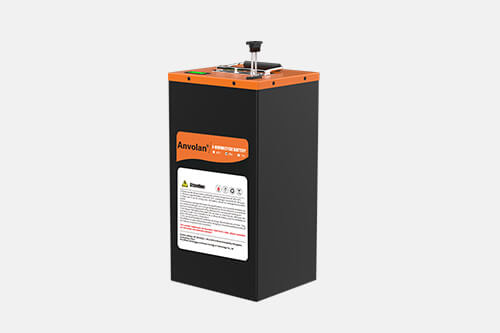
Custom LiFePO4 battery packs for electric tuk tuks are energy storage solutions developed for three-wheeler passenger taxis widely used across Southeast and South Asia. As short-distance urban transport vehicles, tuk tuks frequently start and stop on congested and hilly roads. Traditional lead-acid batteries suffer from short service life, heavy weight and frequent replacement, leading to high operating costs. Custom LiFePO4 battery packs leverage the excellent thermal stability and long-cycle performance of lithium iron phosphate material. They are specially engineered according to vehicle mounting space, motor parameters, passenger load and local road conditions to match power requirements of different models and cut long-term fleet expenses.
The first stage of custom battery pack development is gathering basic parameters of vehicles and operating environments. Engineers collect rated motor voltage, continuous operating current, peak discharge current, maximum passenger load, daily driving range, road gradient and ambient temperature range. Tuk tuk frames have differently sized battery compartments, and standard batteries often cannot fit perfectly. Custom designs allow adjustment of battery pack shape, dimensions and mounting points to fully utilize available chassis space. Common nominal voltages include 48V, 60V and 72V, while capacity can be flexibly adjusted according to range targets. Local grid charging conditions are also evaluated to match proper charging current and connectors, enabling fast energy replenishment between service shifts and reducing waiting time.
LiFePO4 chemistry is well suited for commercial short-distance transport such as tuk tuks. Compared with traditional lead-acid batteries, LiFePO4 achieves thousands of charge-discharge cycles and maintains steady capacity fade even under deep discharge. The material features good thermal stability and carries lower thermal runaway risk under bumpy or overload conditions, meeting safety requirements for urban passenger vehicles. Custom packs are equipped with a built-in battery management system (BMS). This intelligent protection unit monitors cell voltage, temperature and current of every cell string in real time and delivers protection against overcharge, over-discharge, overcurrent, high and low temperature. Some versions support Bluetooth or IoT communication, allowing fleet managers to remotely view battery SOC, temperature and fault logs for centralized maintenance.
Structural protection is a key focus during customization. Tuk tuks operate outdoors in rainy and dusty environments. The battery enclosure adopts high-strength metal housing with IP65 protection rating to block rainwater and sediment. Internal cells use shock-absorbing fixtures to absorb continuous vibration from rough roads and prevent loose wiring connections. The casing has reserved heat dissipation channels to control temperature rise during high-current continuous discharge and preserve cell consistency. During customization, output connectors, cable specifications and mounting brackets can be modified according to client requirements to simplify assembly at vehicle factories and reduce production line modification work.
Parameter matching directly determines user experience and return on investment. Capacity selection balances driving range, pack weight and total cost. Larger capacity extends single-charge mileage but increases vehicle weight and motor load; insufficient capacity may lead to power shortage mid-shift and disrupt operation schedules. Engineers perform load simulation based on the customer’s regular routes and recommend the most suitable specifications. Vehicles operating on steep roads require enhanced peak discharge capability to guarantee climbing power. For hot climate regions, thermal management is optimized to slow capacity degradation under high temperatures. Before finalizing all parameters, battery packs undergo vibration, temperature cycling and impact safety tests to verify reliability under real road conditions.
Custom battery packs also take after-sales maintenance and compliance certification into consideration. Before mass shipment, products pass UN38.3, CE and other safety and transportation certifications to meet cross-border shipping and local market access rules. The BMS supports self-diagnosis and triggers alerts for abnormal conditions to help maintenance staff quickly locate faults. LiFePO4 packs require far less maintenance than lead-acid batteries; no regular liquid refilling is needed, and only periodic inspection of housing and connectors is required. For operating fleets, manufacturers can supply battery monitoring platforms to manage battery health data of multiple vehicles centrally, predict aging in advance and schedule preventive replacement to reduce unexpected vehicle downtime.
In the electrification transition of commercial tuk tuks, custom LiFePO4 batteries solve common pain points of standard batteries including poor dimensional matching and mismatched power parameters. With integrated design covering cell selection, BMS logic, structural protection and customized interfaces, these packs adapt to different frame layouts and powertrains, improve vehicle driving range and extend service life. For vehicle manufacturers and fleets, the upfront investment for custom development is offset by less frequent battery replacement and fewer downtime losses, lowering total cost of ownership. Well-designed parameters, strict reliability testing and comprehensive protection features make custom LiFePO4 energy storage an attractive power upgrade option for electric tuk tuks and support the green transformation of short-distance three-wheeler passenger transport.
Be the first to receive our latest news, how-to user guides,
and exclusive deals! Subscribe now.

 Headquarter Address:10F, Building 25, N0. 179 Fengguan, Dongshen Road, Dongguan, Guangdong
 Factory Address:Building 3, Area D, Shengyang Science and Technology Industrial Park, East District of Suichuan County Industrial Park, Ji'an, Jiangxi
 Headquarter Telephone No.:+86 769 2366 8529
Factory Telephone No.:+86 796 6111618
 Contact Person:Kevin Chen
 Email Address:chen@xpower-world.com