Global layout
 +86 769 2366 8529




Time:2026-04-03 Views:30
As the core power sources for two-wheeled and three-wheeled electric travel, the performance of electric tricycle lithium battery and batteries for electric motorcycle directly determines the vehicle's range, load capacity and safety, and is the key support for promoting the green upgrading of the electric travel industry.
Driven by the in-depth advancement of global "dual carbon" goals and the continuous upgrading of demand for urban and rural travel and short-distance transportation, electric motorcycles and electric tricycles have become rigid-demand equipment covering multiple scenarios such as people's livelihood travel, logistics and distribution, and rural transportation. As their "power hearts", electric tricycle lithium battery and batteries for electric motorcycle are breaking performance bottlenecks through technological innovation, driving the entire electric travel industry to get rid of the limitations of traditional lead-acid batteries and enter a new stage of high-quality development. Since 2026, with the continuous optimization of the supply and demand pattern of the lithium battery industry and the acceleration of technological breakthroughs, the two types of batteries have ushered in large-scale upgrading. From the research and development of special battery cells to the upgrading of safety technology, from scenario-based customization to intelligent empowerment, they fully adapt to the core needs of different vehicle models, becoming the core driving force for activating industrial growth, and also promoting electric travel to develop in a more efficient, environmentally friendly and diversified direction.
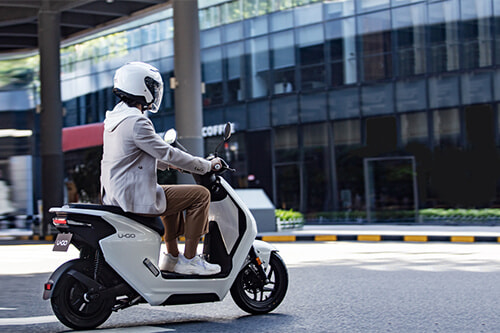
Currently, the electric travel market is experiencing an industrial transformation of "lithium battery replacing lead-acid battery". With the core advantages of high energy density, light weight, long cycle life and environmental friendliness, electric tricycle lithium battery and batteries for electric motorcycle have gradually replaced traditional lead-acid batteries to become the market mainstream. Among them, batteries for electric motorcycle focus on the lightweight and power needs of two-wheeled travel, with a penetration rate of more than 80% in the mid-to-high-end electric motorcycle field; electric tricycle lithium battery is optimized and upgraded for the heavy load and long-range needs of three-wheeled models, becoming the standard configuration for mid-to-high-end electric tricycles. The two work together to promote the comprehensive iteration of the electric travel industry. Compared with traditional lead-acid batteries, the two types of lithium batteries not only weigh only 1/3 of lead-acid batteries, greatly reducing the vehicle's own load and improving range efficiency, but also have the advantages of high charge and discharge efficiency, excellent low-temperature performance and low maintenance cost. They perfectly solve the industry pain points of traditional lead-acid batteries such as short range under heavy load, easy bulging, short service life and environmental pollution, and adapt to the diverse usage scenarios of different electric vehicle models.
Combined with the different usage characteristics of electric motorcycles and electric tricycles, although electric tricycle lithium battery and batteries for electric motorcycle both belong to the category of light vehicle lithium batteries, there are obvious differences in product design, performance focus and scenario adaptation. The core categories include lithium iron phosphate batteries and ternary lithium batteries. At the same time, graphene lithium batteries, as an upgraded version, occupy a certain market share in both fields. Different categories accurately match the core needs of different users with their respective performance advantages. Among them, lithium iron phosphate batteries have become the absolute mainstream in the two types of battery markets with extremely high safety, ultra-long cycle life and excellent stability, accounting for more than 75% of electric tricycle lithium batteries and more than 60% of batteries for electric motorcycle, and are widely used in high-frequency heavy load, home commuting and other scenarios.
Whether adapted to electric tricycles or electric motorcycles, the core advantages of lithium iron phosphate batteries are concentrated in safety and durability. It uses lithium iron phosphate as the positive electrode material and graphite as the negative electrode material, combined with a professional battery management system (BMS). The cycle life can reach 2000-3500 times, far exceeding the 300-500 times of traditional lead-acid batteries. Normal use can meet the need of no replacement for 3-5 years, greatly reducing the long-term use cost of users. It has extremely strong thermal stability, can withstand extreme ambient temperatures from -20℃ to 60℃, and can still maintain more than 85% capacity in winter in low-temperature areas in northern China, effectively solving the problem of traditional battery range attenuation at low temperatures. It is not only suitable for the bumpy and collision scenarios of electric tricycles under complex urban and rural road conditions, but also can meet the safety needs of electric motorcycles riding at high speed. In addition, lithium iron phosphate batteries have no heavy metal pollution and can be recycled and reused after scrapping, which is in line with the global trend of green and environmental protection development and the national environmental protection requirements for new energy vehicles. At the same time, their cost is relatively affordable, making them the first choice for most users.
Ternary lithium batteries focus more on power performance and lightweight, and are more widely used in the field of batteries for electric motorcycle, especially suitable for high-end performance electric motorcycles, and also used in electric tricycles with high power requirements (such as short-distance passenger transport type). It uses nickel-cobalt-manganese/aluminum ternary materials as the positive electrode, with higher energy density, excellent high-power discharge performance, lighter weight, and a cycle life of 1000-2000 times, which can meet the needs of electric motorcycles for high-speed riding and rapid acceleration, and also improve the power response speed of electric tricycles. It has fast charge and discharge efficiency, supports 2C-3C fast charging, and can be charged to 80% in 30 minutes, meeting the fast energy supplement needs of users with high-frequency use. At the same time, it is small in size and can be flexibly adapted to the battery compartment design of different models, which is not only suitable for the lightweight needs of small electric motorcycles, but also can save more cargo space for electric tricycles. It should be noted that the thermal stability of ternary lithium batteries is slightly lower than that of lithium iron phosphate batteries, so they are more suitable for use in normal temperature environments and need to be equipped with a more complete battery management system to ensure safe use.
As an upgraded version of lithium iron phosphate batteries, graphene lithium batteries are used in both electric tricycle lithium battery and batteries for electric motorcycle fields, and have become the preferred choice for mid-to-high-end users with better performance. By adding graphene composite conductive agents in the battery cells, it greatly improves the conductivity, thermal conductivity and corrosion resistance of the battery. The cycle life is increased to 2500-4000 times, the battery life is 15%-20% higher than that of ordinary lithium iron phosphate batteries, and the charging efficiency is increased by 30%. It can be directly adapted without modifying the original vehicle battery compartment. The Super Lithium S30 series graphene lithium battery launched by Xingheng Power is not only suitable for the heavy load needs of electric tricycles, but also can meet the power needs of electric motorcycles. Equipped with the top-level safety configuration of the "Strong City Defense System", the 4830 and above models have a battery life of 100 kilometers, twice that of traditional lead-acid batteries, bringing an extraordinary lithium battery experience to users of both types of vehicles. In addition, as a new type of product, sodium batteries are gradually penetrating in the field of batteries for electric motorcycle. With excellent low-temperature performance, they adapt to riding scenarios in low-temperature areas in northern China, effectively solving the pain point of traditional battery range attenuation at low temperatures.
In 2026, the fields of electric tricycle lithium battery and batteries for electric motorcycle have achieved many technological breakthroughs, and the industry as a whole is upgrading towards "high safety, high capacity, intelligence and scenarioization". With the accelerated industrialization of solid-state battery technology, semi-solid-state batteries have taken the lead in achieving small-scale application in both fields. Their energy density is more than 50% higher than that of traditional lithium batteries, the cycle life exceeds 3000 times, and the charging efficiency is increased to 4C rate, greatly improving the battery life and energy supplement efficiency of electric motorcycles and electric tricycles. As an industry benchmark with seven consecutive years of global sales champion of light vehicle lithium batteries, Xingheng Power has heavily deployed in both fields, launching flagship products such as 64100 and 76100. With the advantages of high safety, more intelligence, ultra-durability and long battery life, it has become an industry benchmark; BYD has introduced automotive-grade blade lithium iron phosphate batteries into both fields, further improving the safety and battery life of batteries and promoting the quality upgrading of the industry.
While technological innovation is advancing, the market patterns of electric tricycle lithium battery and batteries for electric motorcycle are also continuously optimizing. Leading enterprises continue to expand their market share with technological and production capacity advantages, and the industry concentration is constantly improving. Mainstream enterprises such as Tianneng, Xingheng and Chaowei have increased their R&D investment in the two types of batteries and launched scenario-based customized products - for the commuting and high-speed riding needs of electric motorcycles, they have developed lightweight and high-power lithium batteries to adapt to different displacement models; for the logistics and distribution and rural transportation scenarios of electric tricycles, they have developed high-capacity, anti-bump heavy-duty lithium batteries with a single charge range of 150-200km to meet the daily high-frequency use needs; for special scenarios such as environmental sanitation and short-distance passenger transport, they have launched long-range and easy-to-charge special lithium batteries that support on-board charging to ensure operational continuity.
It is worth noting that although there is a clear mandatory national standard for lithium-ion batteries for electric bicycles, this standard does not apply to electric tricycle lithium battery and batteries for electric motorcycle, so the industry has stricter safety requirements for the two types of batteries. The two types of batteries produced by mainstream enterprises are all equipped with an intelligent battery management system (BMS), which can real-time monitor the voltage, current and temperature of the battery, realize automatic protection against overcharge, over-discharge, short circuit and over-temperature, and also have a battery balancing function to extend the battery service life; some high-end products have also added positioning and anti-theft functions to further improve the user experience. With the development of the industry, more and more enterprises are paying attention to the recyclability of batteries and establishing a complete recycling system to promote the green and sustainable development of the industry, while regulating the market order, eliminating three-no products and ensuring the safe use of users.
From a global perspective, the demand for electric tricycle lithium battery and batteries for electric motorcycle continues to rise. Especially in emerging markets such as Southeast Asia and Africa, electric motorcycles and electric tricycles, as low-cost and highly convenient means of transportation, have a rapidly increasing market penetration rate, driving the export demand of the two types of batteries to grow continuously. As a major global producer of electric vehicles and lithium batteries, China, with its complete industrial chain and mature technological advantages, has become the world's main supplier of the two types of batteries, with products exported to more than 50 countries and regions around the world. It not only promotes the international development of China's lithium battery industry, but also helps the green transformation of the global short-distance transportation field. In 2026, the global lithium battery industry is expected to enter a new growth cycle with optimized supply and demand pattern and accelerated technological breakthroughs. As important segments of the power battery field, the two types of batteries will usher in faster development.
For users, choosing a suitable electric tricycle lithium battery or batteries for electric motorcycle needs to be comprehensively considered in combination with vehicle type, usage scenario, load demand and budget. For electric motorcycle users, who commute frequently and pay attention to safety and long-term use cost, lithium iron phosphate batteries are preferred; for those pursuing high-speed and high-power riding, ternary lithium batteries can be chosen; for users in low-temperature areas in northern China, sodium batteries can be given priority. For electric tricycle users, who have high-frequency heavy load and pay attention to safety and battery life, lithium iron phosphate batteries are preferred; for those pursuing lightweight and power performance, ternary lithium batteries can be chosen; for those with sufficient budget and desire for longer battery life and service life, graphene lithium batteries are the best choice. At the same time, no matter which type of battery you choose, you should recognize compliant brands and complete quality assurance, refuse three-no products, and pay attention to daily maintenance to avoid overcharging and over-discharging, ensure the safe and stable use of the battery, and extend its service life.
As the core power components of electric motorcycles and electric tricycles, the technological innovation of electric tricycle lithium battery and batteries for electric motorcycle not only promotes the two types of vehicles to get rid of the limitations of traditional lead-acid batteries, realizing the leap from "low-end transportation" to "multi-scenario efficient application", but also conforms to the global "dual carbon" goals, injecting green power into urban and rural short-distance transportation and people's livelihood travel. In the future, with the continuous breakthrough of solid-state battery technology, the gradual reduction of costs, and the continuous improvement of scenario-based customization capabilities, the two types of batteries will usher in faster development, achieve further upgrades in battery life, safety, intelligence and other aspects, bring users a more efficient, safer and more convenient user experience, promote electric travel to become the mainstream choice of urban and rural green transportation, and help the green transformation of the global transportation field.
Be the first to receive our latest news, how-to user guides,
and exclusive deals! Subscribe now.

 Headquarter Address:10F, Building 25, N0. 179 Fengguan, Dongshen Road, Dongguan, Guangdong
 Factory Address:Building 3, Area D, Shengyang Science and Technology Industrial Park, East District of Suichuan County Industrial Park, Ji'an, Jiangxi
 Headquarter Telephone No.:+86 769 2366 8529
Factory Telephone No.:+86 796 6111618
 Contact Person:Kevin Chen
 Email Address:chen@xpower-world.com