Global layout
 +86 769 2366 8529




Time:2026-09-12 Views:103
As a retro wide-tire mobility vehicle, the Citycoco electric scooter is widely popular for short-distance commuting, scenic sightseeing and suburban transportation, featuring a rugged appearance, strong climbing capacity and decent driving range. Its acceleration, climbing torque, mileage and driving stability are all determined by the built-in battery, the on-board power supply system. When purchasing Citycoco scooters, many buyers only focus on the labeled voltage and capacity, ignoring key indicators of the battery as an integrated power unit, such as output characteristics, power stability, charge-discharge matching, power protection, compatibility and long-term power degradation. Batteries with identical nominal specifications can deliver drastically different riding experiences and service lives depending on the quality of power design. This article analyzes the power architecture, dynamic output features, charging compatibility, safety protection, environmental stability and long-term degradation characteristics of Citycoco electric scooter batteries from the power system perspective. It helps purchasers, distributors and end users understand the underlying principle of Citycoco batteries as the core power unit of the whole vehicle, and distinguish the big gap between high-quality power solutions and low-grade batteries.
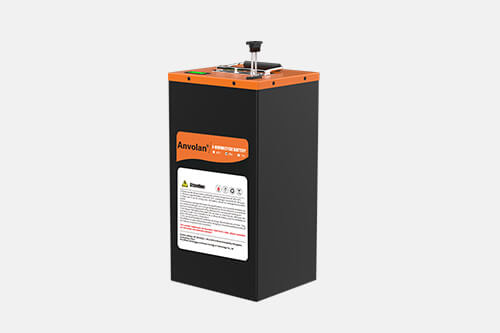
The power architecture of the Citycoco electric scooter battery forms the foundation of the entire power system. Most Citycoco models adopt lithium battery packs as the main power source, replacing bulky lead-acid power supplies from early versions. The integrated DC power system consists of cell groups, BMS power management board, copper busbars and wire current collecting circuits, insulated packaging housing and power output connectors. There are two mainstream voltage standards: 48V and 60V, matching motors of different power ratings. The 48V power supply is used for basic Citycoco models within 1000W, while the 60V version fits high-power 1500W–2000W units to meet high-current power demands for heavy loads and hill climbing. The design quality of power architecture directly affects power transmission efficiency. Low-quality battery power schemes use thin wires, simple BMS boards and loosely arranged cells, which sharply increase loop impedance and cause obvious heat generation and voltage drop under high-current output. High-grade Citycoco battery power systems adopt low-internal-resistance cells with thickened copper busbars to shorten current transmission paths and reduce the overall impedance of the power loop. The DC power pack adopts series-parallel cell grouping to guarantee balanced power output of every cell string and avoid overload on single strings, maintaining consistent performance during continuous discharge. Unlike simple power packs for compact electric scooters, Citycoco has heavier curb weight and wider tires with higher riding load, requiring higher continuous output capability from its power source. Therefore, the power architecture must reserve sufficient current margin to handle instantaneous peak power demand during startup and steep hill acceleration.
Dynamic power output characteristics serve as the most intuitive metric for evaluating Citycoco battery performance and directly determine riding power response. When the Citycoco scooter starts accelerating or climbs slopes with passengers, the motor draws large current instantly, setting strict requirements for instantaneous discharge capacity of the DC power source. A premium Citycoco power supply features a flat discharge platform and strong peak output capability. When the rider turns the throttle and motor load rises rapidly, the battery releases peak current instantly without sharp terminal voltage drop. Insufficient power output leads to obvious weak power: slow startup, rapid speed reduction on uphill roads, voltage collapse and sudden speed limiting triggered by controller low-voltage protection. High-quality lithium power supplies feature low internal resistance with minor voltage drop under continuous discharge and pulse peak discharge, delivering stable output power. On flat roads at constant speed, the power supply maintains low and steady current output; during loaded hill climbing or rapid acceleration, it releases large current instantly with linear power output and throttle-responsive performance. On the contrary, low-grade batteries have inflated nominal capacity and high cell internal resistance. Their voltage looks normal under light load, yet voltage drops sharply once the load increases. The actual output power is far below the rated value. Such power supplies bring poor riding experience. Repeated heavy-load voltage drop accelerates cell aging and shortens the overall service life of the power pack. Meanwhile, premium power supplies deliver smooth voltage curves without frequent voltage fluctuation, reducing frequent regulation of the motor controller, cutting electric control loss and efficiently converting electric energy into kinetic energy.
Charging power compatibility determines energy replenishment efficiency and charging safety. As an energy-storing DC power source, the Citycoco battery needs a matched dedicated charger to convert AC to DC for charging. The charging process is essentially energy refilling from an external charging power supply to the battery pack, and the matching degree between them is critical. Low-quality battery solutions often use mismatched cheap chargers without considering charging compatibility. Uncontrolled charging current causes overcharging and cell bulging, greatly raising safety risks. The BMS power management module built into high-quality Citycoco batteries intelligently manages the whole charging process: it receives DC power from the external charger, monitors the voltage of each cell string in real time and executes staged constant-current and constant-current charging logic. When cell voltage is low, it adopts constant-current stable charging; when nearly full, it automatically switches to low-current constant-voltage float charging to prevent overcharging of single cells. The BMS also features charging current limiting to cap maximum charging current and avoid impact of excessive current on cells. Different Citycoco battery specifications require different charging power parameters: a 48V battery matches a 54.6V charging power source, and a 60V lithium battery works with a 71.4V charger. Mismatched charging power leads to incomplete charging or overcharging damage. In addition, premium power systems have charging temperature detection. If battery temperature rises abnormally during charging, the BMS pauses charging to protect the power unit. Proper charging matching design improves charging speed, protects cells, extends the service life of the whole power supply and reduces thermal loss during charging.
The power safety protection system acts as an indispensable safety barrier for the Citycoco battery power system. As a mobile on-board DC power source, the battery faces bumps, impacts, high temperature and humidity during riding. Multi-level protection mechanisms must be built to avoid risks of electrical faults. All protection functions are integrated into the BMS power management unit to form a complete protection logic: overcharge protection, overdischarge protection, overcurrent protection, short-circuit protection, overtemperature protection and low-voltage warning protection. The power system collects real-time data including pack voltage, single-cell voltage, loop current and internal temperature of the battery pack. When abnormal conditions such as load short circuit occur and loop current surges instantly, the BMS cuts off the power output loop within milliseconds to block heavy current and prevent cable overheating and fire. When the battery drains and voltage falls below the threshold, the BMS disconnects the discharge loop to avoid permanent damage caused by deep cell depletion. The overtemperature function monitors internal battery temperature. If the power supply overheats due to summer exposure or continuous high-current discharge, it automatically limits output power or cuts off power to prevent thermal runaway. Apart from electronic protection, physical protection of the power pack matters equally. Premium power packs adopt flame-retardant housing and insulating gaskets. Heat dissipation gaps are reserved between cells to stop thermal conduction between cells. Harnesses use high-temperature resistant flame-retardant wires, and connectors are sealed and insulated to prevent short circuits caused by rain and moisture. Many low-cost Citycoco batteries are only fitted with simple protection boards with inaccurate thresholds and slow response, failing to cut off power timely under faults and creating severe safety hazards. A qualified Citycoco power supply relies on dual protection: mechanical structure plus BMS electronic control to secure mobile power use from both electrical and physical dimensions.
Power stability under various environments tests the battery’s power supply capacity under changing temperature and vibration. Citycoco scooters mostly run on outdoor roads, so the power supply has to cope with seasonal temperature changes, road vibration, rain and humidity. Environmental changes directly affect the discharge capacity of the DC power source. Low temperature is the biggest challenge for mobile power supplies. Low-grade lithium power packs lose most usable capacity in cold winter, with greatly reduced output power, resulting in weak climbing and shortened mileage. Cells in premium Citycoco lithium power supplies have good low-temperature discharge performance. The power pack retains a high percentage of usable capacity in cold environments with limited voltage drop, so power attenuation in winter stays controllable. In hot summer, continuous high-current discharge generates heat. Premium power packs are designed with proper heat dissipation to discharge internal heat and maintain stable power output. Meanwhile, continuous vibration from bumpy roads may loosen cells and wiring terminals inside the power pack, raising contact resistance and triggering local overheating. High-quality power supplies adopt reinforced cell fixing technology with tightly secured cells and locked bus terminals. They have strong vibration resistance and avoid intermittent power failure caused by poor contact during long-time bumpy riding. Equipped with waterproof sealed housing, the internal power circuit can resist moisture under light rain outdoors to maintain long-term stable power output. Superior environmental stability guarantees that this on-board power source can continuously deliver power through all seasons and rough rural and urban roads.
Long-term power degradation determines the full-life-cycle cost of the entire power supply. All energy storage power sources suffer capacity decay after charge-discharge cycles. As a vehicle power supply, the degradation rate of Citycoco batteries directly affects service life. Low-grade power packs use grade B or C recycled cells with limited cycle life. Their capacity degrades rapidly. After only a few months of use, usable capacity drops sharply, mileage shrinks obviously, and internal resistance rises, leading to heavier heat generation under high current and creating a vicious cycle. High-quality Citycoco batteries use brand-new Grade A cells with excellent consistency. The power pack degrades gently during repeated charge-discharge cycles. Under standardized operation, it can retain over 80% usable capacity after hundreds of cycles with slow growth of internal resistance and no obvious power attenuation. The cell balancing function of BMS actively corrects voltage differences between strings during each charging session, preventing early degradation of individual cells from damaging the whole pack and slowing down overall power aging. Power degradation is easily ignored by distributors and end customers. New batteries of different qualities show little difference in mileage at first. After half a year or one year of frequent riding, low-grade power packs suffer sharp performance drop, while premium power supplies maintain stable power delivery. From the perspective of full-life-cycle cost, high-quality Citycoco batteries with slow degradation do not require frequent replacement, delivering lower long-term comprehensive cost and serving as a more reliable power solution.
To sum up, the Citycoco electric scooter battery is more than a simple energy storage container; it is a highly integrated on-board DC power supply system. Six power-related dimensions define the overall quality: power architecture design, dynamic output performance, charging adaptability, multi-layer power safety protection, stability under variable working environments and long-term power degradation characteristics. During procurement and selection, buyers should not only check voltage and capacity labels but also evaluate product quality from the perspective of the complete power system. A high-quality Citycoco power supply can deliver stable power, support matched charge and discharge, provide comprehensive safety protection and operate reliably under harsh outdoor riding conditions. It offers continuous and stable power for Citycoco wide-tire electric scooters, improves riding experience and cuts maintenance and replacement costs in the long run. For suppliers, distributors and end users, evaluating batteries from the power system perspective is the most scientific way to select premium Citycoco electric scooter batteries.
Be the first to receive our latest news, how-to user guides,
and exclusive deals! Subscribe now.

 Headquarter Address:10F, Building 25, N0. 179 Fengguan, Dongshen Road, Dongguan, Guangdong
 Factory Address:Building 3, Area D, Shengyang Science and Technology Industrial Park, East District of Suichuan County Industrial Park, Ji'an, Jiangxi
 Headquarter Telephone No.:+86 769 2366 8529
Factory Telephone No.:+86 796 6111618
 Contact Person:Kevin Chen
 Email Address:chen@xpower-world.com