Global layout
 +86 769 2366 8529




Time:2026-04-17 Views:40
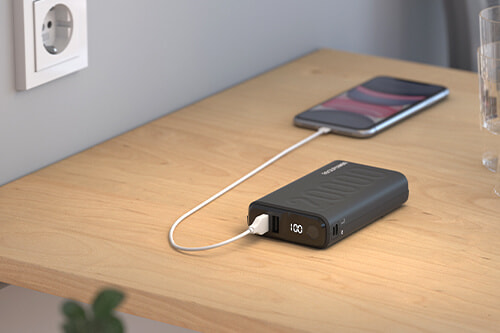
Wireless charging compatibility has become a key indicator of modern power banks, as it directly determines whether the power bank can work seamlessly with various wireless charging-enabled devices, including smartphones, tablets, smartwatches, and Bluetooth earbuds. The compatibility of wireless power banks mainly depends on the wireless charging standards they adopt, with the most common standards being Qi, Qi 2, and MagSafe, each with different characteristics and applicable scenarios. Understanding these standards is essential to evaluating the practicality of a wireless power bank.
The Qi standard, developed by the Wireless Power Consortium (WPC), is the most widely used wireless charging standard globally. It supports charging power ranging from 5W to 15W and is compatible with most Android devices and some older iPhone models. However, a major drawback of the Qi standard is the lack of precise alignment technology—users need to align the device with the charging coil of the power bank accurately to achieve optimal charging efficiency, otherwise, the charging speed will be significantly reduced or charging may even fail. To address this issue, the WPC launched the Qi 2 standard in 2023, which integrates magnetic alignment technology, similar to Apple’s MagSafe, allowing devices to align automatically with the power bank’s charging coil for stable and efficient charging.
MagSafe is a magnetic wireless charging standard developed by Apple specifically for its devices, including iPhones, iPads, and AirPods. It supports charging power up to 15W for MFi-certified products, while non-MFi certified wireless power banks can only provide 7.5W of power for Apple devices. Qi 2, on the other hand, is compatible with both Apple and Android devices, offering a more cost-effective alternative to MagSafe. In addition to the charging standard, the wireless charging compatibility of power banks is also affected by factors such as charging coil size, output power, and interference resistance. For example, power banks with larger charging coils can accommodate more device sizes, while those with strong interference resistance can avoid charging interruptions caused by nearby electronic devices. Overall, a highly compatible wireless power bank should support multiple charging standards, have precise alignment capabilities, and maintain stable performance across different devices.
Be the first to receive our latest news, how-to user guides,
and exclusive deals! Subscribe now.

 Headquarter Address:10F, Building 25, N0. 179 Fengguan, Dongshen Road, Dongguan, Guangdong
 Factory Address:Building 3, Area D, Shengyang Science and Technology Industrial Park, East District of Suichuan County Industrial Park, Ji'an, Jiangxi
 Headquarter Telephone No.:+86 769 2366 8529
Factory Telephone No.:+86 796 6111618
 Contact Person:Kevin Chen
 Email Address:chen@xpower-world.com