Global layout
 +86 769 2366 8529




Time:2026-09-12 Views:153
In the daily use of electric tricycle batteries, users often encounter various common problems such as insufficient endurance, slow charging, power attenuation, abnormal heating and functional failure. Most users lack professional battery knowledge, cannot accurately judge the cause of the problem, and often have wrong operation methods, which aggravate battery damage and shorten service life. This tricycle battery common problem FAQ systematically sorts out the most frequently encountered questions by users in daily use, charging, maintenance, fault judgment and functional use, and provides professional and detailed answers and solutions, helping users solve battery use problems, correct wrong operation habits, and extend battery service life.
Daily use and endurance related common questions are the most concerned content of users. Many users consult why the battery cruising range decreases significantly in winter. The core reason is that the activity of lithium battery cells decreases in low-temperature environment, the internal resistance increases, and the discharge efficiency decreases, resulting in reduced available capacity and shorter endurance, which is a normal physical phenomenon. It can be improved by avoiding outdoor low-temperature charging and properly warming the battery before use. Another common question is why the battery power drops rapidly when climbing and carrying heavy loads. This is because heavy-load climbing requires high-current discharge. If the battery is used for a long time with heavy load, the instantaneous voltage drop will be obvious. It is recommended to avoid overloading for a long time and properly accelerate smoothly to reduce battery load. In addition, many users wonder whether frequent shallow charging will damage the battery. In fact, lithium tricycle batteries support frequent shallow charging, which is more conducive to maintaining cell activity than deep discharge and deep charging, and can effectively extend the cycle life.
Charging fault and maintenance common questions solve daily operation pain points. Users often ask why the battery cannot be fully charged or the charger turns green quickly. This problem is mostly caused by battery cell imbalance, aging of individual cells, or charger mismatch. The solution is to use the intelligent balance charger for balancing charging, replace the matched special charger, and test and replace the aging faulty cells in time. Many users also consult whether they can charge the battery immediately after high-intensity use. The answer is no. The battery will generate heat after long-time high-current discharge. Immediate charging will cause heat accumulation, increase battery temperature, and easily lead to bulging and aging. It is necessary to park the vehicle and cool the battery for 30-60 minutes before charging. In terms of maintenance, users often ask whether the battery needs long-term full power storage. Long-term full power standby will increase cell pressure and accelerate aging. Long-term unused batteries should be stored with 50%-70% residual power, and charged once a month to maintain cell activity.
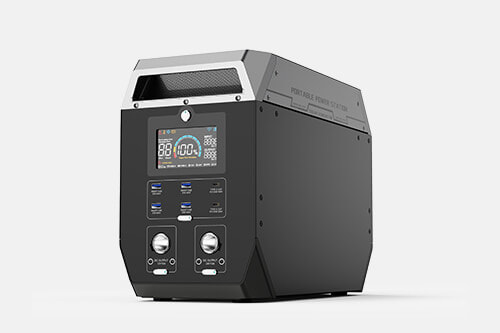
Functional and safety fault common questions ensure safe use. For multifunctional batteries with USB/DC/AC output, users often encounter the problem that the external power supply has no output while the vehicle can drive normally. This is mostly caused by the overload protection and short-circuit protection of the external power supply module. It is necessary to disconnect the external load, restart the battery power supply, and avoid over-powering the equipment. For GPS anti-theft batteries, users often consult the problem of inaccurate positioning or offline positioning. It is usually caused by poor signal in the use environment or low standby power of the positioning module. It is necessary to avoid using in fully enclosed blind areas and regularly check the standby power of the positioning module. In terms of safety, users often ask whether battery slight heating during use is normal. Slight temperature rise during high-current discharge and charging is normal, but obvious overheating, hot shell and peculiar smell are abnormal phenomena, which need to stop use and check faults in time to avoid safety accidents.
Be the first to receive our latest news, how-to user guides,
and exclusive deals! Subscribe now.

 Headquarter Address:10F, Building 25, N0. 179 Fengguan, Dongshen Road, Dongguan, Guangdong
 Factory Address:Building 3, Area D, Shengyang Science and Technology Industrial Park, East District of Suichuan County Industrial Park, Ji'an, Jiangxi
 Headquarter Telephone No.:+86 769 2366 8529
Factory Telephone No.:+86 796 6111618
 Contact Person:Kevin Chen
 Email Address:chen@xpower-world.com