Global layout
 +86 769 2366 8529




Time:2026-05-20 Views:143
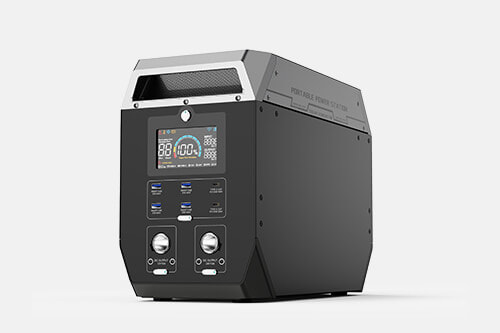
With the increasing diversification of user demands for on-the-go power, the multi-interface design of portable power stations has become a key trend in the industry, evolving from simple single or dual interfaces to a comprehensive, integrated, and intelligent interface system that covers all types of electronic devices and application scenarios. The core trend of multi-interface design is to achieve "one machine for multiple uses", eliminating the need for users to carry additional adapters or power strips, and meeting the simultaneous charging and power supply needs of multiple devices such as smartphones, laptops, drones, household appliances, and outdoor equipment. This trend is driven by the popularization of high-power electronic devices and the expansion of portable power station application scenarios, from traditional outdoor camping to home emergency, professional operations, and self-driving tours.
One of the main trends is the enrichment and diversification of interface types, covering AC outlets, USB-C, USB-A, DC ports, and innovative special interfaces. AC outlets, especially pure sine wave AC outlets, are becoming a standard configuration, with output power increasing to 2600W or even higher, capable of stably powering high-power household appliances such as microwaves, induction cookers, and refrigerators, meeting the needs of home emergency and outdoor cooking. USB-C interfaces are developing towards high-power fast charging, with PD 3.1 140W output becoming increasingly common, capable of rapidly charging high-performance laptops, tablets, and other devices, while supporting bidirectional charging to realize fast charging of the power station itself. Multiple USB-A interfaces (usually 2-4) are retained to meet the charging needs of low-power devices such as smartphones, headphones, and cameras, and some interfaces support fast charging protocols such as QC 3.0 to improve charging efficiency. DC ports, including 12V car ports and XT60 ports, are used to power car fridges, tire inflators, drones, and other equipment, expanding the application scope of portable power stations.
Another important trend is the integration of innovative interfaces and the construction of a peripheral ecosystem, breaking the "single function" limitation of traditional interfaces. For example, DJI's Power 1000 V2 portable power station has launched exclusive SDC and SDC Lite interfaces, which not only support drone fast charging and solar panel connection but also can be connected to expansion battery packs, realizing flexible capacity expansion (up to 11 degrees of electricity) and multiple charging methods such as solar fast charging and on-board fast charging. This innovative interface design realizes the integration of charging, expansion, and accessory connection, forming a complete power supply ecosystem. In addition, the intelligence of interfaces is also a key trend: some high-end models are equipped with intelligent recognition functions, which can automatically match the charging current and voltage according to the connected device, avoiding overcharging and protecting the device battery. The interface layout is also more humanized, with clear labels and reasonable spacing, making it easy for users to connect multiple devices at the same time without mutual interference. With the development of renewable energy integration, the interface design of portable power stations is also moving towards compatibility with solar panels, wind energy equipment, and other renewable energy sources, promoting the development of the "off-grid + energy storage" model and further expanding the application scenarios of portable power stations.
Be the first to receive our latest news, how-to user guides,
and exclusive deals! Subscribe now.

 Headquarter Address:10F, Building 25, N0. 179 Fengguan, Dongshen Road, Dongguan, Guangdong
 Factory Address:Building 3, Area D, Shengyang Science and Technology Industrial Park, East District of Suichuan County Industrial Park, Ji'an, Jiangxi
 Headquarter Telephone No.:+86 769 2366 8529
Factory Telephone No.:+86 796 6111618
 Contact Person:Kevin Chen
 Email Address:chen@xpower-world.com