Global layout
 +86 769 2366 8529




Time:2026-04-23 Views:74
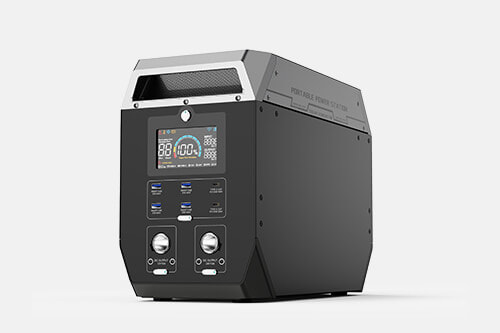
Heat dissipation is a crucial design aspect of portable power stations, as the internal components, particularly the battery pack, inverter, and charging module, generate a significant amount of heat during operation. Excessive heat accumulation can reduce the efficiency of the device, shorten the battery’s service life, and even pose safety risks such as overheating, fire, or explosion. The core principle of heat dissipation design is to transfer the heat generated by internal components to the external environment efficiently, maintaining the device’s operating temperature within a safe range (usually 0°C to 45°C for lithium-ion batteries).
Modern portable power stations adopt a combination of passive heat dissipation and active heat dissipation technologies to achieve optimal heat dissipation performance. Passive heat dissipation relies on heat conduction, convection, and radiation to transfer heat without the need for additional power. The key components of passive heat dissipation include heat sinks, heat-dissipating plates, and thermal conductive materials. The battery pack is usually attached to a metal heat sink (made of aluminum or copper) with high thermal conductivity, which absorbs the heat generated by the battery cells. The heat sink is then connected to the device’s outer casing, which acts as a large heat-dissipating surface, transferring heat to the surrounding air through convection and radiation. Additionally, thermal conductive silicone pads or thermal grease are used between the battery cells and the heat sink to fill the gaps, improving heat conduction efficiency by reducing thermal resistance. The EcoFlow DELTA Pro 3 uses a Cell-To-Chassis (CTC) integration design, which enhances heat transfer by directly connecting the battery cells to the device’s chassis, improving overall thermal management.
Active heat dissipation, on the other hand, uses fans or pumps to enhance air or liquid circulation, accelerating heat transfer. Most mid-to-high-end portable power stations are equipped with intelligent cooling fans, which are controlled by a temperature sensor. When the internal temperature of the device exceeds a certain threshold (usually 35°C to 40°C), the fans automatically start, drawing in cool air from the outside and expelling hot air from the inside, forming a forced convection airflow. The fan speed can also be adjusted according to the temperature, ensuring efficient heat dissipation while reducing noise. For example, the EcoFlow DELTA Pro 3 incorporates X-Quiet technology, which uses dual air duct designs and intelligent cooling algorithms to optimize heat dissipation while minimizing operating noise. Some high-power portable power stations also adopt liquid cooling systems, which use a circulating liquid (such as coolant) to absorb heat from the battery pack and inverter, then transfer the heat to a heat exchanger for dissipation. Liquid cooling systems have higher heat dissipation efficiency than air cooling, making them suitable for high-power devices that generate large amounts of heat.
In addition to passive and active heat dissipation technologies, the layout of internal components also plays a crucial role in heat dissipation design. Manufacturers carefully arrange the battery pack, inverter, and charging module to avoid heat accumulation. For example, the inverter, which generates a large amount of heat, is placed near the vents to facilitate heat discharge, while the battery pack is placed in a well-ventilated area to ensure uniform heat distribution. The casing of the device is also designed with heat-dissipating vents, which are strategically placed to maximize airflow while maintaining waterproof and dustproof performance. Moreover, the use of high-temperature-resistant materials for internal components, such as flame-retardant plastics and heat-resistant wires, further enhances the device’s heat resistance. The X-Core 3.0 thermal architecture used in EcoFlow products integrates multiple components to minimize heat production and dissipate heat efficiently during fast charging, heavy loads, and extended runtimes, ensuring the device operates safely and efficiently. Overall, the heat dissipation design of portable power stations is a comprehensive system that combines multiple technologies to ensure stable and safe operation even under high-load conditions.
Be the first to receive our latest news, how-to user guides,
and exclusive deals! Subscribe now.

 Headquarter Address:10F, Building 25, N0. 179 Fengguan, Dongshen Road, Dongguan, Guangdong
 Factory Address:Building 3, Area D, Shengyang Science and Technology Industrial Park, East District of Suichuan County Industrial Park, Ji'an, Jiangxi
 Headquarter Telephone No.:+86 769 2366 8529
Factory Telephone No.:+86 796 6111618
 Contact Person:Kevin Chen
 Email Address:chen@xpower-world.com