Global layout
 +86 769 2366 8529




Time:2026-09-15 Views:163
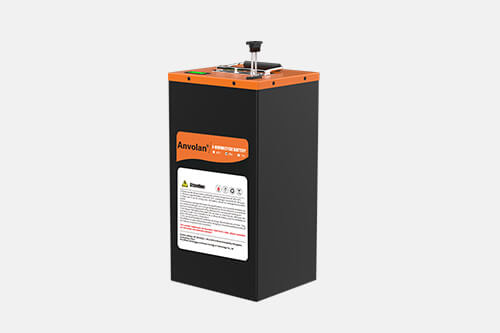
The 60V 20Ah lithium battery is the mainstream power core for electric two-wheelers, light-duty transportation equipment and small outdoor energy storage devices. Its overall performance, operational stability, safety protection capability and service life are essentially determined by the internal system architecture. From the perspective of architectural design, a lithium battery is not a simple assembled product of electric cells, but an integrated power system composed of six major modules: cell array, module layout structure, battery management system (BMS), heat dissipation air duct, mechanical protective shell and equalization circuit. A reasonable architectural design can optimize the stability of voltage output, reduce internal resistance loss, improve heat dissipation efficiency, avoid thermal runaway risks, and ensure the reliability of batteries under complex working conditions such as vibration, high and low temperature, and high-current discharge. Compared with ordinary assembled batteries, 60V 20Ah lithium batteries with standardized architecture have the advantages of compact structure, stable power output, high safety redundancy and strong adaptability. An in-depth analysis of their overall architectural logic can clarify their performance advantages and design principles, providing professional architectural basis for equipment selection, battery modification and quality acceptance.
The cell series-parallel topology architecture is the basic core structure of a 60V 20Ah lithium battery, which directly determines the battery voltage platform, capacity parameters and discharge capability. The nominal full charge voltage of a standard 60V lithium battery system is approximately 67.2V. The industry-general architecture adopts a 16-cell series topology. Each single cell has a standard voltage of 3.7V and a full charge voltage of 4.2V. The 16S series connection realizes 60V-level voltage output, and the rated capacity of the entire battery pack is determined by the 20Ah parameter of a single cell without parallel capacity expansion, forming a minimalist and stable 16S0P architecture. As the optimal ratio scheme in the industry, this series topology avoids the common problems of complex multi-series and multi-parallel structures, such as uneven cell shunting, capacity imbalance and local overheating caused by excessive connection points. Meanwhile, the regular single-row arrangement structure ensures completely consistent current load and working pressure of each cell, realizes balanced power discharge output, effectively solves the problem of sudden voltage drop during vehicle acceleration and climbing, and guarantees linear and stable power output.
The physical layout and mechanical architecture of modules determine the spatial utilization rate, seismic resistance and structural stability of the battery. Standard industrial-grade 60V 20Ah lithium batteries adopt a standardized modular layered and regular layout structure. Sixteen cells are arranged in a matrix parallel form, with standardized heat insulation gaps and heat dissipation channels reserved between cells to avoid heat accumulation caused by compact stacking. The overall module is fixed and limited by high-strength insulating brackets made of flame-retardant ABS material, which has multiple functions of insulation, fire prevention, shock resistance and displacement prevention. It can effectively avoid faults such as cell displacement, tab stretching and circuit falling off caused by jolting and vibration during vehicle operation. Compared with the simple binding assembly structure, the modular fixed architecture maintains long-term stable cell positions and eliminates hidden dangers such as virtual circuit connection and short circuit caused by long-term vibration. At the same time, the highly integrated and compact layout greatly reduces the overall volume, adapts to the battery compartment space of most 60V electric equipment, and balances structural strength and installation adaptability.
The Battery Management System (BMS) electrical architecture serves as the control core of the entire battery pack and a key module for ensuring safety and battery life in architectural design. The dedicated protection board for 60V 20Ah batteries adopts an integrated design, integrating voltage acquisition circuits, current detection units, temperature sensing modules, balance management units and safety protection loops to realize full-dimensional intelligent management. Its core architectural advantage lies in the independent shunt acquisition design. Each series of cells is equipped with an independent voltage sampling circuit to accurately monitor the voltage difference and temperature state of single cells in real time, eliminating detection errors caused by centralized acquisition of universal boards. During the charging stage, the BMS architecture automatically executes segmented charging logic, adopting high-current fast charging in the low-voltage stage and constant-voltage trickle charging in the high-voltage stage. It actively balances cell voltage differences, controls the overall cell pressure difference within a tiny range, and avoids capacity attenuation caused by overcharging and undercharging of single cells. During the discharge stage, the architecture monitors output current in real time and realizes instantaneous power-off protection against overcurrent, overload and short circuit. Equipped with a dual temperature probe structure, it captures battery temperature rise in real time and cuts off the circuit automatically under high temperature, thoroughly avoiding safety risks such as thermal runaway, short circuit and overheating from the electrical architecture level.
The heat dissipation and thermal insulation protection architecture is an important design to improve battery service life and working stability. 60V 20Ah lithium batteries generate operating heat during high-current discharge, continuous climbing and high-temperature operation. Poor heat dissipation architecture will lead to heat accumulation, accelerated cell aging and rapid capacity attenuation. The standardized architectural design adopts a three-layer protection system of gap ventilation, heat conduction buffering and thermal insulation isolation. Uniform heat dissipation air ducts are reserved between cells, and thermally conductive silica gel gaskets are fitted on the module surface to quickly conduct and dissipate working heat, preventing local heat accumulation. Meanwhile, high-temperature resistant thermal insulation cotton is installed inside the module to isolate the diffusion of abnormal high temperature of single cells and avoid cascading thermal runaway problems. The outer shell adopts a thickened flame-retardant metal shell with multiple structural advantages of compression resistance, explosion prevention, heat dissipation and water resistance. The internal fully insulated wiring design adopts high-temperature flame-retardant wires with insulated encapsulated interfaces, completely eliminating hidden dangers such as circuit wear, electric leakage and ignition, and adapting to complex working conditions such as outdoor high temperature, rainy wading and bumpy driving.
The adaptability and scalability of the overall integrated architecture endow the 60V 20Ah lithium battery with extensive industrial application value. The standardized internal architecture ensures high consistency of internal resistance, small fluctuation of output voltage and high power utilization efficiency, effectively improving the cruising range and dynamic performance of electric vehicles. Meanwhile, the modular architecture has strong stability and fault tolerance. The failure of a single cell will not directly scrap the entire battery pack, enabling targeted maintenance and replacement and greatly reducing later maintenance costs. Compared with non-standard randomly assembled batteries, structurally standardized batteries feature longer cycle life, slower attenuation and lower safety hazards, stably achieving 800 to 1200 complete charge-discharge cycles. With the technical upgrading of light electric equipment, the architecture of 60V 20Ah lithium batteries is continuously optimized towards miniaturization, high heat dissipation, intelligent balance and high protection. In conclusion, the scientific and reasonable internal topology, mechanical fixation, electrical control and heat dissipation protection architecture are the core foundation for the stable operation, long-term durability and safety reliability of 60V 20Ah lithium batteries, and the key reason for its long-term mainstream position in the light-duty power market.
Be the first to receive our latest news, how-to user guides,
and exclusive deals! Subscribe now.

 Headquarter Address:10F, Building 25, N0. 179 Fengguan, Dongshen Road, Dongguan, Guangdong
 Factory Address:Building 3, Area D, Shengyang Science and Technology Industrial Park, East District of Suichuan County Industrial Park, Ji'an, Jiangxi
 Headquarter Telephone No.:+86 769 2366 8529
Factory Telephone No.:+86 796 6111618
 Contact Person:Kevin Chen
 Email Address:chen@xpower-world.com