Global layout
 +86 769 2366 8529




Time:2026-09-10 Views:158
Heat Dissipation Circuit Analysis: Core Technology of RoHS Compliant Lead Acid Replacement Batteries for Long-Term Safe Operation
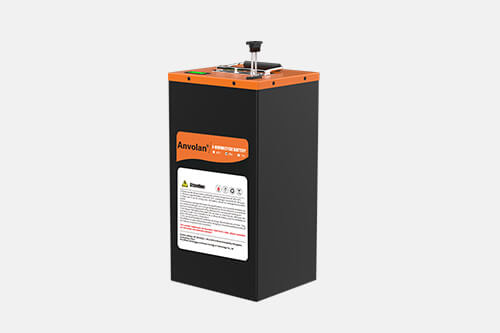
In application scenarios such as energy storage backup, low-speed equipment and small-power devices that replace traditional lead-acid batteries, thermal runaway, local heat accumulation and heat-induced circuit attenuation are the core pain points affecting battery service life and operational safety. Traditional lead-acid batteries feature a simple circuit structure without an intelligent temperature control system. Long-term charging and discharging easily cause overheated circuits, aging plates, high-temperature bulging and liquid leakage. Moreover, their production process involves excessive heavy metals, failing to meet modern environmental compliance standards. As a core upgrade alternative, RoHS compliant lead acid replacement batteries are mainly based on lithium iron phosphate systems. They abandon the extensive circuit layout and passive heat dissipation mode of traditional lead-acid batteries, and adopt refined heat dissipation circuit architecture, intelligent temperature control circuits, current and temperature equalization circuits, and low-loss circuit design. While meeting RoHS environmental protection standards with no lead or harmful substances, they completely eliminate the heat dissipation defects of traditional batteries, achieving low temperature rise, excellent temperature uniformity and high thermal stability, and becoming a core green upgrade solution for traditional lead-acid batteries.
The innovative core heat dissipation circuit architecture is the key difference between RoHS compliant replacement batteries and traditional lead-acid batteries. Traditional lead-acid batteries rely solely on natural shell heat dissipation without dedicated heat dissipation circuits. Uneven current distribution and high internal circuit resistance during charging and discharging easily cause local high-temperature accumulation at terminals and plates. In contrast, this lead acid replacement battery is equipped with an integrated heat dissipation circuit system. It adopts a widened low-internal-resistance copper foil circuit layout to optimize the current path of the main loop, shorten the conductive path, and greatly reduce circuit conduction loss and Joule heat generation. The circuit mainboard uses a high-thermal-conductivity aluminum-based PCB with embedded graphene thermal conductive pads to build an efficient full-area heat conduction channel. It quickly transfers heat generated by BMS protection circuits, power loops and equalization circuits to the battery shell, avoiding heat accumulation between circuits and cells and reducing heat risks at the source. Meanwhile, the zoned circuit layout physically isolates high-temperature power devices from precision temperature control components, eliminating local concentrated heat and ensuring stable and uniform circuit operating temperature.
The closed-loop regulation design of the intelligent temperature control heat dissipation circuit realizes adaptive heat dissipation under all working conditions. Equipped with high-precision NTC temperature sensing circuits, the battery arranges temperature measurement points at three core heat-generating areas: cells, circuit mainboard and terminals, collecting full-domain temperature data in real time and forming a millisecond-level temperature response system. Different from traditional lead-acid batteries that operate continuously at high temperatures without temperature protection, the dedicated temperature control circuit automatically adapts the heat dissipation mode according to charging and discharging rate, ambient temperature and load power. It adopts passive heat conduction under conventional working conditions to reduce standby power consumption; under high-temperature heavy-load and continuous high-current discharge conditions, it automatically activates intelligent current limiting and thermal equalization procedures, suppresses overheating of power devices through dynamic circuit voltage and current regulation, and accelerates heat dissipation to keep the battery temperature within a safe range, effectively preventing thermal attenuation and thermal runaway. In addition, the circuit has a built-in over-temperature self-locking protection logic to cut off power automatically when the temperature exceeds the threshold, avoiding circuit burnout and cell thermal runaway.
The optimized current equalization heat dissipation circuit and low-loss process greatly improve the long-term operational stability of the battery. Traditional lead-acid batteries suffer from poor circuit current equalization, large current deviation in multiple loops, and severe overheating of partial overload loops, leading to accelerated circuit aging and capacity attenuation during long-term operation. This RoHS compliant replacement battery adopts a high-precision symmetrical current equalization circuit combined with a low-loss synchronous rectification topology, which dynamically balances the current load of each branch, avoids overload overheating of single loops, and realizes uniform heat generation of the entire circuit. All key circuit components are made of RoHS-certified environmentally friendly high-temperature-resistant materials with no lead or cadmium, featuring anti-aging and high-temperature resistance. They maintain stable circuit performance in wide-temperature environments without precipitation of harmful substances, balancing environmental compliance and thermal stability. Meanwhile, the circuit supports an intelligent sleep heat dissipation mechanism, automatically reducing circuit power consumption and invalid heat generation in standby state to further lower the overall temperature rise of the battery and extend the service life of circuit components and cells.
The integrated design of structural heat dissipation and circuit protection enhances adaptability to complex working conditions. Leveraging the precise temperature regulation of the heat dissipation circuit, the battery is equipped with layered convection heat dissipation air ducts, forming a dual heat dissipation guarantee of "circuit temperature control + structural heat dissipation". It efficiently dissipates accumulated heat in confined spaces and solves the problem of poor heat dissipation and easy heat accumulation of traditional sealed batteries. In addition, an insulating heat dissipation protective layer is added to the circuit to ensure efficient heat conduction while preventing circuit erosion caused by humidity and dust, adapting to multiple scenarios including indoor energy storage, outdoor equipment and low-speed vehicles. Compared with traditional lead-acid batteries, the circuit failure rate of this product is reduced by more than 80%, and the capacity attenuation rate during the full life cycle is significantly slowed down. Fully compliant with RoHS environmental standards without heavy metal pollution, it is more suitable for modern green energy storage and equipment supporting needs.
In conclusion, the core advantages of RoHS compliant lead acid replacement batteries lie not only in upgraded environmentally friendly materials, but also in the comprehensive innovation of the heat dissipation circuit system. From low-loss heat conduction circuits and intelligent temperature control closed-loop systems to high-precision current equalization heat dissipation design and environmentally friendly component technology, it completely solves the industry pain points of traditional lead-acid batteries such as high heat generation, poor heat dissipation, missing temperature control and potential safety hazards. With an efficient and stable heat dissipation circuit system, the battery achieves the core advantages of low temperature rise, long service life, high safety and zero pollution. It perfectly replaces traditional lead-acid batteries and becomes a preferred green solution for industrial energy storage, civil equipment and low-speed power scenarios.
Be the first to receive our latest news, how-to user guides,
and exclusive deals! Subscribe now.

 Headquarter Address:10F, Building 25, N0. 179 Fengguan, Dongshen Road, Dongguan, Guangdong
 Factory Address:Building 3, Area D, Shengyang Science and Technology Industrial Park, East District of Suichuan County Industrial Park, Ji'an, Jiangxi
 Headquarter Telephone No.:+86 769 2366 8529
Factory Telephone No.:+86 796 6111618
 Contact Person:Kevin Chen
 Email Address:chen@xpower-world.com