Global layout
 +86 769 2366 8529




Time:2026-09-21 Views:43
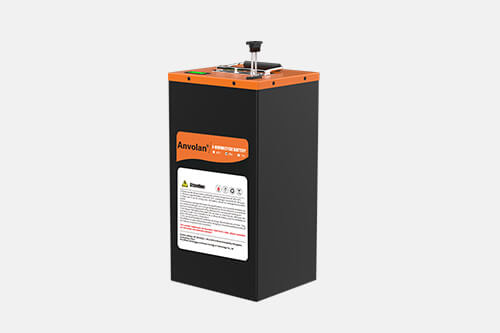
The 12V 100Ah lithium iron phosphate (LiFePO4) battery is a mainstream large-capacity energy storage solution widely used in off-grid photovoltaic energy storage, RV power supply, marine equipment, outdoor industrial duty and emergency backup systems, with a rated energy storage of 1280Wh. Featuring excellent resistance characteristics, it thoroughly solves the core pain points of traditional lead-acid batteries such as high internal resistance, high energy loss, large load voltage drop and severe heat generation under heavy loads. In battery power supply systems, internal resistance and load matching resistance are core parameters that determine energy conversion efficiency, load capacity, thermal stability and equipment endurance. Slight differences in resistance values directly affect the power supply accuracy and long-term operating cost of the entire energy storage system. From the perspective of resistance technology, this paper systematically analyzes the basic internal resistance parameters, dynamic resistance performance, load matching characteristics, resistance loss control and full-scenario working condition adaptation value of the 12V 100Ah LiFePO4 battery, and deeply explains its core technical advantages of low resistance and high efficiency.
In terms of basic static internal resistance parameters, the 12V 100Ah LiFePO4 battery has industry-leading ultra-low internal resistance, serving as the core foundation for its efficient power supply. Composed of four series-connected 3.2V 100Ah LiFePO4 cells, the single cell DC internal resistance is as low as 0.3–0.5mΩ, and the overall AC internal resistance of the battery pack is strictly controlled within 20–50mΩ, far superior to the 8–10mΩ internal resistance of equivalent lead-acid batteries. Due to the physical characteristic of high internal resistance, traditional lead-acid batteries have large charge migration resistance and high implicit loss under static standby and light-load conditions. In contrast, LiFePO4 cells feature stable crystal structure, minimal resistance during lithium ion de-embedding and migration, high static internal resistance consistency and no sharp resistance increase after long-term use. The ultra-low and stable static internal resistance ensures almost no invalid power consumption during standby and light-load operation, reduces energy storage loss from the source and realizes long-term power retention.
Dynamic load resistance characteristics determine the power supply stability and load fault tolerance of batteries under variable and heavy-load working conditions. Different from fixed static internal resistance, battery dynamic resistance fluctuates slightly with load current, operating rate and ambient temperature, acting as a key indicator to distinguish energy storage battery performance. The 12V 100Ah LiFePO4 battery presents excellent dynamic resistance stability, with negligible fluctuation within the conventional operating rate range of 0.1C to 1C, and no sharp resistance rise with increasing load. Under working conditions such as daily light-load photovoltaic energy storage, intermittent equipment operation and instantaneous high-power equipment startup, the dynamic resistance remains at a low level, effectively inhibiting the rise of polarization resistance and avoiding common defects such as rapid voltage drop and output power compression caused by increased load. Different from traditional batteries with sharply increased internal resistance, severe voltage drop and power attenuation under heavy loads, the adaptive dynamic resistance characteristics ensure stable output voltage and power for fluctuating loads.
The core engineering value of ultra-low internal resistance lies in extremely low Joule heat loss and full-condition low-energy operation. According to the Joule loss law, battery thermal loss is positively correlated with internal resistance and the square of current. Higher internal resistance leads to more heat generation and higher invalid energy loss during charging and discharging. Benefiting from ultra-low internal resistance, the 12V 100Ah LiFePO4 battery significantly reduces thermal loss in charge-discharge cycles, with less heat accumulation and high energy absorption efficiency exceeding 97% during charging, and a discharge energy conversion rate up to 98%. Most stored power can be effectively output to drive loads, completely solving the problems of heat generation, power waste and virtual capacity loss of traditional batteries. Meanwhile, low internal resistance controls battery temperature rise effectively, with no abnormal heat accumulation during long-term full-load operation, avoiding cell aging, capacity attenuation and the vicious cycle of further increased internal resistance caused by high temperature, and greatly extending the battery cycle life.
Internal resistance equalization and BMS resistance regulation ensure long-term internal resistance consistency and operational safety of the battery pack. The core hidden danger of multi-series battery packs lies in unbalanced internal resistance of single cells. Individual cells with high internal resistance cause uneven charging and discharging of the whole pack, leading to early power depletion, overcharge overheating and sudden capacity drop. The 12V 100Ah LiFePO4 battery undergoes strict internal resistance sorting before delivery, with minimal internal resistance difference among four series cells and highly consistent overall resistance. Each cell bears uniform load and consistent loss during charge-discharge cycles. Equipped with an intelligent built-in BMS, the battery monitors loop resistance, operating current and temperature in real time, automatically triggering current limiting and power-off protection under abnormal resistance fluctuation and local overload conditions. It corrects internal resistance deviation after long-term use through active and passive balancing technology, maintains overall resistance stability, and prevents performance attenuation and potential safety hazards caused by resistance imbalance.
Wide-temperature resistance stability enables the battery to adapt to complex high and low temperature working conditions and avoid resistance failure in extreme environments. The internal resistance of ordinary batteries rises sharply at low temperatures, resulting in reduced load capacity and equipment startup failure; while internal resistance imbalance intensifies at high temperatures with doubled loss and heat generation. In contrast, the 12V 100Ah LiFePO4 battery features excellent wide-temperature resistance performance with controllable internal resistance fluctuation ranging from -20℃ to 55℃. It avoids severe internal resistance surge and lithium precipitation loss at low temperatures, as well as resistance disorder and thermal runaway risks at high temperatures. It can maintain stable resistance output, load capacity and energy efficiency in extreme scenarios such as outdoor low-temperature energy storage in winter, high-temperature operation in closed equipment cabins in summer, and field duty with large temperature differences, perfectly adapting to off-grid photovoltaic, vehicle-mounted, ship-mounted and outdoor security working conditions.
In terms of scenario adaptation, excellent resistance characteristics make the 12V 100Ah LiFePO4 battery the optimal choice for large-capacity energy storage. In off-grid photovoltaic energy storage scenarios, ultra-low internal resistance maximizes the absorption of photovoltaic pulse current, reduces energy storage link loss and improves photovoltaic power utilization. In vehicle and marine high-power equipment scenarios, stable dynamic resistance supports instantaneous high-current load and ensures smooth equipment startup and linear power output. In long-term unattended duty scenarios, low static internal resistance reduces self-consumption and heat generation to realize long-term low-loss operation. Compared with traditional energy storage batteries, its core advantages of low resistance, stable resistance, low loss and anti-attenuation perfectly solve the pain points of high energy consumption, poor stability and short service life of large-capacity energy storage systems, delivering higher operation and maintenance cost performance and power supply reliability.
In conclusion, resistance characteristics constitute the core technical barrier that distinguishes the 12V 100Ah LiFePO4 battery from traditional energy storage power supplies. Ultra-low static internal resistance reduces basic energy consumption, stable dynamic resistance adapts to full-condition loads, balanced resistance design ensures long-term stability, and wide-temperature resistance characteristics adapt to complex environments. The superposition of multiple resistance advantages realizes high-efficiency, low-loss, high-stability and long-service-life power supply effects. With the popularization of distributed energy storage, outdoor backup energy and mobile high-power power supply, the 12V 100Ah LiFePO4 battery with excellent resistance performance will continuously replace traditional lead-acid batteries and become the core power support for various medium and large-scale energy storage systems.
Be the first to receive our latest news, how-to user guides,
and exclusive deals! Subscribe now.

 Headquarter Address:10F, Building 25, N0. 179 Fengguan, Dongshen Road, Dongguan, Guangdong
 Factory Address:Building 3, Area D, Shengyang Science and Technology Industrial Park, East District of Suichuan County Industrial Park, Ji'an, Jiangxi
 Headquarter Telephone No.:+86 769 2366 8529
Factory Telephone No.:+86 796 6111618
 Contact Person:Kevin Chen
 Email Address:chen@xpower-world.com