Global layout
 +86 769 2366 8529




Time:2026-05-12 Views:175
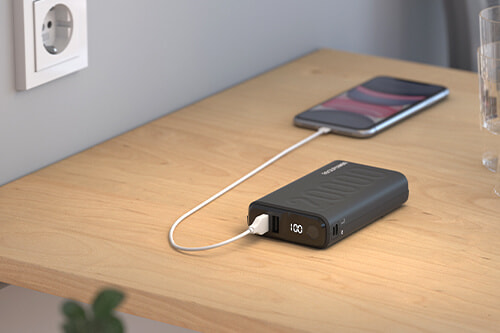
The service life of a power bank is mainly determined by the service life of its internal lithium-ion battery, which is usually measured by the number of charge-discharge cycles (usually 500-1000 cycles). After a certain number of cycles, the battery capacity will gradually decrease, and when the capacity drops to 80% of the original capacity, the power bank’s performance will be significantly reduced, and it may need to be replaced. However, through scientific use and proper maintenance, we can effectively extend the service life of the power bank and delay the aging of the battery. The core method to extend the service life is to protect the battery from damage caused by overcharging, over-discharging, high temperature, and other factors.
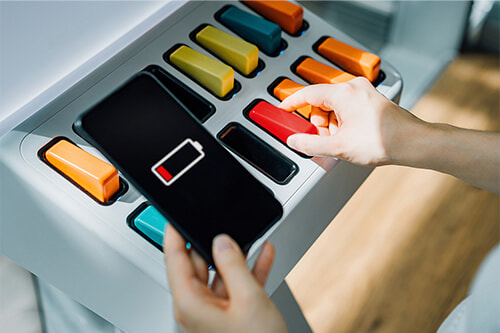
First, control the charge-discharge range of the battery. As mentioned earlier, lithium-ion batteries have a memory effect, but this effect is very weak, and overcharging or over-discharging is the main cause of battery damage. Therefore, it is recommended to keep the power bank’s remaining power between 20% and 80% as much as possible. Avoid charging the power bank to 100% for a long time and then leaving it plugged in, and also avoid using it until the power is completely exhausted. For example, when the power bank’s remaining power is about 30%, start charging it, and stop charging it once it reaches 100% (or unplug it after it is fully charged for a short time). If the power bank is not used for a long time, it is recommended to charge it to 50%-60% first and then store it, which can effectively prevent the battery from over-discharging and extend its service life.
Second, avoid using the power bank in extreme temperatures and maintain a stable working environment. High temperature is the biggest enemy of lithium-ion batteries, as it will accelerate the chemical reaction inside the battery, leading to the loss of active substances and the reduction of battery capacity. Therefore, when using or storing the power bank, avoid high-temperature environments such as direct sunlight, near a heater, or in a closed car. In summer, you can place the power bank in a cool and ventilated place when charging or using it; in winter, avoid using it outdoors for a long time. In addition, avoid using the power bank while it is charging, because this will generate a lot of heat, which will cause the internal temperature of the power bank to rise, accelerating battery aging. If you need to use the device while charging, it is recommended to charge the device directly through a charger instead of using the power bank as an intermediary.
Third, use and maintain the power bank regularly. Even if you do not use the power bank for a long time, it is recommended to charge and discharge it once every 1-2 months. This can activate the battery’s active substances, prevent the battery from entering a deep sleep state, and avoid irreversible damage to the battery. In addition, regularly check the power bank’s appearance, charging ports, and cables for damage. If you find any damage (such as cracks, swelling, or loose ports), stop using it immediately and send it to a professional for maintenance or replacement. At the same time, choose a high-quality power bank with reliable quality and safety certification when purchasing, as inferior power banks not only have a short service life but also have potential safety hazards. A high-quality power bank with a good battery management system (BMS) can automatically protect the battery from overcharging, over-discharging, and over-temperature, which is also an important guarantee for extending the service life.
Be the first to receive our latest news, how-to user guides,
and exclusive deals! Subscribe now.

 Headquarter Address:10F, Building 25, N0. 179 Fengguan, Dongshen Road, Dongguan, Guangdong
 Factory Address:Building 3, Area D, Shengyang Science and Technology Industrial Park, East District of Suichuan County Industrial Park, Ji'an, Jiangxi
 Headquarter Telephone No.:+86 769 2366 8529
Factory Telephone No.:+86 796 6111618
 Contact Person:Kevin Chen
 Email Address:chen@xpower-world.com