Global layout
 +86 769 2366 8529




Time:2026-05-25 Views:199
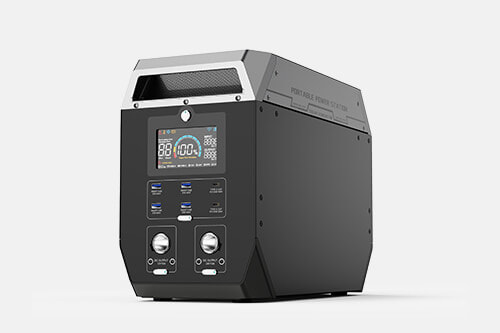
Portable power stations have become indispensable tools for outdoor activities, emergency backup, and off-grid power supply, with charging technology being the core factor determining their usability, efficiency, and user experience. In recent years, the integration of multiple charging technologies has become the main trend in portable power station innovation, aiming to solve the pain points of single charging methods—such as slow charging speed, limited charging scenarios, and poor compatibility. The integration of charging technologies not only improves charging efficiency but also expands the application scope of portable power stations, meeting the diverse needs of users in different scenarios.
The integration of AC fast charging and solar charging is one of the most mature and widely used technologies. AC fast charging, represented by technologies like EcoFlow’s X-Stream, can charge a portable power station from 0% to 80% in less than 2 hours, significantly reducing charging time compared to traditional AC charging. Solar charging, on the other hand, leverages renewable energy, allowing users to recharge the power station outdoors without relying on grid power. Modern portable power stations are equipped with MPPT (Maximum Power Point Tracking) technology, which optimizes the efficiency of solar energy conversion, ensuring that the battery can quickly absorb solar energy even in low-light conditions. The combination of AC fast charging and solar charging enables dual-input charging, further shortening recharge time and improving convenience for outdoor users.
Wireless induction charging integration is another emerging trend in portable power station technology. By embedding induction charging surfaces into power stations, users can charge compatible devices (such as smartphones, tablets, and wireless earbuds) directly on the power station surface, eliminating the need for messy cables and separate charging pads. This cable-free design not only enhances user experience but also reduces tripping hazards, making it ideal for outdoor events, camping, and work sites. Advanced induction charging systems also include safety features such as foreign object detection (FOD) and intelligent temperature control, which prevent overheating and fire risks caused by metallic debris or overcharging.
The integration of multi-protocol charging and smart charging management further enhances the versatility and safety of portable power stations. Modern power stations support multiple charging protocols, such as USB-C PD, QC, and PPS, ensuring compatibility with a wide range of devices, from smartphones to laptops and small appliances. Smart charging management systems, powered by AI, can automatically adjust charging current and voltage according to the device’s needs, preventing overcharging, over-discharging, and short circuits. For example, the Jackery Explorer 1000 Pro supports ultra-fast solar charging (0% to 80% in 1.8 hours) and dual 100W PD ports, while the Bluetti AC200P supports 500W solar input and dual charging (AC + solar), catering to both emergency and outdoor power needs. As portable power stations become more popular, the integration of charging technologies will continue to evolve, focusing on efficiency, convenience, and sustainability.
Be the first to receive our latest news, how-to user guides,
and exclusive deals! Subscribe now.

 Headquarter Address:10F, Building 25, N0. 179 Fengguan, Dongshen Road, Dongguan, Guangdong
 Factory Address:Building 3, Area D, Shengyang Science and Technology Industrial Park, East District of Suichuan County Industrial Park, Ji'an, Jiangxi
 Headquarter Telephone No.:+86 769 2366 8529
Factory Telephone No.:+86 796 6111618
 Contact Person:Kevin Chen
 Email Address:chen@xpower-world.com