Global layout
 +86 769 2366 8529




Time:2026-05-15 Views:29
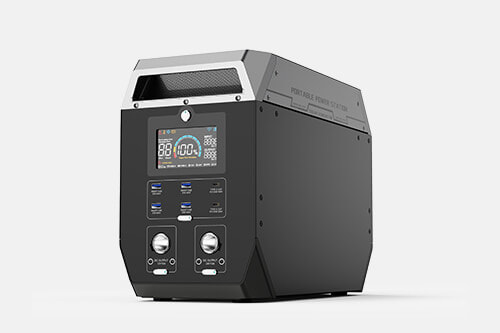
The overload protection mechanism is another essential safety feature of portable power stations, designed to prevent damage caused by operating the device beyond its rated power capacity. Overload occurs when the total power consumption of connected devices exceeds the portable power station’s continuous output rating, or when a single device draws more power than a specific output port can handle. This common issue can arise in everyday use—for example, connecting a high-wattage appliance like a microwave or space heater to a power station with a lower continuous output rating, or plugging multiple high-draw devices (such as laptops, refrigerators, and power tools) into the station simultaneously. Without overload protection, the excessive current draw can overheat the inverter, damage the battery, degrade internal components, and even pose a fire risk. As such, overload protection is a critical design element that ensures the longevity and safety of portable power stations.
The overload protection mechanism operates through a combination of real-time monitoring, intelligent control, and graduated response strategies, tailored to different types of overload scenarios. At the core of this mechanism is the BMS, which continuously monitors the total power output of the station and the power draw of each individual port (AC, DC, USB-C, etc.). Each portable power station has a predefined continuous output rating (typically ranging from 500W to 3000W) and a surge rating (a temporary higher power output for a few seconds, designed to handle devices with high startup power demands, such as motors or compressors). When the BMS detects that the continuous power draw exceeds the rated capacity, or that a single port is overloaded, it triggers a protective response to prevent damage.
The protective response to overload varies depending on the severity and duration of the overload, but typically follows a graduated approach to minimize disruption while ensuring safety. In mild cases—such as a temporary surge in power draw that does not exceed the surge rating—the BMS may throttle the output power slightly to bring it back within safe limits, allowing the connected devices to continue operating without interruption. In more severe cases—where the continuous power draw exceeds the rated capacity for an extended period—the BMS will activate a temporary shutdown of the affected output ports or the entire power station. This shutdown is often accompanied by visual or auditory alerts, such as a flashing “Overload” icon on the display, a beeping sound, or rapid spinning of cooling fans before shutdown, to notify the user of the issue. Some models also feature a dedicated overload protection button, which must be pressed to reset the station after the overload is resolved.
Practical usage guidelines and real-world testing further highlight the importance of overload protection. For example, devices with motors or heating elements (such as refrigerators, kettles, or power tools) often require 2 to 4 times their running wattage at startup, which can trigger a temporary surge. High-quality portable power stations with robust overload protection can handle these surges within their surge rating, while preventing sustained overload. To avoid overload, users are advised to check the power consumption of connected devices before use, ensuring that the total power draw does not exceed the station’s continuous output rating. Additionally, reputable manufacturers conduct rigorous testing of their overload protection mechanisms, simulating real-world scenarios to ensure that the system activates reliably and consistently. For instance, in lab tests, deliberate overload simulations trigger automatic shutdown within seconds, preventing overheating and component damage. This level of reliability makes overload protection a key factor in choosing a portable power station, especially for users who rely on the device for heavy-duty applications like RV trips, construction sites, or emergency home backup.
Be the first to receive our latest news, how-to user guides,
and exclusive deals! Subscribe now.

 Headquarter Address:10F, Building 25, N0. 179 Fengguan, Dongshen Road, Dongguan, Guangdong
 Factory Address:Building 3, Area D, Shengyang Science and Technology Industrial Park, East District of Suichuan County Industrial Park, Ji'an, Jiangxi
 Headquarter Telephone No.:+86 769 2366 8529
Factory Telephone No.:+86 796 6111618
 Contact Person:Kevin Chen
 Email Address:chen@xpower-world.com