Global layout
 +86 769 2366 8529




Time:2026-09-22 Views:125
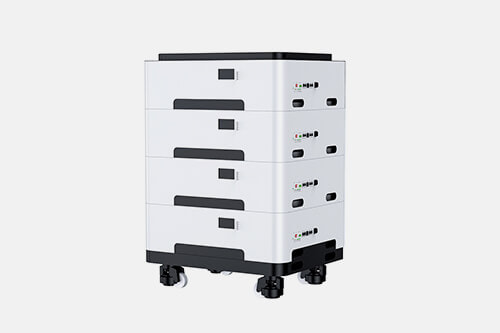
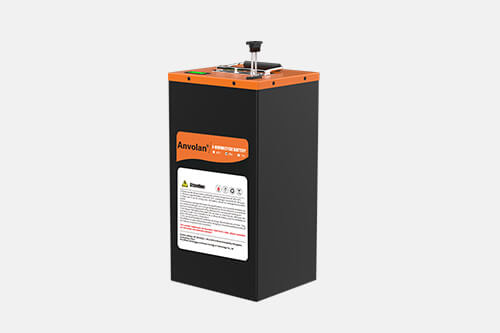
In off-grid solar energy storage, RV and marine power supply, industrial backup power, low-speed electric vehicles and base station standby power applications, the storage battery acts as the core foundation of the whole power supply system. Whether the system can continuously deliver stable power and resist load fluctuation, ambient temperature change and long-term charge-discharge cycling directly affects project maintenance cost and equipment operation safety. Many energy storage failures are not caused by damaged inverters or distribution cabinets, but system instability from battery capacity degradation, poor cell voltage consistency, and weak temperature adaptability. Ternary lithium batteries carry thermal runaway risks, while conventional lead-acid batteries have short cycle life and rapid performance drop after deep discharge, failing to meet long-term stable power supply requirements. A professional lifepo4 200ah battery adopts the inherently stable crystal structure of lithium iron phosphate, standardized module design and built-in BMS battery management system. It addresses unstable power supply issues of energy storage systems from five dimensions: cell chemical stability, module consistency, anti-disturbance capability under variable loads, wide-temperature operation performance and long-cycle stability, delivering reliable energy storage units for stationary and mobile energy storage scenarios.
From the perspective of cell chemical stability, the inherent stable properties of lifepo4 material form the underlying guarantee for stable operation of the lifepo4 200ah large-capacity battery. The lattice structure of lithium iron phosphate is robust. During charge and discharge cycles, lithium ion intercalation and deintercalation will not trigger lattice collapse. Even under abnormal conditions such as overcharge or local high temperature, violent chemical reactions rarely occur, bringing much better thermal stability than ternary materials. Ordinary large-capacity batteries undergo drastic internal chemical changes during high-current charge and discharge, easily causing accelerated aging, gas generation and cell bulging, which further leads to voltage imbalance of the whole battery pack. For the lifepo4 200ah cell, chemical changes remain mild within rated current range, with few side reactions inside the cell. Its flat voltage platform keeps small voltage variation for single cells. Such stable electrochemical features enable the lifepo4 200ah battery to maintain steady voltage output during continuous discharge and intermittent high-power output. It reduces system instability risks triggered by chemical degradation of cells, minimizes battery failure from the root and ensures long-term safe operation of energy storage systems.
Module consistency is the key indicator for the lifepo4 200ah battery to sustain stable performance of the whole pack. Large-capacity battery packs are assembled with multiple series-connected cells. The stability bottleneck of the whole pack usually comes from individual cells with inconsistent parameters. If cells differ greatly in capacity, internal resistance and self-discharge rate, repeated charge and discharge cycles will make some cells reach cut-off voltage in advance while others remain undercharged or undischarged. This results in rapid loss of available capacity, rising voltage difference between cells, and eventually BMS protection and system shutdown. High-quality lifepo4 200ah batteries go through multi-round capacity sorting, internal resistance matching and self-discharge screening before delivery. All cells inside one module have highly unified parameters. During long-term cycling, cells degrade at a similar rate and the voltage difference between individual cells stays at a very low level. Even under continuous full-load operation and long-time float charge, module voltage will not diverge sharply. It effectively prevents the degradation of single cells from dragging down the whole energy storage system, reduces unexpected shutdown failures and maintains stable operation of the entire power supply system.
Against dynamic load disturbance, the lifepo4 200ah battery features excellent stability to resist load changes. Loads of energy storage systems are not constant. Solar storage systems charge in daytime and discharge continuously at night; RV and industrial backup power often face instantaneous high-power load startup with rapid current surge. Ordinary large-capacity batteries have relatively high internal resistance. Severe voltage drop occurs under instantaneous high current, triggering inverter low-voltage alarm, system restart and power interruption. The lifepo4 200ah cell has low internal resistance and strong load capacity. When facing sudden load changes, voltage drop stays within controllable range and voltage recovers quickly. When high-power equipment startup brings current shock, the battery output voltage will not oscillate violently. It can continuously supply smooth power to inverters and electric loads, suppress system fluctuation caused by load disturbance and guarantee stable operation of back-end electrical equipment, avoiding power supply tripping due to transient load impact.
Wide-temperature environmental adaptability determines the continuous stability of the lifepo4 200ah battery in complex field environments. Outdoor solar power stations and field mobile energy storage devices must endure high-temperature exposure in summer and extreme cold in winter. Many storage batteries suffer sharp rise of internal resistance at low temperatures, leading to reduced available capacity and insufficient output power; continuous high temperature will accelerate cell aging and shorten service life. The lifepo4 200ah battery is optimized for wide-temperature operation. It can maintain basic working capacity between -20℃ and 60℃. Combined with BMS temperature management logic, it activates preheating at low temperatures and triggers current limiting protection at high temperatures. In field locations with large seasonal temperature differences, the battery will not experience abrupt performance drop with ambient temperature changes. Its charge and discharge status stays controllable to keep the energy storage system available all year round and mitigate power instability risks brought by environmental conditions.
Long-term cycle stability directly affects the system reliability of energy storage projects throughout their lifecycle. Energy storage equipment requires repeated charge and discharge all year round, and battery capacity decay rate determines the service life of the system. Lead-acid batteries only have hundreds of cycles, and degradation accelerates after deep discharge, requiring batch replacement after 2 to 3 years of use. The lifepo4 200ah lithium iron phosphate battery achieves over 6000 cycles. After thousands of cycles under standard working conditions, the remaining capacity can still stay above 80%. Its capacity decay curve is gentle without sudden capacity drop in the middle and later service period. With the built-in BMS balancing function, voltage difference between cells is continuously corrected to slow down deterioration of module consistency. For scenarios such as off-grid solar base stations and backup power requiring long-time unattended operation, the lifepo4 200ah battery can maintain stable energy storage capacity over many years, greatly reducing battery replacement frequency and lowering risks of system paralysis caused by battery aging.
The built-in BMS battery management system serves as intelligent control to maintain system stability for the lifepo4 200ah battery, conducting real-time monitoring and protection under all working conditions. BMS continuously collects single cell voltage, total pack voltage, loop current and multi-point temperature data, implementing overcharge, overdischarge, overcurrent, short circuit, high-temperature and low-temperature protection in real time. When abnormal conditions occur, BMS accurately limits charge and discharge current and cuts off the circuit if necessary to prevent fault escalation. Meanwhile, passive and active balancing functions continuously correct cell voltage difference to avoid poor consistency after long-time operation. BMS is not merely a simple fault cut-off device, but a control unit that keeps the battery module running steadily. It ensures the lifepo4 200ah battery always works within safe and stable ranges under various complex operating conditions.
In conclusion, stable operation of energy storage systems relies on electrochemical stability, module consistency, anti-load-disturbance performance, wide-temperature tolerance and long-cycle durability of energy storage units. The lifepo4 200ah battery leverages stable crystal structure of lithium iron phosphate, strictly sorted cell modules, low internal resistance for shock resistance, wide-temperature adaptability and supporting intelligent BMS control system. It comprehensively solves common stability defects of large-capacity storage batteries including voltage imbalance, voltage drop under load, temperature sensitivity and rapid degradation. It provides long-cycle and highly reliable energy storage power solutions for off-grid solar storage, RV power, industrial backup power and other applications.
Be the first to receive our latest news, how-to user guides,
and exclusive deals! Subscribe now.

 Headquarter Address:10F, Building 25, N0. 179 Fengguan, Dongshen Road, Dongguan, Guangdong
 Factory Address:Building 3, Area D, Shengyang Science and Technology Industrial Park, East District of Suichuan County Industrial Park, Ji'an, Jiangxi
 Headquarter Telephone No.:+86 769 2366 8529
Factory Telephone No.:+86 796 6111618
 Contact Person:Kevin Chen
 Email Address:chen@xpower-world.com