Global layout
 +86 769 2366 8529




Time:2026-08-08 Views:128
As a benchmark brand of high-end low-speed electric golf carts, Tomberlin’s E-Merge and Engage series have become mainstream models for golf course operation, high-end community commuting and scenic spot sightseeing, relying on mature AC power systems, 450A intelligent controllers and regenerative braking technology. For Tomberlin carts operating with high frequency and long duration, the energy consumption efficiency of the battery directly determines the vehicle’s power cost, cruising performance and equipment loss, serving as the core key to long-term operational cost reduction and efficiency improvement. Traditional original lead-acid batteries are plagued by high energy consumption loss, low power conversion efficiency and poor working condition adaptability, resulting in high long-term power consumption costs and rapid cruising range attenuation, which greatly increase operational expenses. The dedicated LiFePO4 phosphate iron lithium battery fully compatible with all Tomberlin golf cart models is deeply calibrated for Tomberlin’s original power architecture. With the core advantages of ultra-high power utilization rate, ultra-low self-consumption and full-working-condition energy saving, it fundamentally reduces overall vehicle energy consumption and acts as an optimal upgraded solution to replace traditional lead-acid batteries for long-term energy-saving operation.
From the perspective of core energy consumption pain points, the adaptation shortcomings of traditional lead-acid batteries with Tomberlin’s power system are the main cause of high vehicle energy consumption. Tomberlin golf carts are equipped with high-performance brushless AC motors and intelligent electronic control systems, which have strict requirements on battery discharge stability and power transmission efficiency. However, the power conversion efficiency of traditional lead-acid batteries is only 75%-80%, and nearly 30% of electric energy is lost in the form of thermal energy, failing to fully meet the vehicle’s power output demands. Under daily driving, slope climbing and heavy-load commuting conditions, lead-acid batteries suffer from severe voltage fluctuation and unstable discharge efficiency, causing repeated power consumption and idle power loss of the motor. The power consumption per mileage is much higher than the standard value. Meanwhile, lead-acid batteries have severe charge-discharge loss, with a large amount of invalid energy consumption during each charging cycle. With the extension of service time, battery capacity attenuation and internal resistance increase will continuously aggravate energy loss. The energy consumption loss can rise by more than 30% after 3 years of use, which not only greatly reduces the cruising range but also keeps increasing monthly and annual power costs, bringing a heavy energy consumption burden to large-scale operation of golf courses and scenic spots.
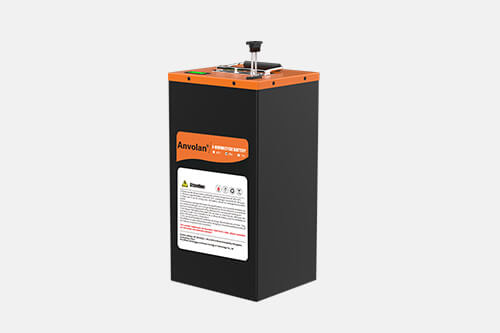
Fully adapted to Tomberlin models, this dedicated LiFePO4 battery optimizes the overall vehicle energy consumption system in an all-round way from cell structure to adaptation logic, greatly improving power utilization efficiency. Adopting high-consistency lithium iron phosphate cells, it accurately matches the 48V power specifications of all Tomberlin series including E-Merge SS, Defender and Engage, and is perfectly compatible with the original Sevcon intelligent controller and regenerative braking system. Its power conversion efficiency reaches over 95%, 15 percentage points higher than traditional lead-acid batteries, which significantly reduces thermal loss and power waste during charging and discharging. The battery supports constant voltage and stable current output with extremely low internal resistance. It can maintain efficient power transmission under all working conditions such as flat road cruising, steep slope climbing and frequent low-speed start-stop, eliminating additional power consumption caused by idle power loss and voltage instability. It converts every unit of electricity into driving power to the maximum extent and reduces unit mileage energy consumption fundamentally.
In terms of actual working condition energy consumption, the lithium battery shows outstanding energy-saving advantages and fully adapts to the high-frequency multi-scenario usage characteristics of Tomberlin golf carts. Golf course daily patrols, scenic spot loop commuting and community short-distance travel are characterized by frequent start-stop, low-speed constant-speed driving and intermittent operation. Traditional lead-acid batteries experience sharp energy consumption spikes during start-stop and serious invalid power consumption under no-load and light-load conditions. In contrast, this LiFePO4 battery adapts to Tomberlin’s original power program with fast response and precise current output, causing no energy consumption peak fluctuation during start-stop and extremely low no-load standby self-consumption. Meanwhile, it matches the vehicle’s regenerative braking energy recovery mechanism, efficiently recycles and reuses redundant power generated by braking and downhill driving to further reduce overall energy consumption. Under measured working conditions with the same load and driving mileage, the single-trip power consumption of Tomberlin golf carts equipped with LiFePO4 batteries is 20%-25% lower than that of lead-acid batteries, delivering extremely significant power-saving effects in long-term high-frequency operation.
The ultra-low self-discharge and long-term low-loss characteristics further amplify the energy-saving advantages of the battery, completely solving the problem of idle energy waste of traditional batteries. Tomberlin golf carts often face intermittent use, night parking and off-season idling. Traditional lead-acid batteries have an extremely high self-discharge rate, with 3%-5% power self-consumption per day during idle storage. Long-term parking causes continuous power loss, which not only wastes electric energy but also damages the battery due to sulfation and further aggravates energy consumption loss in subsequent use. In comparison, the Tomberlin-specific LiFePO4 battery is equipped with an intelligent energy consumption management BMS system, with a monthly self-discharge rate lower than 3% and daily self-consumption less than 0.1%, almost no power loss during long-term idle storage. It eliminates invalid energy consumption caused by idle power loss and repeated recharging. In addition, the battery has a cycle life of 3000 to 5000 times. The internal resistance remains stable throughout the 8-10 year long service life without capacity attenuation and annual rising energy consumption, maintaining long-term low-energy and high-efficiency operation and avoiding the disadvantage of increasing power consumption of lead-acid batteries in the later stage.
The lightweight energy-saving design effectively reduces the load energy consumption of Tomberlin golf carts and realizes dual energy saving. Traditional lead-acid batteries of the same capacity are extremely heavy, greatly increasing the chassis load of Tomberlin golf carts. The motor needs to consume more electric energy to drive the vehicle, and the additional energy consumption caused by load is particularly obvious during starting and climbing. The weight of this LiFePO4 battery is only 40% of equivalent lead-acid batteries, which significantly reduces the overall vehicle weight, lowers the operating load of motors, suspensions and tires, and reduces invalid energy consumption caused by driving resistance. The lightweight body paired with efficient power output makes the vehicle’s power output smoother and more flexible, further reducing power consumption per mileage, cutting indirect operational costs caused by equipment wear, and achieving dual benefits of energy saving and loss reduction.
Stable full-temperature-range energy consumption adapts to multi-environment working conditions and eliminates energy waste caused by extreme temperatures. Traditional lead-acid batteries have poor adaptability to high and low temperatures. The internal resistance surges and power consumption accelerates in high-temperature summer environments, while the capacity drops sharply and power conversion efficiency declines severely in low-temperature winter environments, resulting in over 40% energy consumption loss in extreme weather, which seriously affects user experience and increases power costs. This Tomberlin-specific LiFePO4 battery operates stably in the full temperature range from -20℃ to 60℃, maintaining over 90% power conversion efficiency in both high and low temperature environments. It resists high-temperature exposure on golf courses in summer and low-temperature cold in winter, ensuring stable and low-energy operation in all seasons. Equipped with a customized intelligent BMS system, it dynamically adjusts discharge current and accurately controls energy output to avoid energy waste and potential safety hazards caused by overload and abnormal discharge, guaranteeing energy-saving stability in various scenarios.
In terms of long-term large-scale operational energy cost accounting, the LiFePO4 battery has remarkable energy-saving value. After replacing with lithium batteries, each Tomberlin golf cart can save more than 20% of power annually. For golf courses and scenic spots with dozens or hundreds of devices, the overall annual power expenditure can be greatly reduced. Meanwhile, the battery’s maintenance-free, zero-loss and long-life features completely eliminate implicit costs caused by frequent replacement, maintenance and shutdown failures of lead-acid batteries, requiring no repeated human and material resource investment for equipment energy consumption maintenance. Compared with lead-acid batteries that need replacement every 2-3 years and have rising energy consumption in the later stage, a single lithium battery can operate stably for 8 to 10 years with far lower full-life-cycle energy consumption cost, making it the optimal upgrade choice for long-term energy saving and cost reduction of Tomberlin golf carts.
In conclusion, the LiFePO4 battery compatible with Tomberlin golf carts solves the core pain points of traditional lead-acid batteries such as high energy consumption, large loss, poor adaptability and increased power consumption in later stages. With all-round advantages of high power conversion rate, low self-consumption, full-working-condition energy saving, lightweight resistance reduction and full-temperature stable energy consumption, it perfectly matches the power operation logic of all Tomberlin models. Whether for daily personal commuting or large-scale high-frequency commercial operation, it can continuously reduce power consumption and operational costs while ensuring stable cruising and strong vehicle power, serving as a high-quality exclusive power product for energy-saving upgrading and long-term consumption reduction of Tomberlin golf carts.
Be the first to receive our latest news, how-to user guides,
and exclusive deals! Subscribe now.

 Headquarter Address:10F, Building 25, N0. 179 Fengguan, Dongshen Road, Dongguan, Guangdong
 Factory Address:Building 3, Area D, Shengyang Science and Technology Industrial Park, East District of Suichuan County Industrial Park, Ji'an, Jiangxi
 Headquarter Telephone No.:+86 769 2366 8529
Factory Telephone No.:+86 796 6111618
 Contact Person:Kevin Chen
 Email Address:chen@xpower-world.com