Global layout
 +86 769 2366 8529




Time:2026-09-21 Views:193
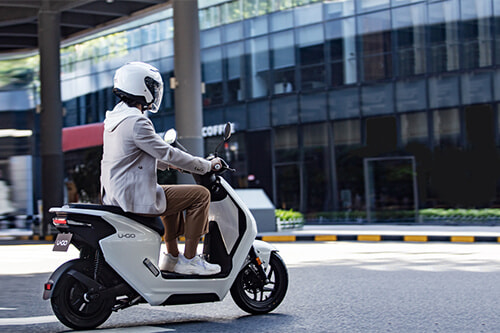
The Citycoco wide-tire electric scooter is popular for short-distance travel and suburban leisure rides, featuring a rugged appearance, heavy load capacity and strong power. The Citycoco scooter battery acts as the core power source of the whole vehicle. Unlike batteries for small ordinary electric scooters, Citycoco scooters are equipped with high-power motors and often operate under heavy-duty conditions such as two-person loads, steep hill climbing and bumpy suburban rides. It sets higher requirements on the battery’s discharge capability, safety protection and cycle durability. Many owners find after comparing the original lead-acid battery with upgraded lithium batteries that battery quality directly affects riding power, mileage and overall service life. From the perspective of safety and durability, this article systematically analyzes the cell quality, BMS safety protection, cycle attenuation characteristics, environmental adaptability and long-term practical value of Citycoco scooter lithium batteries.
Most Citycoco scooters are fitted with 1500W~2000W high-power brushless motors. Instant high current will be generated during startup, rapid acceleration and heavy-load climbing. Inferior batteries adopt grade B or C recycled cells with high internal resistance. Voltage drops rapidly under high-current discharge, resulting in weak climbing power and sluggish acceleration. Long-term high-current operation also brings overheating risks. Premium Citycoco scooter batteries use brand-new grade A cells, available in ternary lithium and LiFePO4 options. Ternary lithium cells deliver higher energy density and longer mileage under the same volume, ideal for users pursuing long-range travel. LiFePO4 versions feature stronger thermal stability, high temperature resistance, superior safety and longer cycle life. Both solutions adopt low internal resistance assembly technology. Faced with instantaneous high current output, they maintain a stable voltage platform with low voltage drop, continuously supplying sufficient power for the motor to fully unlock the performance of Citycoco high-power motors and guarantee stable power during two-person riding and uphill travel.
Safety protection is an essential core indicator of Citycoco batteries. These scooters are frequently used outdoors and exposed to sunlight, rain and continuous vibration. Insufficient battery protection easily causes failures. Qualified Citycoco scooter batteries are built with an intelligent BMS (Battery Management System), the safety hub of the whole battery pack. The BMS monitors the voltage of each cell string, operating current and battery temperature in real time, providing six protection mechanisms against overcharge, overdischarge, overcurrent, short circuit, high temperature and low temperature. During charging, the BMS automatically balances the voltage of each cell string, preventing premature full charge of partial cells and electric quantity deficit of others, and avoids premature aging of the whole pack caused by expanding cell voltage difference. When the current exceeds the limit during heavy-load riding, the system limits current automatically to slow the temperature rise of cells and reduce hidden dangers of thermal runaway.
Apart from electronic protection from BMS, physical structural protection of the battery is equally important. Qualified Citycoco batteries adopt thickened hard shells with waterproof sealing rings, reaching IP65 waterproof rating. They can resist rain splashing and water spray on road surfaces, so users do not need to worry about rainwater seeping into the battery during daily riding in light rain. Buffer flame-retardant materials are filled between cells and shells. When the scooter passes bumpy roads, buffer materials reduce cell extrusion and vibration friction to lower risks of cell damage and short circuit. Meanwhile, the detachable portable battery design allows users to take the battery indoors for charging separately. It brings convenience for users without outdoor charging access and prevents battery theft when parking, balancing safety and practicality.
Cycle life and capacity attenuation determine the comprehensive cost performance of batteries in long-term use. Traditional lead-acid batteries of the same specification only support 300 to 500 cycles. After 1 to 2 years of use, capacity drops sharply, driving range shrinks greatly and heavy-load climbing performance deteriorates obviously. Citycoco ternary lithium batteries can achieve more than 1000 cycles and retain 80% rated capacity after cycling; LiFePO4 versions reach over 2000 cycles with gentle attenuation curve. For daily urban commuting and weekend suburban trips, premium lithium batteries can run stably for 3 to 5 years. The capacity decreases slowly and linearly throughout the whole life cycle, without sudden power collapse that happens to lead-acid batteries in later service. Although lithium batteries have higher procurement cost than lead-acid batteries, their longer service life and fewer replacement times greatly reduce long-term operation and maintenance costs, showing remarkable economic advantages over the full life cycle.
Environmental adaptability directly affects riding experience in different seasons. High-temperature exposure in summer and low temperature in winter are two major challenges for lithium batteries. Low-cost batteries suffer accelerated cell aging and permanent capacity loss under high temperature; in cold winter, internal resistance surges, driving range shrinks sharply and power weakens obviously. High-quality Citycoco scooter batteries are optimized for wide-temperature operation. Built-in temperature sensors work with BMS to limit charge and discharge power under high temperature and prevent cell overheating damage. In low-temperature environments, the BMS implements preheating management to ease lithium precipitation and mitigate winter range loss. The fluctuation of driving range and power remains small in four seasons, adapting to all-weather outdoor travel.
Proper daily maintenance is necessary to extend the service life of Citycoco batteries. Shallow charge and discharge is recommended; avoid draining the battery completely before recharging. Do not park the scooter under blazing sun or in extremely cold environments for a long time. After riding on rainy days, wipe the battery connector and check whether the shell seal is intact. If the scooter is left unused for a long period, keep the battery at around 50% state of charge and recharge it every 1 to 2 months. Long-term storage with deep power deficit and continuous heavy-load riding under high temperature will accelerate aging and shorten service life even for high-quality lithium batteries.
In conclusion, the core competitiveness of Citycoco scooter battery lies in its safety design and durability. Grade A cells guarantee strong power output, intelligent BMS creates multi-layer electronic safety defense, waterproof and shockproof shells resist complex outdoor environments, and long-cycle characteristics deliver stable long-term driving range. Compared with traditional lead-acid batteries, lithium batteries feature stronger power, lighter weight, longer lifespan and higher safety. For owners of Citycoco wide-tire scooters, selecting high-quality dedicated lithium batteries not only improves range and power, but also provides stable and reliable safety guarantee for long-term riding and fully unlocks the riding fun of this retro large-wheel mobility scooter.
Be the first to receive our latest news, how-to user guides,
and exclusive deals! Subscribe now.

 Headquarter Address:10F, Building 25, N0. 179 Fengguan, Dongshen Road, Dongguan, Guangdong
 Factory Address:Building 3, Area D, Shengyang Science and Technology Industrial Park, East District of Suichuan County Industrial Park, Ji'an, Jiangxi
 Headquarter Telephone No.:+86 769 2366 8529
Factory Telephone No.:+86 796 6111618
 Contact Person:Kevin Chen
 Email Address:chen@xpower-world.com