Global layout
 +86 769 2366 8529




Time:2026-09-29 Views:50
Knowing how often to replace golf cart batteries helps owners arrange maintenance budgets reasonably, avoid sudden cart breakdowns, and maintain stable driving performance. Golf cart batteries are consumable components with fixed service lifespans, and their replacement frequency varies significantly between traditional lead-acid batteries and modern lithium batteries. Many users replace batteries too early and cause unnecessary waste or delay replacement until complete failure, leading to frequent power faults and poor driving experience. A scientific replacement cycle guide based on battery type, usage frequency, and maintenance status enables accurate judgment of battery replacement timing for all golf cart owners.
Standard lead-acid golf cart batteries have a replacement cycle of 2 to 3 years under normal daily use and regular maintenance conditions. Lead-acid deep-cycle batteries for golf carts support approximately 500 to 800 standard charge-discharge cycles. For users who drive the cart daily and charge it once every 1 to 2 days, the battery capacity will drop below 60% of the original value after 2 to 3 years, failing to meet normal driving range and power requirements. For users with low frequency use (only weekends or seasonal use), well-maintained lead-acid batteries can last up to 3 to 4 years. However, irregular maintenance such as overcharging, deep over-discharging, electrolyte shortage, and long-term idle storage will accelerate aging, shortening the replacement cycle to only 1 to 2 years.
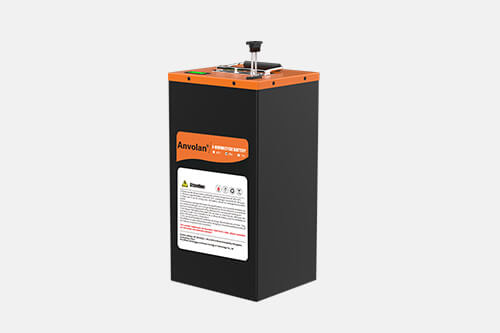
Lithium iron phosphate (LiFePO4) golf cart batteries have a far longer replacement cycle of 8 to 10 years, becoming a long-term cost-effective upgrade choice. High-quality lithium golf cart batteries achieve 3000 to 5000 charge-discharge cycles, with extremely low capacity attenuation speed. Even with daily full-cycle charging and driving, lithium batteries can maintain more than 80% of original capacity after 8 years of use. Unlike lead-acid batteries, lithium batteries are not prone to sulfation failure, do not require daily maintenance, and have strong tolerance for normal charging and discharging habits. Only improper use such as long-term overheating, frequent deep over-discharging, and mismatched charging will cause premature aging. For most household and light commercial use, lithium batteries only need one replacement in nearly a decade.
Master battery failure judgment signs to replace batteries timely before complete performance collapse. For lead-acid batteries, obvious replacement signals include drastically reduced driving range, slow acceleration, rapid voltage drop under load, swollen battery casings, frequent electrolyte loss, and terminal corrosion that cannot be fixed. For lithium batteries, replace the pack when continuous range attenuation, unstable voltage output, abnormal charging heat, and inconsistent single-cell voltage appear. Regardless of battery age, any faulty battery with safety hazards such as bulging, leakage, and short-circuit symptoms must be replaced immediately. By following type-specific replacement cycles and combining real-time battery performance detection, users can always keep golf cart batteries in optimal working condition, balancing driving experience, safety, and economic benefits.
Be the first to receive our latest news, how-to user guides,
and exclusive deals! Subscribe now.

 Headquarter Address:10F, Building 25, N0. 179 Fengguan, Dongshen Road, Dongguan, Guangdong
 Factory Address:Building 3, Area D, Shengyang Science and Technology Industrial Park, East District of Suichuan County Industrial Park, Ji'an, Jiangxi
 Headquarter Telephone No.:+86 769 2366 8529
Factory Telephone No.:+86 796 6111618
 Contact Person:Kevin Chen
 Email Address:chen@xpower-world.com