Global layout
 +86 769 2366 8529




Time:2026-04-17 Views:85
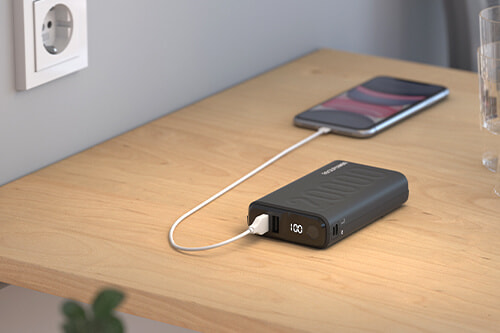
High-temperature environments pose a serious threat to the safety of power banks, as excessive heat can accelerate the internal chemical reactions of lithium-ion batteries, leading to battery degradation, leakage, or even thermal runaway—an uncontrollable chain reaction that can cause fire or explosion. Unlike low-temperature effects, which are mostly temporary, high-temperature damage to power banks is often permanent, reducing the battery’s cycle life and long-term capacity irreversibly. The ideal operating temperature for power banks is between 0°C and 40°C, and when the ambient temperature exceeds 40°C, the safety risks begin to increase significantly.
When the temperature is between 40°C and 50°C, the internal chemical reactions of the battery accelerate, leading to gradual degradation of the electrode material and electrolyte, which shortens the battery’s service life. At this temperature range, the power bank may also activate thermal regulation mechanisms to reduce the charging and discharging current, thereby reducing heat generation. When the temperature rises to 50°C to 60°C, the risk of battery damage increases sharply: the electrolyte may decompose, producing flammable gases that cause the power bank to bulge; the internal resistance of the battery increases significantly, leading to excessive heat generation and further increasing the temperature. In extreme cases, the separator between the positive and negative electrodes may melt, causing a short circuit and triggering thermal runaway.
To ensure high-temperature usage safety, most power banks are equipped with multiple safety protection mechanisms, including over-temperature protection, over-current protection, and short-circuit protection. These mechanisms can automatically cut off the circuit when the internal temperature of the power bank exceeds a safe threshold, preventing further damage. However, these protection mechanisms have their limits—if the power bank is placed in an environment with direct sunlight, near heat sources (such as stoves or car dashboards), or used while charging in high temperatures, the protection system may fail to respond in time. Additionally, using inferior power banks with unqualified batteries or lacking effective protection mechanisms significantly increases the risk of fire or explosion in high-temperature environments. Therefore, avoiding high-temperature exposure and using qualified products are crucial to ensuring the safety of power banks.
Be the first to receive our latest news, how-to user guides,
and exclusive deals! Subscribe now.

 Headquarter Address:10F, Building 25, N0. 179 Fengguan, Dongshen Road, Dongguan, Guangdong
 Factory Address:Building 3, Area D, Shengyang Science and Technology Industrial Park, East District of Suichuan County Industrial Park, Ji'an, Jiangxi
 Headquarter Telephone No.:+86 769 2366 8529
Factory Telephone No.:+86 796 6111618
 Contact Person:Kevin Chen
 Email Address:chen@xpower-world.com