Global layout
 +86 769 2366 8529




Time:2026-09-24 Views:147
As short-distance transport vehicles in golf courses, large parks, resorts and communities, golf carts rely on energy storage units to provide continuous power. After long-term operation, the original energy storage components will suffer capacity attenuation, rising internal resistance and degraded low-temperature performance. The output power drops, resulting in weak climbing performance, shortened driving range and significantly increased maintenance frequency. Among equipment renewal solutions, retrofitting and replacing the original power energy storage system is a preferred option for many park and golf course operators. Compared with purchasing brand-new vehicles, energy storage retrofit projects require lower investment and shorter construction cycles. The original frame, motor and control system of the vehicle can be reused. While controlling operating costs, the project can effectively restore and even improve the vehicle’s dynamic performance.
Traditional energy storage solutions have been applied on golf carts for many years with mature procurement channels and low initial investment, yet inherent drawbacks will emerge with extended use. Such energy storage units have relatively high self-discharge rates, and their capacity continuously decreases during long-term idle storage. The available capacity drops sharply in low-temperature environments; in autumn and winter in northern regions, the driving range of vehicles on golf courses will shrink obviously. Meanwhile, their cycle life is limited, and capacity attenuation accelerates after frequent charge and discharge cycles, requiring full replacement after several years of use. Regular inspection of electrolyte and cleaning of corroded terminals are required during maintenance, leading to heavy workload. For golf courses and large resort parks operating nonstop all year round, frequent shutdown for maintenance and energy storage replacement will directly affect the site reception capacity and raise long-term operating expenses.
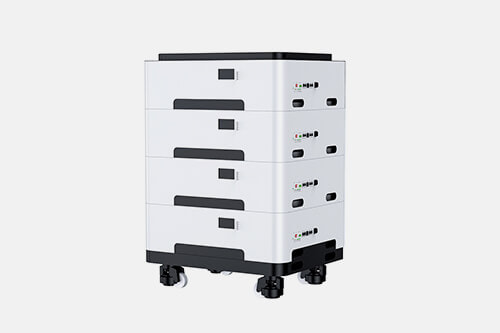
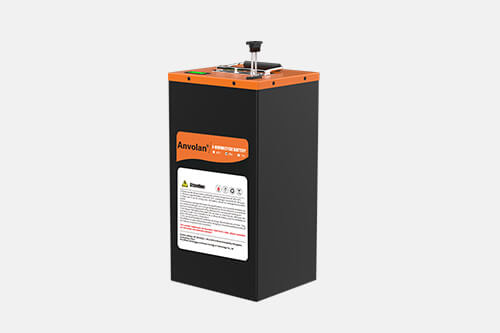
New-generation lithium energy storage units, featuring outstanding cycle life, low self-discharge rate and maintenance-free characteristics, have become the mainstream option for retrofitting such short-distance transport vehicles. These products have stable battery cells and well-integrated safety protection circuits, which can monitor voltage, current and temperature in real time, and provide multi-layer protection against overcharge, over-discharge, overcurrent and short circuit to reduce potential safety hazards during operation. Compared with old-style energy storage devices, they deliver higher energy density and lighter weight under the same capacity, lowering the overall vehicle load and motor strain, which helps improve driving range and climbing capacity. Besides, these products can output stably within a wide temperature range, adapting to various site conditions including hot and humid weather in southern areas and cold winters in northern regions, and mitigating performance fluctuations caused by seasonal changes.
Complete pre-project evaluation must be carried out before the implementation of vehicle retrofitting, which serves as the foundation for successful project delivery. First, it is necessary to verify the parameters of the original vehicle power system, confirm the rated motor voltage, controller specifications and wire harness carrying capacity, and check whether the original cables, fuses and connectors can directly match the new energy storage unit. The wire harnesses of some aged vehicles are degraded with insufficient cross-sectional area. During retrofitting, cables and connectors need to be replaced simultaneously to avoid heating under high current and potential safety risks. Second, the application scenario of the vehicle should be assessed: daily driving distance on site, continuous operation duration, frequency of hill climbing and indoor or outdoor parking conditions, so as to determine the capacity specification and installation space of the energy storage unit. The size of the original battery compartment, position of fixing brackets and ventilation conditions also need on-site measurement to ensure smooth installation of the new unit without damaging the original vehicle structure.
System matching is the core technical link in retrofitting projects. Many failed retrofits result from neglected system compatibility. The original vehicle controller and charging equipment must match the electrical parameters of the new energy storage unit. If the original charger cannot adapt to the charging curve of the new unit, problems such as incomplete charging, overcharging or frequent triggering of protection may occur. In severe cases, the service life of cells will be shortened or faults may arise. In many retrofit projects, the matching charger needs to be replaced to implement charging management according to lithium charging logic. In addition, communication signals and protection linkage cannot be ignored. Some original vehicle control systems have low-voltage protection logic. After energy storage replacement, the protection threshold needs recalibration to ensure the vehicle can slow down and shut down smoothly when power is low, preventing deep discharge damage to cells.
Standard operating procedures shall be followed during installation and construction. Cut off the original vehicle power supply before construction, complete discharge and insulation protection, remove the old energy storage unit, clean rust and dust inside the battery compartment and check the structural integrity of the compartment. Shock-absorbing gaskets shall be installed when fixing the new energy storage unit. Golf carts travel on undulating lawns, and continuous vibration may damage cells and loosen terminals. Shock absorption design can reduce the risk of loosening caused by vibration. During wiring, strictly distinguish positive and negative poles, fasten terminals tightly and apply insulation protection to prevent short circuits. After all wiring is finished, perform static testing first, measure open-circuit voltage and insulation resistance to confirm no short circuit or electric leakage. Then carry out no-load test run, followed by on-site road tests to check voltage changes during start-up, climbing and constant-speed driving, and verify normal operation of protection functions.
After retrofitting, regular maintenance can maximize the service life of the energy storage unit. Although this new type of energy storage product is maintenance-free, visual inspections are still required regularly to check for shell damage, loose terminals and abnormal overheating. Daily charging should be completed under ambient temperature; avoid charging immediately after exposure to intense sunlight. For long-term parked vehicles, store them with appropriate remaining power and recharge periodically to prevent deep power depletion. Maintenance personnel need to be familiar with the protection mechanism of the energy storage unit. When the vehicle shuts down due to protection, troubleshoot following standard procedures instead of removing protection devices to force operation, which may damage the energy storage system.
From the perspective of operational economy, although the initial procurement cost of retrofitting is higher than traditional energy storage products, it boasts advantages in the full life cycle cost. Longer cycle life extends the replacement interval, greatly reducing repeated expenses for procurement, disassembly and manual repair, and saving massive labor for daily maintenance. For fleets on golf courses and resorts, batch retrofitting lowers the overall failure rate and improves vehicle availability, cutting operational losses caused by vehicle breakdowns. Meanwhile, new energy storage units are more environmentally friendly with simpler disposal procedures, conforming to the green development trend of global venue operation.
In general, retrofitting the energy storage system of golf carts is a systematic project rather than a simple replacement of energy storage components. A complete project workflow includes pre-assessment, parameter matching, standardized installation, commissioning and after-service maintenance. When carrying out retrofitting projects, operators need to fully consider the original vehicle hardware, site working conditions and electrical system compatibility, select suitable energy storage products and implement construction and commissioning in strict accordance with specifications. Properly implemented retrofitting can effectively solve pain points including aging original energy storage equipment, insufficient driving range and cumbersome maintenance, extend the service life of golf carts, reduce long-term operating costs, guarantee stable operation of transport vehicles on golf courses and parks, and deliver reliable power support for venue operation.
Be the first to receive our latest news, how-to user guides,
and exclusive deals! Subscribe now.

 Headquarter Address:10F, Building 25, N0. 179 Fengguan, Dongshen Road, Dongguan, Guangdong
 Factory Address:Building 3, Area D, Shengyang Science and Technology Industrial Park, East District of Suichuan County Industrial Park, Ji'an, Jiangxi
 Headquarter Telephone No.:+86 769 2366 8529
Factory Telephone No.:+86 796 6111618
 Contact Person:Kevin Chen
 Email Address:chen@xpower-world.com