Global layout
 +86 769 2366 8529




Time:2026-08-06 Views:188
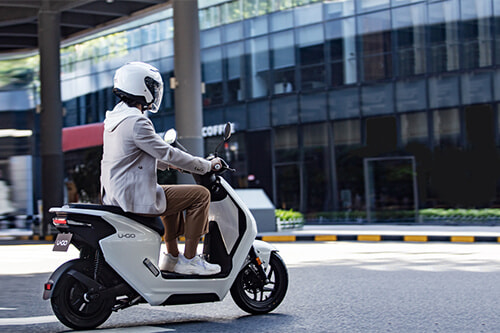
Road potholes and continuous vibration are easily overlooked factors that damage electric motorcycle batteries. Long-term bumpy riding on uneven roads will cause continuous vibration and jitter of the battery, leading to loose internal cells, detached wiring terminals, shell cracking, and abnormal battery resistance. Whether it is lithium-ion battery packs with stacked internal structures or lead-acid batteries with fragile plate structures, frequent severe vibration will cause irreversible structural damage, resulting in reduced battery capacity, unstable power output, and even sudden power off during riding. Targeted anti-vibration maintenance and standardized riding habits can effectively protect the battery from vibration damage.
Keeping the battery fixed firmly is the most critical anti-vibration measure. The battery of an electric motorcycle is fixed in the battery compartment by fixing brackets, bolts, and rubber shock-absorbing gaskets. Long-term riding vibration will cause bolt loosening and aging and deformation of shock-absorbing gaskets, leading to battery displacement and violent jitter. Riders need to regularly check the battery fixing bolts every month, tighten loose bolts in time, and replace aging, hardened or broken shock-absorbing rubber pads. The rubber gasket can buffer the vibration generated by road bumps and isolate the direct friction and collision between the battery and the vehicle body, which is the core barrier against vibration damage.
Optimize riding habits to reduce vibration impact on the battery. When passing potholes, speed bumps, gravel roads and other uneven road sections, take the initiative to slow down and avoid high-speed passing. High-speed bumping will generate strong instantaneous vibration force, which directly impacts the internal battery cells and causes cell displacement and internal circuit breakage. Do not carry excessive heavy loads for a long time; overloading will increase the vehicle’s jitter amplitude on bumpy roads and aggravate battery vibration wear. In addition, avoid sudden start and emergency braking frequently, as these operations will produce instantaneous inertial vibration, causing loose battery terminals and poor contact.
Regular vibration damage inspection and auxiliary protection can further improve battery anti-vibration ability. During daily maintenance, check the battery shell for cracks, deformation and scratches caused by long-term vibration, and inspect the internal wiring harness for loosening, falling off and wire breakage. For vehicles that often run on bumpy mountain roads and rural roads, additional shock-absorbing cotton can be pasted around the battery compartment to enhance the buffering effect. Once symptoms such as unstable power, intermittent power failure and abnormal battery noise appear after bumpy riding, stop using the vehicle in time and check the battery fixation and internal structure. Adhering to long-term anti-vibration maintenance can keep the battery structure stable and maintain consistent power performance.
Be the first to receive our latest news, how-to user guides,
and exclusive deals! Subscribe now.

 Headquarter Address:10F, Building 25, N0. 179 Fengguan, Dongshen Road, Dongguan, Guangdong
 Factory Address:Building 3, Area D, Shengyang Science and Technology Industrial Park, East District of Suichuan County Industrial Park, Ji'an, Jiangxi
 Headquarter Telephone No.:+86 769 2366 8529
Factory Telephone No.:+86 796 6111618
 Contact Person:Kevin Chen
 Email Address:chen@xpower-world.com