Global layout
 +86 769 2366 8529




Time:2026-05-27 Views:189
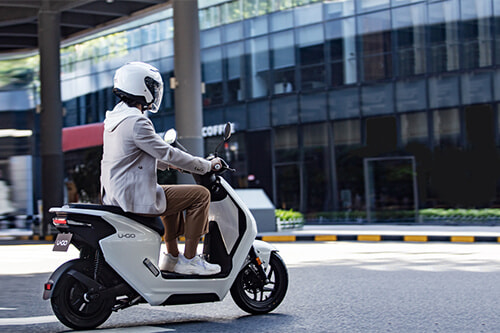
The discharge rate of a Citycoco battery pack refers to the speed at which it can safely deliver current to the motor, measured in C‑rate (1C = discharge of full capacity in 1 hour) and continuous/peak current (A). It directly impacts acceleration, hill‑climbing ability, and sustained performance, especially for 1200W–2000W motors.
Standard Citycoco 60V lithium‑ion packs (18650/21700 cells) have a continuous discharge rate of 30–50A (0.5C–1C) and a peak discharge rate of 120–180A (2C–3C, lasting 50–100ms). For a 60V 20Ah pack, 1C equals 20A, so 30A continuous is 1.5C, sufficient for 1200W motors (≈20A at 60V) and short bursts of high power. High‑performance packs for 1500W–2000W motors offer continuous 50–80A (2C–4C) and peak 200A+ for strong acceleration and steep hills.
The BMS enforces discharge limits to protect cells from damage. The overdischarge cutoff voltage is 43.2V (2.7V per cell) for 60V packs, preventing deep discharge that shortens life. The BMS also limits continuous current to 30–50A and peak current to 180A, balancing performance and safety.
The discharge rate affects real‑world performance:
1200W motors: 30A continuous is enough for 40–45km/h top speed and mild hills.
1500W–2000W motors: 50A continuous is needed for 50–60km/h and steep hills.
Low‑quality packs with weak BMS may have lower discharge rates, causing voltage drops, reduced power, or premature cutoff under load.
Temperature also affects discharge performance:
20–30°C: Optimal, full discharge capacity and power.
<0°C: Reduced capacity (20–30%) and lower peak current; avoid full power use.
>45°C: Risk of overheating; BMS limits current.
Proper maintenance preserves discharge capability: avoid deep discharge, store at 50–70% charge, and use compatible chargers. In summary, the Citycoco battery’s discharge rate is matched to motor power, with BMS protection ensuring safe, consistent performance across conditions.
Be the first to receive our latest news, how-to user guides,
and exclusive deals! Subscribe now.

 Headquarter Address:10F, Building 25, N0. 179 Fengguan, Dongshen Road, Dongguan, Guangdong
 Factory Address:Building 3, Area D, Shengyang Science and Technology Industrial Park, East District of Suichuan County Industrial Park, Ji'an, Jiangxi
 Headquarter Telephone No.:+86 769 2366 8529
Factory Telephone No.:+86 796 6111618
 Contact Person:Kevin Chen
 Email Address:chen@xpower-world.com