Global layout
 +86 769 2366 8529




Time:2026-09-15 Views:117
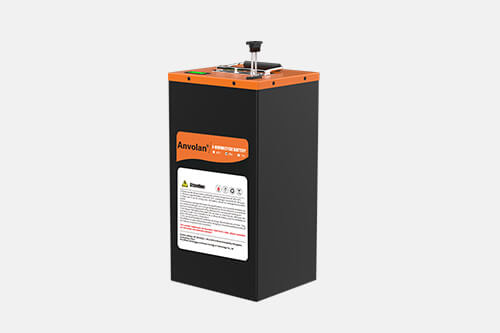
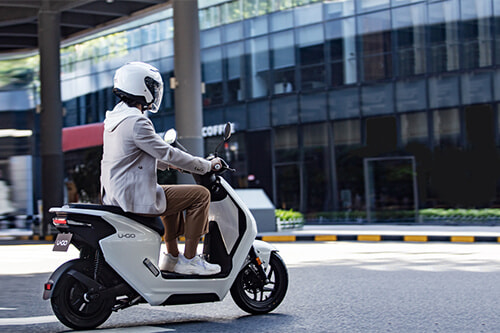
Citycoco is a wide-tire electric scooter. Thanks to its rugged appearance and strong off-road capability, it is widely used in urban commuting, campus patrol and leisure riding. As the core power component of Citycoco, the battery directly determines riding range, climbing power, vehicle safety and long-term riding experience. The 60V 20Ah battery is the mainstream power solution for original factory installation and market replacement of this model. Many users only pay attention to voltage and capacity parameters when replacing batteries, ignoring the matching relationship between the battery and Citycoco’s power system, battery compartment structure, wiring harness, connectors and controller. An in-depth analysis of the design logic, matching points, performance limits and replacement risks of the Citycoco 60V 20Ah battery from the perspective of whole-vehicle matching helps vehicle manufacturers, maintenance merchants and riders identify battery quality, and avoid problems such as power attenuation, poor fitting in battery compartment, circuit overload and potential safety hazards caused by mismatched batteries, so as to realize coordinated and stable operation between the battery and Citycoco vehicle system.
The original electrical system of Citycoco is developed based on the 60V voltage platform. Its controller, motor, dashboard and charging port are all matched for the 60V electrical architecture. The 60V 20Ah battery can perfectly fit the original electrical parameters of this vehicle. Citycoco is usually equipped with a 1000W to 1500W brushless DC hub motor, which generates large peak discharge current during startup and climbing. Compared with the 48V platform, the 60V platform delivers lower operating current under the same power, reducing voltage drop and heat generation of wiring harnesses. The 20Ah capacity can support a cruising range of 40–60 km for Citycoco under standard working conditions, balancing vehicle weight and mileage. Random replacement with batteries of other specifications, such as upgrading to 72V, may increase power in a short time but exceed the voltage tolerance of controllers and dashboards and burn electrical components. Batteries with smaller capacity will greatly reduce cruising range and fail to meet daily commuting needs. As the original standard specification, the 60V 20Ah battery achieves optimal matching in voltage, capacity and peak discharge capability with the whole vehicle electrical system. It can be installed and used without modifying core components such as controllers, motors and dashboards, fundamentally avoiding electrical failures caused by refitting.
Physical matching of the battery compartment is a non-negligible point for selecting the Citycoco 60V 20Ah battery. The Citycoco model has a fixed space for the battery compartment, mostly arranged under the footrest in the middle of the frame. The reserved length, width and height of the compartment are limited, and space should also be reserved for wiring harnesses, fixing buckles and heat dissipation gaps. The original supporting 60V 20Ah battery adopts customized structural design according to the contour of Citycoco’s battery compartment. Its shell dimensions, fixing hole positions and buckle positions fully fit the frame. The battery will not shake after being placed into the compartment. Some non-standard third-party batteries are marked as 60V 20Ah, yet their shells are oversized or irregular. Forcing them into the battery compartment will squeeze internal wiring harnesses. During bumpy riding, the battery impacts repeatedly inside the compartment, resulting in shell cracking, internal cell displacement and tab breakage, which may lead to short circuit and fire risks. Some non-standard batteries have thin shells without shock absorption buffer structures and cannot withstand continuous vibration during off-road riding of Citycoco. Qualified dedicated Citycoco 60V 20Ah batteries adopt thickened hard plastic or metal shells, equipped with shock absorbing cushions, with shapes adapted to the compartment for firm installation. It ensures structural stability under bumpy riding conditions, which cannot be achieved by general-purpose batteries.
Matching between the BMS protection architecture and vehicle load is critical to riding safety and battery life of Citycoco. The hub motor of Citycoco generates large impulse current during startup and climbing. Therefore, the BMS protection board of the supporting 60V 20Ah battery must be specially tuned for the peak current characteristics of this model. General universal 60V 20Ah lithium battery BMS has relatively conservative protection thresholds. It is easy to trigger overcurrent protection during high-current output when the vehicle climbs hills, causing sudden power cut and potential riding safety hazards. The BMS of dedicated Citycoco batteries adapts to dynamic vehicle loads in protection logic. It allows short-time high peak current output while retaining complete safety protection mechanisms including overcharge, overdischarge, overcurrent, short circuit and over-temperature protection. Built-in temperature probes are closely attached to cells to monitor battery temperature rise in real time. BMS sampling lines continuously monitor the voltage of each cell string and automatically perform passive equalization to prevent large voltage differences between cells after long-term use and rapid capacity attenuation. In abnormal working conditions, the BMS quickly cuts off the circuit to protect the battery as well as the vehicle controller and motor. If general-purpose batteries are selected, mismatched BMS protection logic and vehicle load will either cause frequent power tripping or lose protection capacity due to excessively high protection thresholds, accelerating battery aging and even triggering safety accidents.
Matching of connectors, wiring harnesses and charging systems directly affects battery disassembly and charging convenience of Citycoco. Original Citycoco is equipped with dedicated discharge plugs and charging ports. The matched 60V 20Ah batteries adopt plugs of the same specification. The pin layout, locking structure and anti-reverse design of plugs fully match the original vehicle wiring harness, supporting quick plugging and unplugging for convenient battery removal and charging. Non-matching batteries often have incompatible plug types, requiring wire cutting and joint modification. Manual wiring tends to form poor connections. The joints heat up and oxidize under high current, bringing fire hazards. For charging, the original 60V charger’s output voltage and current are specially matched with the charging curve of the 60V 20Ah battery. The charging process is controlled in segments: constant-current fast charging in the early stage and constant-voltage trickle charging when nearly full, ensuring charging efficiency while protecting cells. Mismatch between battery and charger will lead to incomplete charging, early stop or overcharging and accelerate cell degradation. Qualified Citycoco 60V 20Ah batteries complete charge-discharge curve calibration before delivery and are compatible with original chargers without modifying the charging circuit to simplify daily charging maintenance.
Weight and center-of-gravity matching is also an important factor for Citycoco’s handling performance. As a wide-tire off-road scooter, the center of gravity directly affects steering, cornering and off-road stability. The weight of the original 60V 20Ah battery is calculated by the vehicle factory. Placed in the battery compartment under the footrest, it lowers the vehicle’s center of gravity and improves riding stability. If batteries of other schemes are adopted, such as non-standard high-density cells with excessive weight, the vehicle’s center of gravity will shift, steering becomes heavy and the vehicle may lose control on bumpy roads. Inferior batteries with falsely marked capacity are too light and cause unbalanced frame weight distribution, which also affects handling. The weight parameter of the 60V 20Ah lithium battery perfectly fits the frame weight distribution design of Citycoco, balancing cruising range and vehicle handling.
In later replacement and maintenance scenarios, the 60V 20Ah battery has a mature supply chain system and becomes the preferred replacement option for Citycoco. Many Citycoco owners need to replace batteries after their original batteries age. The 60V 20Ah specification has the largest market volume with sufficient spare parts. Maintenance merchants can purchase quickly, with shorter procurement cycles and controllable replacement costs compared with niche customized batteries. However, product quality varies greatly in the market. Some merchants falsely mark capacity with poor cell consistency. Although marked parameters are the same, their matching performance with the whole vehicle is poor, resulting in sharp mileage drop and insufficient power after short-term use. During selection, besides checking voltage and capacity, it is necessary to verify battery shell size, BMS current parameters and plug models. Priority should be given to dedicated batteries optimized for Citycoco models.
In summary, the Citycoco 60V 20Ah battery is not a simple standardized energy storage unit, but a dedicated power component deeply matched with Citycoco’s electric system, battery compartment structure, weight distribution and load characteristics. From the perspective of whole-vehicle matching, the value of the battery is not only reflected in the two paper parameters of 60V voltage and 20Ah capacity, but also in the collaborative matching of physical structure, BMS protection logic, connector wiring harness, weight and center of gravity with the whole vehicle system. Selecting a qualified and well-matched 60V 20Ah battery can fully release the power of Citycoco’s motor, stabilize cruising range, reduce electrical faults and safety risks, and extend the service life of both vehicle and battery. On the contrary, blindly purchasing general non-standard batteries while ignoring whole-vehicle matching will bring a series of problems such as power interruption, wire heating and battery damage. With the continuous popularization of wide-tire electric scooters such as Citycoco, users and maintenance providers should take whole-vehicle matching as the core evaluation dimension instead of only comparing capacity and price when selecting batteries, so as to guarantee riding safety and maximize the overall performance of Citycoco.
Be the first to receive our latest news, how-to user guides,
and exclusive deals! Subscribe now.

 Headquarter Address:10F, Building 25, N0. 179 Fengguan, Dongshen Road, Dongguan, Guangdong
 Factory Address:Building 3, Area D, Shengyang Science and Technology Industrial Park, East District of Suichuan County Industrial Park, Ji'an, Jiangxi
 Headquarter Telephone No.:+86 769 2366 8529
Factory Telephone No.:+86 796 6111618
 Contact Person:Kevin Chen
 Email Address:chen@xpower-world.com