Global layout
 +86 769 2366 8529




Time:2026-09-21 Views:17
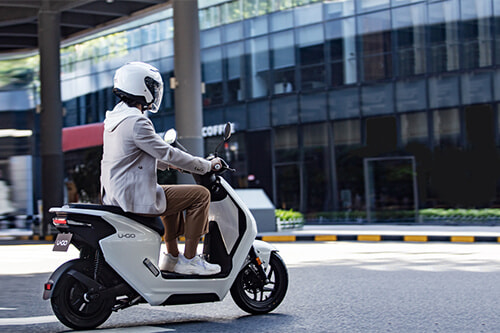
As a lightweight means of transportation for urban short-distance commuting, community travel and campus mobility, electric scooters have become extremely popular travel devices due to their flexibility, low energy consumption and easy parking. The battery is the core power source of electric scooters. Its endurance stability, output smoothness and load adaptability directly determine the riding experience, travel safety and equipment service life. Many common problems such as inflated battery capacity, gradually shortened mileage, speed drop during climbing and reduced low-temperature endurance are mainly caused by poor battery stability rather than insufficient capacity. From the perspective of endurance stability, this article comprehensively analyzes the voltage-stabilized output characteristics, load endurance performance, temperature adaptability, attenuation rules and daily maintenance strategies of electric scooter batteries, and explains how high-quality batteries achieve stable endurance in full scenarios.
The core of endurance stability lies in the battery’s stable voltage and power output throughout the discharge process. Electric scooters belong to dynamic load equipment; starting, accelerating, climbing and heavy load riding instantly increase discharge current. Inferior batteries have high internal resistance, resulting in rapid voltage drop under high current output. The controller will trigger low-voltage protection, causing power attenuation and sudden mileage reduction, which leads to the problem of inflated battery capacity. In contrast, high-quality dedicated batteries adopt low-internal-resistance cells with stable discharge platforms and linear voltage attenuation. They avoid voltage drop during starting and speed reduction during climbing, dynamically match output power according to riding loads, release power efficiently without virtual power loss, and make the actual endurance highly consistent with the rated standard.
Dynamic working condition adaptability is the key factor for batteries to maintain stable endurance. Daily riding conditions are complex and changeable. Frequent start-stop, repeated acceleration and slope switching continuously change battery discharge rates. Ordinary batteries cannot adapt to fluctuating dynamic loads, easily causing intermittent power cutoffs, power stuttering and abrupt endurance attenuation. Optimized for actual working conditions, high-quality electric scooter batteries support wide-range dynamic discharge, adapting to light-load daily commuting, heavy-load climbing and instantaneous high-power acceleration. With efficient internal charge migration and rapid load response, the battery delivers consistent and smooth power output, balances power consumption in different scenarios, avoids energy waste caused by partial high-current discharge, and greatly improves overall endurance stability and riding fluency.
Temperature adaptability affects seasonal endurance performance and is an important indicator of battery stability. Low-quality batteries have weak temperature control ability. High temperature accelerates cell aging and causes permanent endurance attenuation, while low temperature reduces cell activity and increases internal resistance, directly cutting winter endurance in half. High-quality electric scooter batteries feature excellent wide-temperature performance and built-in temperature monitoring protection. They suppress thermal aging and endurance loss in high-temperature summer riding, maintain sufficient cell activity in winter, and effectively relieve low-temperature endurance shrinkage. With minor seasonal endurance fluctuation, they deliver stable mileage output all year round and adapt to all-weather urban commuting demands.
Controllable linear attenuation ensures long-term endurance stability throughout the battery life cycle. The service life of electric scooter batteries is essentially a continuous process of maintaining stable endurance. Inferior batteries have sufficient initial endurance but age rapidly after dozens of charge-discharge cycles, resulting in cliff-like capacity decline and unstable later-stage performance. High-quality lithium batteries adopt a stable electrochemical system with high chemical reaction reversibility and slow active material loss, achieving gentle linear attenuation. They maintain high effective capacity after hundreds of cycles without sudden performance degradation, ensuring stable endurance and power output in long-term use, extending the effective service life and reducing replacement costs.
The intelligent BMS system provides comprehensive protection for stable battery endurance. Unstable endurance is usually caused by hidden losses such as overcharge, overdischarge, overcurrent and cell voltage imbalance. Equipped with a high-precision battery management system, dedicated electric scooter batteries monitor cell voltage, current and temperature in real time, automatically adjust charge and discharge status, and avoid damaging working modes such as deep power loss and overvoltage charging. The cell balancing function keeps all cells in consistent status, prevents overall endurance collapse caused by single-cell premature aging, and continuously guarantees output consistency and stable endurance.
In conclusion, the core value of electric scooter batteries lies not only in capacity size, but also in durable and stable power output. A stable discharge platform prevents virtual capacity and mileage shrinkage; dynamic working condition adaptation ensures stable endurance on complex road conditions; wide-temperature performance reduces seasonal fluctuation; and linear attenuation and intelligent protection achieve long-term durability. In high-frequency short-distance commuting scenarios, stable endurance effectively improves travel experience and reduces operation costs, serving as the core guarantee for safe, smooth and long-term operation of electric scooters.
Be the first to receive our latest news, how-to user guides,
and exclusive deals! Subscribe now.

 Headquarter Address:10F, Building 25, N0. 179 Fengguan, Dongshen Road, Dongguan, Guangdong
 Factory Address:Building 3, Area D, Shengyang Science and Technology Industrial Park, East District of Suichuan County Industrial Park, Ji'an, Jiangxi
 Headquarter Telephone No.:+86 769 2366 8529
Factory Telephone No.:+86 796 6111618
 Contact Person:Kevin Chen
 Email Address:chen@xpower-world.com