Global layout
 +86 769 2366 8529




Time:2026-09-11 Views:199
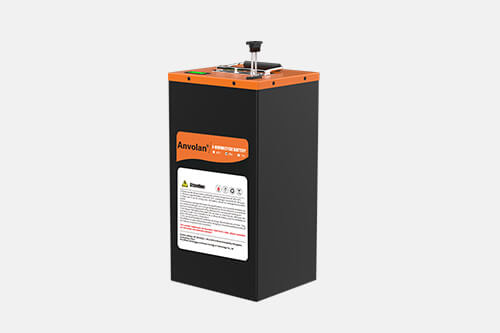
For golf courses, scenic spots, park resorts and property parks equipped with large batches of sightseeing cars and golf carts, batteries are not disposable consumables, but core assets that determine the overall operating cost, maintenance efficiency and profit margin of the vehicle fleet. Most operators only focus on the initial procurement price while ignoring long-term hidden costs caused by subsequent continuous maintenance, frequent replacement, energy consumption loss and downtime failures, resulting in high overall vehicle operating costs for a long time. Traditional 72V lead-acid batteries dominate the market with low entry prices, but they bring a series of operational pain points in high-frequency commercial use, such as cumbersome maintenance, short service life, high energy consumption, high failure rate and huge downtime losses. Massive annual investment in labor, consumables and replacement continuously squeezes operating profits. Centering on the core advantage of ultra-low full-life-cycle operation and maintenance costs, this dedicated 72V lithium battery for golf carts comprehensively reduces expenses from five key dimensions: labor maintenance cost, battery replacement cost, energy consumption loss cost, fault maintenance cost and downtime loss cost. It completely subverts the high-consumption and high-investment operation mode of traditional lead-acid batteries and serves as the optimal upgrade solution for commercial fleets to reduce costs and improve efficiency in the long run.
In terms of labor maintenance costs, this battery achieves zero daily maintenance and completely eliminates the labor-intensive and cost-heavy maintenance drawbacks of lead-acid batteries. Traditional 72V lead-acid batteries require regular and systematic daily maintenance. Operators need to frequently open the cover to check electrolyte levels and replenish distilled water to prevent battery drying and bulging; regularly fasten terminal connections, clean surface oxidation and dust to avoid poor circuit contact; and conduct manual supplementary charging and cell balancing during idle periods to prevent scrapping caused by power loss. For medium and large fleets with dozens or hundreds of vehicles, daily professional maintenance consumes huge working hours and forms a fixed annual labor expenditure burden. In contrast, this 72V lithium battery adopts a fully sealed integrated maintenance-free design with no electrolyte leakage, drying or aging risks. It requires no water replenishment, rust cleaning, manual balancing or regular activation inspection after installation. With zero daily maintenance requirements and no dedicated staff supervision, it only needs conventional surface cleaning for long-term stable operation. It directly eliminates high annual labor maintenance costs, greatly simplifies fleet battery management and releases human resources for core operational services.
In terms of cycle replacement costs, its ultra-long cycle life effectively reduces battery iteration frequency and cuts long-term procurement expenses fundamentally. Traditional lead-acid batteries only achieve 300 to 500 charge-discharge cycles, with a service life of merely 1 to 2 years under high-frequency commercial operating conditions. They suffer from sharp capacity attenuation, weak power and failure to store electricity after short-term use and require full-pack replacement frequently. Within a 10-year operation cycle, lead-acid batteries need replacement 4 to 5 times repeatedly. Accumulated costs including repeated procurement, disassembly and assembly labor fees result in extremely high long-term comprehensive expenses. Although lead-acid batteries have low unit prices, their total life-cycle costs are far higher than expected. Adopting automotive-grade LiFePO4 cells, this 72V lithium battery achieves more than 3,500 charge-discharge cycles and maintains stable performance for 8 to 10 years in commercial scenarios, requiring no repeated replacement within a decade. The one-time investment supports decade-long stable operation, completely eliminating the annual battery replacement cycle. It reduces the full-life-cycle replacement cost by more than 60% compared with lead-acid batteries of the same specification, bringing substantial cost savings for large-scale fleet operation.
In terms of energy consumption costs, its high energy conversion efficiency continuously reduces the overall power consumption of the fleet. Traditional lead-acid batteries have a low energy conversion efficiency of only about 70%, with most electric energy lost as heat during charging and discharging, resulting in slow charging and high power waste. Their unstable voltage output leads to continuous power attenuation as power decreases, forcing the motor to operate under high load to maintain normal speed and further increasing invalid energy consumption. Moreover, the obvious memory effect of lead-acid batteries causes fixed capacity attenuation under shallow charge and discharge cycles, gradually reducing available power and indirectly increasing energy loss. In contrast, this 72V lithium battery boasts a conversion efficiency of over 95% with extremely low charge-discharge loss and high power utilization. It delivers stable and constant voltage output without power attenuation, balancing motor load and effectively reducing invalid power consumption. With zero memory effect, it supports flexible charging habits including opportunistic charging, shallow cycling and deep discharge, perfectly adapting to the intermittent charging and high-frequency cyclic operation of fleets without capacity solidification loss. It brings remarkable annual power saving for single vehicles and considerable cumulative energy-saving benefits for large fleets, steadily reducing daily operational power costs.
It greatly cuts fault maintenance and accessory loss costs, forming another core cost-reduction advantage. Traditional lead-acid batteries have poor structural stability and are prone to bulging, liquid leakage, short circuits, terminal oxidation and cell premature aging under long-term vibration and extreme temperatures. Frequent troubleshooting and maintenance are required, and leaked electrolyte corrodes vehicle brackets, circuits and metal parts, causing body rust and circuit damage that generate additional vehicle repair and accessory replacement expenses. In addition, lead-acid batteries have extremely low fault tolerance; the failure of a single cell will disable the entire battery pack, turning minor faults into overall scrapping and amplifying loss costs. Equipped with an integrated sealed structure and intelligent all-round BMS protection system, this 72V lithium battery provides multi-layer protection against overcharging, overdischarging, overcurrent, short circuit and extreme temperatures. With excellent shockproof, waterproof, corrosion-resistant and leak-proof performance, it operates stably with an extremely low failure rate. Without vulnerable parts or liquid corrosion risks, it avoids additional expenses caused by fault troubleshooting, maintenance and accessory replacement, maintaining stable fleet operation and eliminating hidden equipment loss costs.
Most importantly, it minimizes downtime loss and guarantees full-time revenue generation for the fleet. For commercial golf carts and sightseeing vehicles, equipment downtime directly suspends revenue. Frequent failures, rapid range attenuation and sudden power outage of traditional lead-acid batteries easily cause service interruption and operational stagnation, resulting in direct revenue loss and damaged brand reputation. Meanwhile, lead-acid batteries require 8 to 10 hours for full charging, with low charging efficiency that fails to meet high-frequency cyclic usage demands. Vehicles have to idle for charging during peak business hours, reducing equipment utilization rate and causing indirect revenue loss. Supporting fast charging and fully charged within 3 to 4 hours, this 72V lithium battery doubles charging efficiency and greatly improves vehicle turnover and utilization rate. It maintains stable overall performance without sudden power failure, power attenuation or capacity drop, minimizing equipment downtime for maintenance and idle charging. It maximizes full-time operational availability, eliminates downtime revenue loss, improves daily operational efficiency and creates sustainable and stable economic benefits for operators.
From the perspective of full-life-cycle operational cost accounting, this 72V golf cart lithium battery perfectly meets the cost-reduction needs of commercial fleets. It comprehensively cuts long-term operating expenses through zero labor maintenance, low replacement frequency, low energy consumption, low fault rate and zero downtime loss. Abandoning the low-price but high-consumption drawbacks of traditional lead-acid batteries, it maximizes full-cycle cost performance with one-time investment, long-term stability and ultra-low maintenance. Whether for small-scale venue operation or large-scale fleet batch deployment in scenic spots and golf courses, this lithium battery simplifies operation management, reduces comprehensive operating costs and improves operational efficiency, serving as the core upgraded solution for golf cart and sightseeing fleets to achieve long-term stable operation and cost reduction.
Be the first to receive our latest news, how-to user guides,
and exclusive deals! Subscribe now.

 Headquarter Address:10F, Building 25, N0. 179 Fengguan, Dongshen Road, Dongguan, Guangdong
 Factory Address:Building 3, Area D, Shengyang Science and Technology Industrial Park, East District of Suichuan County Industrial Park, Ji'an, Jiangxi
 Headquarter Telephone No.:+86 769 2366 8529
Factory Telephone No.:+86 796 6111618
 Contact Person:Kevin Chen
 Email Address:chen@xpower-world.com