Global layout
 +86 769 2366 8529




Time:2026-07-11 Views:45
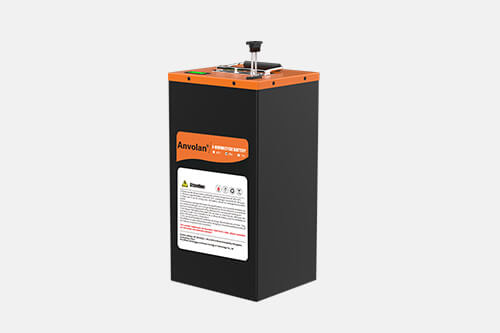
In high-end golf courses, cultural and tourism resorts, large leisure manors, and high-end community shuttle scenarios, 72v lithium golf cart battery serves as the core power source for high-power and long-range golf carts. Compared with the mainstream 48V low-voltage system in the industry, the 72V high-voltage power architecture supports high-speed driving, heavy-load passenger carrying, and long-distance cruise of vehicles, adapting to high-intensity working conditions such as full-domain driving on large golf courses, undulating mountain road conditions, and high-frequency commercial reception. As the core indicator measuring the quality, commercial value and long-term stability of 72V lithium golf cart batteries, cycle life directly determines the equipment replacement frequency, site operation and maintenance costs and daily operation efficiency of vehicles. Different from the mild working conditions of low-voltage batteries for light-duty use, 72V high-voltage lithium batteries operate under harsh long-term conditions including high-current discharge, deep charge and discharge, large load fluctuation and significant outdoor temperature difference, resulting in distinct cycle attenuation rules and service life influencing factors. Centering on cycle life, this paper comprehensively compares the cycle performance gap between 72V lithium batteries, traditional lead-acid batteries and low-voltage lithium batteries, deeply analyzes the impact of working conditions, temperature, charging and discharging habits and load status on battery cycle life, sorts out scientific life extension schemes combined with industry measured data, and analyzes the full life cycle cost advantages. It provides professional and practical selection and maintenance references for golf courses, cultural and tourism scenic spots and commercial operation and maintenance teams, so as to fully release the long-term application value of 72v lithium golf cart battery.
The industry’s standard judgment for battery cycle life refers to the total number of effective charge and discharge cycles when the battery capacity decays to 80% of the initial rated capacity. After reaching this threshold, the battery’s power, cruising range and stability drop significantly, failing to meet the operation requirements of commercial equipment and requiring mandatory retirement and replacement. For 72V high-voltage golf carts, the significance of battery cycle life lies not only in the service life, but also directly relates to the vehicle power consistency, operation stability and site reputation. Conventional 48V low-voltage golf carts are mostly used for short-distance and low-speed transportation with mild working conditions and small discharge current, leading to gentle cycle attenuation. In contrast, models equipped with 72v lithium golf cart battery focus on high-speed, heavy-load and long-distance driving, with higher discharge depth and larger instantaneous current in single operation, resulting in faster cell aging loss and stricter requirements for battery cycle stability and anti-attenuation capability. At present, the power batteries suitable for 72V golf carts in the market are mainly divided into three categories: traditional 72V lead-acid batteries, upgraded lead-carbon batteries and high-end lithium iron phosphate lithium batteries. The electrochemical system differences of different battery types lead to vastly different cycle life and working condition adaptability, forming a hierarchical market application pattern.
Traditional 72V lead-acid batteries are the entry-level configuration for early high-voltage golf carts, occupying the low-end market with low initial procurement costs, but their prominent short cycle life makes them unable to adapt to high-frequency commercial scenarios. Under standard laboratory shallow charge and discharge conditions, the effective cycle times of 72V lead-acid batteries are only 300 to 500, while in the real commercial working conditions of golf carts with daily long-distance cruise, frequent climbing start-stop and deep discharge operation, the actual effective cycle life is merely 200 to 400. Calculated based on the daily high-frequency usage of 8 to 10 hours on golf courses, the effective service cycle of 72V lead-acid batteries is only 1 to 2 years. In the later stage, there will be many problems such as cliff-type capacity attenuation, weak power at high speed, insufficient climbing power, plate vulcanization, heating and bulging during charging, and electrolyte leakage. Meanwhile, lead-acid batteries have obvious memory effect. Long-term deep charge and discharge and irregular operation and maintenance will continuously and irreversibly damage cell activity and accelerate cycle aging. It is very common to replace lead-acid batteries once a year in large commercial courses. Frequent battery replacement not only increases procurement and manual disassembly costs, but also causes vehicle downtime and idle time, affecting site reception and operation efficiency, with high implicit operation and maintenance costs, which can no longer meet the long-term operation needs of modern high-end courses.
72V lead-carbon batteries are iterative upgraded products of lead-acid batteries, with optimized anti-vulcanization and cycle anti-attenuation capabilities, serving as mid-range transitional power solutions. By adding special carbon materials to the negative electrodes, they improve the battery’s charge acceptance and deep discharge tolerance, effectively solving the core pain points of easy vulcanization and short service life of traditional lead-acid batteries. According to industry measured data, under the standard commercial working condition of 80% discharge depth, the effective cycle life of 72V lead-carbon golf cart batteries can reach more than 800 times, 1.5 to 2 times that of ordinary lead-acid batteries, and the service life can be extended to 3 to 4 years under standardized use, with gentler cycle attenuation and slightly improved power stability. However, limited by the inherent defects of the lead-acid electrochemical system, lead-carbon batteries still have poor adaptability to high-current working conditions and high temperature sensitivity. The long-term high-intensity operation of 72V high-voltage vehicles with large instantaneous discharge current and continuous high power will accelerate plate loss. Coupled with the impact of high-temperature exposure in summer and humid rainy outdoor environments, the cycle life of lead-carbon batteries will be greatly reduced. There are still problems of frequent replacement and insufficient stability in long-term high-frequency commercial scenarios, making long-term maintenance-free operation impossible.
72V lithium iron phosphate 72v lithium golf cart battery is currently the mainstream solution with optimal cycle performance, strongest working condition stability and highest commercial cost performance in the high-voltage golf cart market, and has become the standard power configuration for high-end courses and cultural and tourism resorts. Relying on the stable and safe lithium iron phosphate electrochemical system, the battery has no memory effect, high temperature resistance, anti-aging performance and strong high-current tolerance, perfectly adapting to the high-intensity operation conditions of 72V high-voltage vehicles. According to authoritative industry measured data, high-quality special lithium batteries for 72V golf carts have an effective cycle life of 4000 to 6000 times under standard laboratory shallow charge and discharge conditions, and some high-end models can reach 6500 times; even under the harsh commercial heavy-load working condition of 80% deep discharge, the actual effective cycle times can stably maintain more than 3000 times. The performance gap is extremely significant in horizontal comparison, and its cycle life is 8-10 times that of 72V lead-acid batteries and 4-5 times that of lead-carbon batteries, far exceeding the cycle performance of conventional 48V low-voltage lithium batteries. Under scientific operation and maintenance and standardized use, the effective service life can reach 8 to 12 years. More than 80% of the initial capacity can be retained after 3000 cycles, with uniform and gentle capacity attenuation throughout the whole process, no sudden aging or power fault. It can maintain long-term power consistency under high-speed, climbing and heavy-load working conditions, thoroughly solving the industry pain points of frequent replacement, frequent faults and unstable power of traditional high-voltage batteries.
Compared with low-voltage lithium batteries, the cycle attenuation logic of 72v lithium golf cart battery is more specific. Four core working condition factors directly determine its actual service life and are the key controllable points for daily maintenance and life extension. The primary factor is depth of discharge (DOD), the core variable affecting the cycle life of high-voltage batteries. 72V high-voltage batteries have larger energy storage capacity, and the energy loss of single full charge and discharge is much higher than that of low-voltage batteries. 100% extreme deep discharge will greatly impact cell activity, accelerate the aging of internal chemical materials and greatly shorten the cycle period. Industry measured data shows that the effective cycle times of 72V lithium golf cart batteries under 100% deep discharge is about 3000 times; while maintaining the shallow charge and discharge range of 30% to 80%, the cycle life can be increased by more than 50%, up to more than 4500 times. The common operation habits of maintenance personnel who exhaust the battery power before charging and store the battery with full power for a long time will continuously overdraw the battery cycle potential, leading to premature aging and reduced cruising range, which is the core human cause of shortened service life of high-voltage batteries.
Secondly, the standardization of charging methods directly affects the cycle stability and service life of 72v lithium golf cart battery. 72V high-voltage batteries have more cells and larger energy storage, and have higher requirements for charging current and voltage accuracy than low-voltage batteries, so the loss caused by irregular charging is more fatal. Traditional 72V lead-acid and lead-carbon batteries cannot adapt to fast charging. Extreme fast charging will cause severe internal heating and accelerated plate corrosion, and a single fast charge will cause irreversible cycle damage. Although 72V high-voltage lithium batteries support intelligent fast charging to adapt to the fast supplementary charging needs of high-frequency courses, behaviors such as multiple daily ultra-fast charging, overnight overcharging, mixed use of non-original chargers and mismatched voltage and current charging will continuously increase the load on BMS systems and cells, resulting in unbalanced cell heating and voltage disorder. Long-term abuse of fast charging will directly reduce the battery cycle life by 30% to 40%. On the contrary, adopting original supporting constant current and constant voltage chargers, taking standard slow charging as the main mode and emergency fast charging as the auxiliary mode, and powering off in time after full charging to avoid long-term power deficit storage can maximize the protection of cell activity, delay capacity attenuation and stabilize the cycle performance of high-voltage batteries.
Ambient temperature is an easily overlooked but critical factor that greatly affects the cycle life of 72V high-voltage lithium batteries. The optimal working and charging temperature range of 72v lithium golf cart battery is 15℃ to 25℃. Golf carts are parked and operated outdoors all year round, and seasonal temperature differences and sun and rain exposure have a significant impact on battery cycle stability. In summer high-temperature environment, the ground temperature of the course can exceed 40℃. Long-term vehicle exposure and charging operation under high temperature will accelerate battery electrolyte decomposition and cell aging. Excessively high internal battery temperature will cause implicit loss, reducing the cycle life by about 50% on average. Long-term high-temperature use is prone to problems such as rapid capacity attenuation, cell bulging and abnormal protection threshold. In winter low-temperature environment, battery chemical activity is greatly reduced, with decreased available capacity and discharge efficiency. Forced high-speed driving and heavy-load climbing at this time will cause severe cell polarization and irreversible capacity damage, and continuous accumulation will greatly reduce effective cycle times. Compared with traditional batteries, 72V lithium iron phosphate batteries have a wider temperature adaptation range, operating stably from -20℃ to 60℃ with stronger high and low temperature attenuation resistance, adapting to the complex outdoor working conditions of courses in northern and southern China.
Vehicle load conditions and driving status are important scenario factors affecting the long-term cycle performance of 72v lithium golf cart battery. 72V golf carts are mostly used for multi-person passenger carrying, luggage transportation and long-distance mountain driving. High-frequency heavy load, steep slope start and instantaneous high-current discharge will continuously impact the internal cell structure, aggravate active material loss, keep the battery in a long-term high-load operating state and accelerate cycle attenuation. At the same time, the bumpy and vibrating course road surface will cause loose wiring terminals, misplaced cell arrangement and damaged sealing structure of the battery pack during long-term driving, destroying the overall battery stability and further shortening the cycle life. High-end 72V lithium golf cart batteries are equipped with high-precision intelligent BMS systems, which can real-time monitor the voltage, current, temperature and remaining capacity of each cell, automatically realize multiple intelligent protections including overcharge, overdischarge, overcurrent, high temperature, short circuit and voltage imbalance, accurately balance cell voltage difference, avoid premature aging and failure of single cells, and greatly improve the overall cycle consistency and long-term stability of the battery. In addition, regularly cleaning battery interfaces, keeping the battery dry and ventilated, conducting regular supplementary charging during idle periods and avoiding long-term power deficit storage can effectively stabilize cycle performance and delay aging.
From the perspective of full life cycle cost accounting, selecting batteries based on cycle life is the optimal cost reduction and efficiency improvement choice for high-end courses and commercial sites, and 72v lithium golf cart battery has far superior long-term cost performance than traditional high-voltage batteries. Although the short-term procurement cost of 72V lithium batteries is higher than that of lead-acid and lead-carbon batteries, the comprehensive cost advantage is prominent when calculated based on the long service cycle of 8 to 12 years. Traditional 72V lead-acid batteries need to be replaced 5 to 6 times in 10 years, and lead-carbon batteries need 2 to 3 replacements. Coupled with implicit costs such as battery procurement, manual disassembly and assembly, equipment shutdown loss, daily operation and maintenance and fault maintenance, the overall investment is extremely high. In contrast, 72V lithium iron phosphate golf cart batteries can be stably used for more than ten years with one-time installation, without frequent replacement throughout the whole life cycle. They have gentle cycle attenuation, low failure rate, zero maintenance, low self-discharge rate and no corrosion pollution, eliminating the need for special personnel for regular maintenance and thoroughly saving high-frequency operation and maintenance costs. According to industry measured calculation data, under the same working conditions and service intensity, the comprehensive operation and maintenance cost of golf carts equipped with long-cycle 72V lithium batteries can be reduced by more than 60%. It has outstanding value in cost reduction, efficiency improvement and stable operation for large-scale courses and chain cultural and tourism scenic spots.
Matching usage and maintenance schemes according to the working condition intensity and cycle demand of different scenarios can maximize the cycle life value of 72v lithium golf cart battery. For small private courses and low-frequency leisure transportation scenarios with low vehicle usage frequency, light load and mild working conditions, conventional long-cycle 72V lithium iron phosphate batteries can meet the demand, and can be stably used for more than 10 years with basic maintenance. For high-frequency commercial scenarios such as large professional courses, cultural and tourism resorts and high-end hotel shuttles with long daily operation hours, heavy-load passenger carrying, complex road conditions and variable temperature differences, higher requirements are put forward for battery cycle stability, anti-attenuation ability and safety protection performance. It is necessary to prioritize high-end 72V lithium batteries with long cycle life, intelligent BMS balance protection and wide temperature adaptation. Meanwhile, strictly implement maintenance specifications such as shallow charge and discharge, temperature-controlled charging and stable light-load driving to avoid manual working condition loss and maximize the effective battery cycle life. Relying on the advantages of ultra-long cycle life, it can thoroughly solve the commercial site pain points of frequent equipment shutdown, cumbersome battery replacement and high operation and maintenance costs, ensuring all-weather stable site operation.
Looking at the development trend of the golf cart power industry, high-voltage upgrading, lithium upgrading, long-cycle performance and intelligence have become irreversible industry directions. The cycle performance of72v lithium golf cart battery has become the core assessment indicator for high-end equipment iteration, market competition and site selection. With the continuous iteration of power battery technology, the new generation of special 72V lithium batteries for golf carts further break the cycle life limit and continuously upgrade working condition stability and anti-attenuation capability by optimizing cell chemical formulas, upgrading high-precision BMS intelligent balance algorithms, strengthening shockproof and waterproof sealing structures and improving high and low temperature tolerance. At the same time, the continuous cost reduction brought by large-scale cell production gradually narrows the price gap with traditional batteries, and the cost performance advantage becomes increasingly prominent. In the future, long-cycle, high-stability, intelligent and maintenance-free 72V high-voltage lithium batteries will completely replace traditional lead-acid and lead-carbon batteries and become the standard configuration for high-end golf carts, thoroughly solving the long-standing industry pain points of short service life, fast attenuation, cumbersome operation and maintenance and high comprehensive cost of high-voltage batteries, and continuously promoting the high-quality development of high-end leisure cultural tourism and golf industry towards green low carbon, high efficiency, long-term effectiveness and intelligent operation and maintenance.
Be the first to receive our latest news, how-to user guides,
and exclusive deals! Subscribe now.

 Headquarter Address:10F, Building 25, N0. 179 Fengguan, Dongshen Road, Dongguan, Guangdong
 Factory Address:Building 3, Area D, Shengyang Science and Technology Industrial Park, East District of Suichuan County Industrial Park, Ji'an, Jiangxi
 Headquarter Telephone No.:+86 769 2366 8529
Factory Telephone No.:+86 796 6111618
 Contact Person:Kevin Chen
 Email Address:chen@xpower-world.com