Global layout

 +86 769 2366 8529





Time:2026-11-23 Views:27
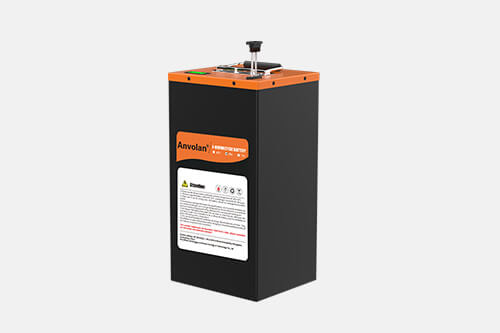
After enough datasheets and slogans, what owners care about is how the vehicle feels day to day. A 72V electric tricycle battery pack supply is widely used on these vehicles, and the feedback from owners clusters around a few points: is there punch off the line, does the charge last a full day, does it lose speed on a climb, does winter still work, how long is the wait to charge, and how painful is a repair. Laying these impressions out in the order they appear is closer to real life than reading a set of rated figures.
1. The first run: how starting and acceleration feel
After a new pack goes in, owners notice the start first. The 72V platform runs a higher voltage, so current is lower for the same power, and the motor responds more directly; a fully loaded start no longer feels sluggish. Some owners put it simply: they used to need two bites at the throttle, now the vehicle moves as soon as power is applied. The change is more obvious in town delivery with frequent stops, where a route may involve dozens of drops and a start each time; over a shift that saves time and effort. Others mention that the motor sounds quieter under heavy load, which may relate to lower current and less heat.
2. A full day out: is the charge enough
Range is the item most easily exaggerated and most easily doubted. What owners actually judge is not a kilometre figure but how much is left at the end of a working day. Delivery riders want to know whether the day's route can be completed without a top-up; rural haulers want to know whether there is margin left after a loaded round trip. The practical approach is to size capacity against the busiest day rather than the average one. Most reports run along the lines that, with ten to twenty percent margin in hand, a full day passes without watching the gauge, and that freedom from watching is itself an improvement.
3. Slopes and full loads: can it hold up
Users in hilly areas feel gradients most directly. On a loaded climb, the pack's instantaneous output decides whether the vehicle slows sharply or cuts out. Owners describe it as holding speed uphill rather than having to get off and push. The key is not only the cells but the BMS overcurrent threshold: set too conservatively, protection trips mid-climb and the experience is poor; set too loosely, cells run overloaded and life suffers. That is why one pack can behave differently across vehicle models, and why owner impressions often diverge on the same product.
4. Winter: where complaints concentrate
Owners in the north tend to say the same thing: winter range shrinks and charging slows. This is not a fault of a particular product but a characteristic of LiFePO4. What varies is the size of the loss and how it is handled. Packs with low-temperature protection refuse to charge when it is too cold, which looks inconvenient but prevents cell damage; products with heating or insulation keep winter usability higher. Another thing owners notice is that charging right after returning, while the pack is still warm, fills more easily than waiting until the next day, which is a matter of habit rather than hardware.
5. Charging: waiting time and rhythm
The charging experience depends on charger power and the facilities available. The general impression is that lithium charges faster than lead-acid: an hour over lunch adds a useful stretch of range for the afternoon. Faster is not automatically better, though. When charger and pack are mismatched, the first part fills quickly and the end never quite completes, which hurts use. Where charging bays are limited, owners care most about whether they can get a turn, and that is where swappability and connector standardisation become part of the experience.
6. The repair bench view: what happens when it fails
The repair side is often overlooked. Technicians care about whether the pack is modular, whether a fault can be traced to a group or a single string, whether parts are easy to obtain, and whether special tools are needed for removal. One technician who has spent years on tricycles says the thing he dreads is a fully sealed pack that can only be replaced as a whole; with a modular structure, replacing one group or one protection board gets the vehicle back on the road the same day. After-sales response matters just as much: several days of silence after a request is more stressful than the fault itself.
7. After a year: degradation and consistency
Long-term impressions centre on degradation. Most owners accept some capacity loss; what they do not accept is one group failing first and dragging the whole pack down. Consistency decides that risk: with careful cell sorting and strict grouping at the factory, string voltages remain close after a year and the pack behaves steadily. Without it, nothing shows early, but six months later a few strings fall behind, range drops suddenly, and the experience sours.
Be the first to receive our latest news, how-to user guides,
and exclusive deals! Subscribe now.

 Headquarter Address:10F, Building 25, N0. 179 Fengguan, Dongshen Road, Dongguan, Guangdong
 Factory Address:Building 3, Area D, Shengyang Science and Technology Industrial Park, East District of Suichuan County Industrial Park, Ji'an, Jiangxi
 Headquarter Telephone No.:+86 769 2366 8529
Factory Telephone No.:+86 796 6111618
 Contact Person:Kevin Chen
 Email Address:chen@xpower-world.com