Global layout
 +86 769 2366 8529




Time:2026-04-10 Views:82
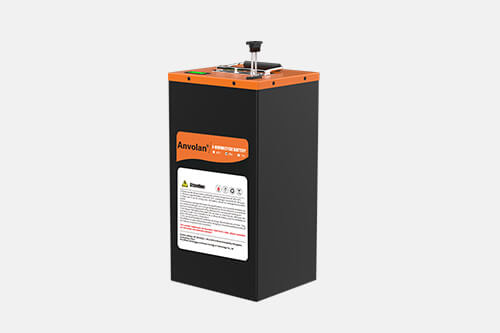
As a core product in the high-voltage energy storage field, the 72V Battery features precise voltage calibration, excellent endurance performance and strict safety design, adapting to high-voltage power demand in various scenarios. It empowers electric travel, industrial equipment and other fields with advanced technology, balancing performance and reliability.
With the rapid iteration of the new energy industry and the continuous expansion of high-voltage power consumption scenarios, the 72V Battery has broken the bottlenecks of insufficient endurance and weak power of low-voltage batteries by virtue of its unique voltage advantages and comprehensive technological upgrades, becoming the core bridge connecting small-scale energy storage and high-power electrical equipment. Different from traditional low-voltage batteries, the 72V Battery takes 72V nominal voltage as the core, with a stable working voltage range of 60V-84V. Through scientific series combination of battery cells, it achieves a perfect balance between power and energy efficiency. It can not only meet the instantaneous discharge demand of high-power equipment, but also take into account long-term endurance. It is widely used in electric motorcycles, golf carts, industrial forklifts, solar energy storage and other fields, becoming the mainstream choice in the current high-voltage energy storage market.
In terms of core technology, the 72V Battery adopts a diversified cell configuration and refined management scheme to meet the needs of different scenarios. At present, mainstream products are mainly divided into two categories: graphene-modified lead-acid batteries and lithium-ion batteries. Among them, graphene-modified lead-acid batteries take stability as their core advantage, while lithium-ion batteries focus on energy density and portability. Both categories have undergone strict technical optimization to adapt to the core demands of different users. In terms of cell selection, the lithium-ion version adopts high-quality NMC (nickel-manganese-cobalt) or LFP (lithium iron phosphate) cells. The energy density of NMC cells can reach 200-250 Wh/kg, which is suitable for scenarios pursuing portability and acceleration performance; LFP cells have a cycle life exceeding 4000 times and excellent thermal stability, making them more suitable for long-term high-intensity use of commercial equipment; graphene-modified lead-acid batteries enhance electrode conductivity through graphene technology, greatly improving charge-discharge efficiency and cycle life. Essentially, they inherit the stable and safe characteristics of lead-acid batteries, without worrying about thermal runaway risks.
Voltage management and charge-discharge technology are one of the core competitiveness of the 72V Battery. The product is equipped with a high-precision Battery Management System (BMS), which monitors the voltage, current and temperature of each battery cell in real time with an accuracy of ±0.05V, realizing comprehensive protection against overcharging, over-discharging, short circuit, over-temperature and other risks, and avoiding performance degradation or safety hazards caused by cell imbalance. In terms of charge and discharge, the CC-CV (constant current constant voltage) charging mode is adopted. Lithium batteries are compatible with a maximum 84V charger, and lead-acid batteries are compatible with an 82.8V absorption voltage. The charging efficiency is more than 30% higher than that of traditional low-voltage batteries. Among them, the graphene-modified model can achieve fast charging in 6 hours and can be charged to 80% in 45 minutes, greatly reducing the charging waiting time. At the same time, the product optimizes the high-current discharge performance. The 72V high-voltage design can support the operation of 5-10 kW motors, reducing current consumption and line loss. The power output is stable when climbing, carrying people or heavy loads, without power shortage caused by sudden voltage drop. Compared with the 48V system, it can reduce the cable thickness by 30%, further improving equipment adaptability.
In terms of performance parameters, the 72V Battery presents diversified adaptation characteristics, with a capacity ranging from 20Ah to 200Ah, which can be flexibly selected according to different scenarios. Taking the mainstream 72V20Ah model as an example, the theoretical endurance can reach 72 kilometers, the actual measured endurance under no-load uniform driving at 25℃ is 76-82 kilometers, the capacity attenuation is controlled at 15%-20% in the winter environment of -5℃, and the endurance can still maintain about 50 kilometers; the 72V38Ah model, as the gold configuration for high-power electric two-wheeler models, has accounted for 62% of the domestic high-power electric vehicle market. It is suitable for high-frequency travel and cargo transportation scenarios in counties and towns, with an endurance of more than 60 kilometers, and the endurance attenuation is not obvious after two years of use. In terms of cycle life, graphene-modified lead-acid batteries can reach 800-1300 times, which can be used stably for 3-5 years if charged once a day; lithium-ion batteries can reach 1500-4000 times, with a service life of 5-10 years, both far exceeding the 300-500 cycle standard of traditional low-voltage lead-acid batteries, greatly reducing the user's replacement cost.
Safety performance is the core design focus of the 72V Battery. From cell production to finished product assembly, it follows strict quality control standards to fully avoid the safety risks of high-voltage batteries. Graphene-modified lead-acid batteries use aqueous electrolyte, which has stable chemical properties and is not afraid of high temperature, impact and overcharging. Even in case of puncture, bulging and other situations, only electrolyte leakage will occur, without fire or explosion, and the probability of safety accidents is almost zero; lithium-ion batteries realize thermal runaway early warning by optimizing the cell structure and BMS protection logic, automatically cutting off the circuit when the temperature exceeds 65℃. Equipped with an IP67 waterproof case, it can withstand 30 minutes of immersion, adapting to complex environments such as outdoors and humidity. According to the data of the Ministry of Emergency Management in the first quarter of 2026, more than 80% of electric bicycle fires are related to non-standard modified lithium batteries, while compliant 72V batteries effectively avoid such risks through strict technical control, becoming the preferred configuration for major manufacturers.
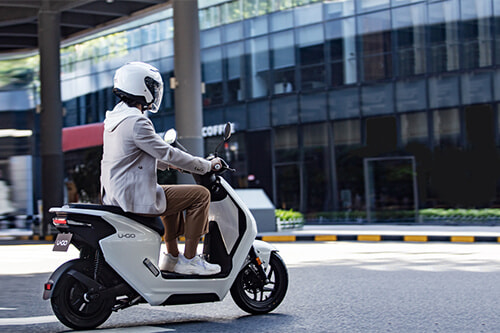
In terms of scenario adaptation, the 72V Battery covers both civil and industrial power fields with its flexible specification design, realizing all-round empowerment. In the civil power field, it is mainly suitable for high-speed electric motorcycles (speed > 70 km/h), electric tricycles and other models, especially suitable for the travel and cargo transportation needs of users in counties and towns, balancing power and cost performance. A set of 72V38Ah graphene battery costs about 1650 yuan, which is about 1000 yuan cheaper than lithium batteries of the same specification, and the trade-in discount can reach 40%. The after-sales network covers the whole country, making maintenance and replacement convenient. In the industrial field, it is suitable for 6-seat golf carts, industrial forklifts and other equipment. The 72V100Ah model can support 8 hours of continuous operation of golf carts, and the 72V200Ah model can meet 6-10 hours of full-load work of forklifts. At the same time, it can be used as an energy storage unit of solar energy storage arrays, combined with a 72V MPPT controller to improve energy storage efficiency. In addition, the product is also compatible with a variety of modified models, such as Niu and Fengsu Jihe series electric vehicles, which can be directly upgraded and installed, greatly improving the overall vehicle performance.
In terms of cost and after-sales service, the 72V Battery has achieved dual advantages of cost performance and convenience with its mature technical system. Compared with low-voltage batteries of the same power, the 72V Battery does not need additional current amplification equipment, and can be directly compatible with high-power motors, reducing equipment modification costs; the maintenance cost of graphene-modified lead-acid batteries is extremely low, without frequent water replenishment, only regular balanced charging is needed, while lithium-ion batteries do not need daily maintenance, only monthly SOC calibration is needed, greatly reducing the user's maintenance energy. In terms of after-sales service, mainstream brands of 72V Battery all provide perfect quality assurance services. Graphene-modified lead-acid batteries have a 2-year warranty, and lithium-ion batteries have a 3-5-year warranty. Offline maintenance outlets cover urban and rural areas, enabling rapid maintenance and replacement even in rural areas. Compared with the cumbersome process of returning lithium batteries to the factory for maintenance, it greatly improves the user experience.
With the intensive implementation of new electric vehicle battery safety regulations in 2026, policies such as "Safety Requirements for Power Batteries for Electric Vehicles" and "Performance Technical Specifications for Lithium-Ion Batteries for Electric Bicycles" have put forward higher requirements for battery safety, cycle life and low-temperature performance, and the technical advantages of the 72V Battery have become more prominent. Graphene-modified lead-acid batteries are naturally compliant with the new regulations, without the need for additional protective devices; lithium-ion batteries have also achieved improved compliance through technical optimization, and their cost control capabilities have been further enhanced. In the future, the 72V Battery will continue to focus on technological innovation, optimize energy density and cycle life, expand more application scenarios such as industrial energy storage and outdoor emergency power supplies, and promote further cost reduction, balancing performance, safety and cost performance, injecting new vitality into the development of the high-voltage energy storage field.
As a performance benchmark in the high-voltage energy storage field, the 72V Battery has broken the performance limitations of traditional batteries with its precise technical positioning, comprehensive performance advantages and wide scenario adaptability. It not only meets the core needs of ordinary users for power, endurance and cost performance, but also adapts to the strict requirements of the industrial field for stability and long-term performance. Whether it is electric vehicles for daily travel or industrial equipment operating at high intensity, the 72V Battery can provide a stable, efficient and safe energy storage solution with its advanced technical system, becoming a core supporting product in the high-voltage energy storage field in the new energy era.
Be the first to receive our latest news, how-to user guides,
and exclusive deals! Subscribe now.

 Headquarter Address:10F, Building 25, N0. 179 Fengguan, Dongshen Road, Dongguan, Guangdong
 Factory Address:Building 3, Area D, Shengyang Science and Technology Industrial Park, East District of Suichuan County Industrial Park, Ji'an, Jiangxi
 Headquarter Telephone No.:+86 769 2366 8529
Factory Telephone No.:+86 796 6111618
 Contact Person:Kevin Chen
 Email Address:chen@xpower-world.com