Global layout
 +86 769 2366 8529




Time:2026-07-07 Views:96
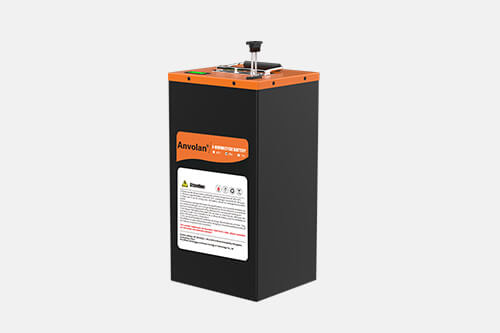
In high-frequency and heavy-load electric tricycle application scenarios such as agricultural transportation, urban and rural freight, stall delivery and long-distance travel, the battery adaptation directly determines the overall vehicle power output, cruising performance, equipment service life and operational safety. As a high-capacity, high-energy-storage and high-voltage commercial-grade power supply, the 72v 180ah electric tricycle battery pack has a rated energy storage of up to 12.96kWh, serving as the core upgrade configuration for heavy-load and long-range electric tricycles. Compared with conventional medium and small-capacity battery packs such as 72V60Ah and 72V120Ah on the market, this battery boasts core advantages of longer cruising range, more stable discharge, sufficient heavy-load power and longer cycle life. However, due to its special volume, capacity and discharge parameters, it cannot be universally applied to all electric tricycles. From a professional adaptation perspective, this paper comprehensively analyzes the full set of adaptation standards of the 72v 180ah electric tricycle battery pack, including vehicle hardware adaptation, motor and electronic control matching, body structure compatibility, working condition scenario adaptation, charging system adaptation, as well as installation and operation maintenance adaptation. It helps users avoid power failures, equipment damage and potential safety hazards caused by mismatching, virtual matching and forced matching, realize perfect compatibility and implementation between the battery and the whole vehicle, and maximize the application value of large-capacity lithium batteries.
Core power parameter adaptation is the foundation for the practical application of the 72v 180ah electric tricycle battery pack and the key to preventing power mismatching and equipment damage. This battery pack has a standard voltage of 72V and a full-charge voltage of 84V, adapting to the mainstream high-power electric tricycle power assemblies on the market, and precisely matching motors with power from 1500W to 3000W, which fully meets the working condition requirements of heavy-load freight, long-distance commuting and continuous operation. For 1500W basic heavy-load motors, the 72V180Ah large-capacity battery can stably output continuous current, eliminate voltage drop and weak power problems during full-load climbing and heavy-load driving, and achieve linear and stable power output. For high-power motors of 2000W to 3000W, the high-capacity and high-current discharge characteristics of the battery can perfectly match the instantaneous peak power demand, realizing fast starting and acceleration and sufficient climbing torque, and completely solving the problem of premature aging of small-capacity batteries caused by long-term overload operation due to insufficient power to drive high-power motors. It is necessary to avoid the wrong adaptation of forced matching with low-power motors. Low-speed and low-power tricycles below 800W have small current limiting of electronic control systems. Forcibly equipped with 72V180Ah large-capacity batteries will cause current mismatching, electronic control overload, line heating and other problems, and even burn out controllers and motors in severe cases, which does not conform to the adaptation standards at all.
Vehicle controller and circuit system adaptation is the core link to ensure the stable operation of the 72v 180ah electric tricycle battery pack. When upgrading electric tricycles with large-capacity lithium batteries, it is necessary to confirm that the original vehicle controller voltage compatibility range supports 72V/84V specifications. Mixing low-voltage controllers of 48V and 60V is prohibited, because low-voltage controllers cannot bear the output of high-voltage batteries, which is extremely easy to cause circuit short circuit and controller breakdown and burnout. Meanwhile, the original vehicle line specifications must meet the standards. The main lines of the whole vehicle adapted to this battery pack need to adopt thickened copper wires of 8 square millimeters or above to ensure stable high-current transmission and avoid heating, aging and sparking of thin lines under long-term high-load operation. Most original low-configured tricycles have insufficient line specifications, and the main lines, connectors and safety devices need to be replaced synchronously during battery upgrading to match the maximum discharge current parameters of the battery. In addition, the parameters of the battery built-in BMS protection board need to adapt to the overall vehicle working conditions. It is preferred to select an intelligent protection board with continuous discharge above 50A and peak discharge above 120A, which can accurately match the current fluctuations of high-power tricycles during starting, stopping, climbing and heavy loading, and realize comprehensive protection of overcharge, overdischarge, overcurrent, short circuit, high and low temperature, so as to ensure the safe and stable operation of the vehicle circuit system.
Vehicle body structure and installation space adaptation are the prerequisites for the smooth installation of the 72v 180ah electric tricycle battery pack. Different from conventional small-capacity batteries, the 72V180Ah lithium battery pack has a larger volume and higher self-weight, which has clear adaptation requirements for the size and load-bearing structure of the electric tricycle battery compartment. According to the industry general adaptation standards, the internal length, width and height of the battery compartment adapted to this battery shall not be less than 64cm×32cm×22cm. The original battery compartments of most new heavy-load freight tricycles and closed passenger tricycles can meet the installation requirements, while old simple mobility tricycles and small lightweight tricycles have narrow battery compartment space and insufficient load-bearing capacity, which cannot adapt to the installation of large-capacity batteries. Forced installation will cause extrusion deformation, unstable fixation, bump displacement and other problems. In terms of load-bearing adaptation, the vehicle chassis needs to be equipped with reinforced load-bearing structures to stably bear the self-weight of large-capacity batteries and avoid chassis deformation and vehicle body tilt caused by long-term load-bearing. During installation, the original fixing bracket shall be matched with special reinforced buckles to fit the vehicle body installation points, prevent battery loosening and line wear caused by driving bumps, and ensure sufficient battery heat dissipation space without closed extrusion and heat accumulation, fully adapting to the long-term outdoor bumpy and high-frequency driving operation scenarios.
Working condition scenario adaptation determines the service cost performance and life stability of the 72v 180ah electric tricycle battery pack, and the adaptation effect varies greatly in different vehicle usage scenarios. Featuring ultra-long cruising range and stable heavy-load performance, this battery pack has a single full-charge cruising range of 180 to 220 kilometers, which is fully suitable for high-intensity operation scenarios such as urban and rural long-distance freight, daily high-frequency round-trip distribution, large-area agricultural field transportation and long-line scenic spot and park shuttle services. It can realize uninterrupted daily work without midway power supplementation and greatly improve operation efficiency. In terms of climate working condition adaptation, the 72V180Ah lithium iron phosphate battery pack is preferred, adapting to a wide temperature range of -20℃ to 45℃. It can maintain stable capacity during high-temperature outdoor operation in summer and low-temperature outdoor driving in winter, with strong adaptability to complex working conditions such as exposure, severe cold and rain, and stable performance in four seasons. For household scenarios with short-distance and low-speed, low-frequency travel and light-load driving, this battery has performance surplus and high input cost with low adaptation cost performance, and medium and small-capacity batteries are more suitable. Therefore, this large-capacity lithium battery is an exclusive adaptive configuration for commercial heavy-load and high-frequency long-range electric tricycles.
Charging system adaptation is the key to ensure the long-term service of the 72v 180ah electric tricycle battery pack. Mismatched chargers will directly cause accelerated battery attenuation and battery bulging and scrapping. Based on the 180Ah large-capacity parameters of the battery, a special 72V high-current intelligent lithium battery charger shall be adapted, and a 20A to 25A segmented fast charging device is preferred to balance charging efficiency and cell maintenance. The single complete charging duration is controlled within 8 to 10 hours, adapting to the centralized power supplementation operation rhythm during night shutdown. Mixing small-current lead-acid chargers and low-voltage miscellaneous chargers is strictly prohibited. Small-current equipment will lead to insufficient battery charging and frequent virtual power, which will seriously damage the battery cells in long-term use; excessive current will cause cell overheating and voltage difference imbalance, shortening the battery service life. Meanwhile, the intelligent charging management mode shall be adapted to support automatic floating charge stop, temperature monitoring and overload protection, matching the charging logic of large-capacity batteries. For multi-vehicle centralized operation scenarios, supporting batch intelligent charging equipment can be configured to realize independent temperature control and balanced charging and further improve charging adaptability and operation and maintenance safety.
From the perspective of comprehensive adaptation specifications, the 72v 180ah electric tricycle battery pack has strict adaptation standards for hardware, structure, working conditions and charging, and is not a universal battery product. Its core applicable users are commercial electric tricycles equipped with 1500W to 3000W high-power motors, standard large-capacity battery compartments, and focusing on heavy-load long-distance and high-frequency operation, which perfectly adapts to high-intensity working scenarios such as freight, agriculture and distribution. With ultra-large energy storage, stable power and ultra-long service life, it completely solves the pain points of insufficient cruising range, weak power and frequent attenuation of ordinary batteries. Users must strictly check the full-dimensional adaptation according to the overall vehicle parameters, body structure and usage scenarios during selection and upgrading, and avoid blind modification and mismatched use. Only by meeting the full set of adaptation conditions can the performance advantages of this large-capacity lithium battery be fully released, taking into account power, cruising range, safety and cost performance, and providing reliable power guarantee for the long-term stable operation of electric tricycles.
Be the first to receive our latest news, how-to user guides,
and exclusive deals! Subscribe now.

 Headquarter Address:10F, Building 25, N0. 179 Fengguan, Dongshen Road, Dongguan, Guangdong
 Factory Address:Building 3, Area D, Shengyang Science and Technology Industrial Park, East District of Suichuan County Industrial Park, Ji'an, Jiangxi
 Headquarter Telephone No.:+86 769 2366 8529
Factory Telephone No.:+86 796 6111618
 Contact Person:Kevin Chen
 Email Address:chen@xpower-world.com