Global layout
 +86 769 2366 8529




Time:2026-09-12 Views:36
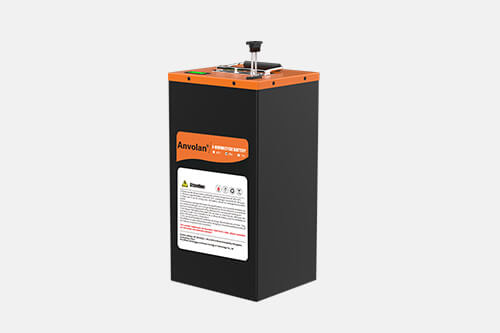
In the power supporting system of heavy-duty cargo electric tricycles, engineering tricycles and long-distance commuter electric tricycles, the core performance of the battery directly determines the vehicle’s endurance, power output stability, load capacity and overall service life. Traditional lead-acid batteries are plagued by common defects such as virtual capacity, rapid power attenuation, short cycle life, severe voltage drop under heavy load and poor low-temperature performance, failing to meet the high-frequency, heavy-load and long-endurance operation demands of commercial tricycles. As an upgraded power configuration for heavy-duty electric tricycles, the 72V 300Ah LiFePO4 battery relies on excellent electrochemical performance and industrial-grade structural design. With comprehensive advantages of ultra-large energy storage capacity, stable power output, ultra-long cycle life, wide temperature adaptability and high-level safety protection, it completely solves the performance pain points of traditional batteries and has become the mainstream matching power supply for commercial heavy-duty electric tricycles. This article comprehensively analyzes six core capabilities of the 72V 300Ah LiFePO4 electric tricycle battery from the performance perspective, including endurance performance, power output, cycle durability, charge and discharge efficiency, environmental adaptability and intelligent protection.
Ultra-large energy storage and accurate endurance performance are the fundamental core advantages of the 72V 300Ah LiFePO4 battery. With a rated voltage of 72V and a rated capacity of 300Ah, the battery achieves a total energy storage of 21.6kWh, representing a top-tier large-capacity power configuration for tricycles and far exceeding the energy storage level of conventional 72V 100Ah–200Ah batteries. Different from lead-acid batteries with virtual capacity and annual capacity attenuation, LiFePO4 cells feature extremely high capacity consistency with minimal factory capacity deviation, ensuring sufficient and reliable full-charge available capacity. In actual working conditions, matched with conventional 2000W–3000W tricycle motors, the vehicle can achieve a cruising range of over 300 kilometers under no-load and smooth road conditions. Even under full load of 500kg–1000kg heavy-duty operation, the effective cruising range can remain stably above 240 kilometers, fully meeting the all-day uninterrupted operation needs of express logistics, urban and rural freight, and construction site transportation. Meanwhile, the battery delivers a stable discharge platform with uniform voltage attenuation throughout the operation, avoiding insufficient power and abrupt power drop in the later stage that commonly occur in traditional batteries, and solving the problems of inaccurate endurance estimation and mid-journey power shortage in long-distance operations.
Stable heavy-load power output adapts to complex driving conditions of tricycles. Electric tricycles require high instantaneous discharge capability and voltage stability when starting with heavy loads, climbing slopes and driving on bumpy roads, while ordinary batteries are prone to excessive voltage drop, weak power and stuttering acceleration. The 72V 300Ah LiFePO4 battery supports continuous high-current discharge and instantaneous peak discharge with strong and linear power output. Its ultra-low internal resistance minimizes voltage drop during heavy-load startup and steep slope climbing, providing stable and sustainable power support for the motor. It ensures smooth heavy-load startup, powerful climbing performance and flexible acceleration. Unlike lead-acid batteries with sharply degraded performance under heavy loads, this battery maintains stable power output without obvious fluctuation in both constant-speed driving on flat roads and heavy-load operation on complex road conditions, effectively improving the operational efficiency and driving experience of tricycles.
Ultra-long cycle durability greatly reduces long-term replacement and operation costs. Cycle life is a core indicator for evaluating the long-term cost performance of power batteries. Ordinary lead-acid batteries only have 300–500 charge-discharge cycles, with significant capacity attenuation after six months to one year of use and mandatory replacement within two years. In contrast, industrial-grade 72V 300Ah LiFePO4 cells adopt a highly stable electrochemical system, achieving 3000–6000 deep charge-discharge cycles. Under normal working conditions, the effective service life can reach 5–8 years. The battery capacity decays slowly during long-term operation, retaining more than 80% of the rated capacity after three years of use and eliminating the high cost of frequent battery replacement. In addition, the battery has no memory effect, allowing random supplementary charging without deep power depletion. It requires no regular maintenance such as water replenishment and balance repair needed for lead-acid batteries, realizing maintenance-free long-term operation.
High-efficiency charge and discharge performance adapts to high-frequency commercial operation rhythms. To meet the daily multiple charging and continuous operation demands of commercial tricycles, the 72V 300Ah LiFePO4 battery is optimized for charging adaptability. It supports high-speed fast charging and can be fully charged within 4–6 hours with a dedicated matched charger, greatly shortening the charging cycle and improving vehicle attendance efficiency. Featuring strong charging acceptance, low temperature rise during charging and high energy conversion rate, the battery achieves an energy utilization efficiency of over 95% with extremely low power loss. On the discharge side, it supports deep discharge with an available discharge depth of over 90%, fully releasing energy storage advantages and avoiding idle power waste. The combination of fast charging and deep discharging perfectly adapts to high-frequency turnover and high-intensity commercial scenarios such as logistics transportation and construction site operations, maximizing vehicle operating hours and operational efficiency.
Wide-temperature environmental adaptability ensures stable all-season operation. Electric tricycles operate in complex scenarios with high-temperature exposure in summer, severe cold in winter, outdoor humidity and dust, which easily cause performance failure, bulging damage and halved endurance of ordinary batteries. The 72V 300Ah LiFePO4 battery boasts excellent wide-temperature adaptability, operating stably in an ultra-wide temperature range from -40℃ to 85℃ and adapting to national all-season working conditions. It maintains stable thermal performance without overheating, bulging or thermal runaway in high-temperature summer environments, with no significant capacity attenuation during continuous high-load operation. In cold winter environments, it avoids the common defect of halved endurance for lead-acid batteries, retaining stable discharge performance and sufficient power output at low temperatures to prevent vehicle stalling. Equipped with a fully sealed waterproof and dustproof structure, the battery is moisture-proof, shockproof and bump-resistant, perfectly adapting to harsh outdoor, construction site and rural road conditions and ensuring all-weather stable power output.
Intelligent BMS protection and superior safety performance establish a solid operational guarantee. The battery is built with a high-precision intelligent Battery Management System (BMS), integrating multiple protection functions including overcharge, overdischarge, overcurrent, short circuit, overheating and low-voltage protection. It real-timely monitors cell voltage, operating current and temperature data, dynamically balances cell power and eliminates potential faults and performance attenuation caused by excessive cell voltage difference. The system can quickly cut off power under abnormal working conditions to prevent safety hazards such as short-circuit ignition and overcharge bulging. Benefiting from the inherent high safety properties of LiFePO4 materials, the battery features high temperature resistance, non-flammability and non-explosion with excellent thermal stability. It will not ignite or explode even under extrusion, collision or puncture. Adopting Grade A large single cells with high consistency and stable performance, the battery achieves long-term safe and reliable operation through three-dimensional guarantees of high-quality materials, optimized structure and intelligent protection, fully adapting to high-frequency and high-intensity commercial vehicle operation.
In conclusion, the 72V 300Ah LiFePO4 electric tricycle battery perfectly matches the commercial operation scenarios of heavy-duty electric tricycles with comprehensive performance advantages including ultra-large energy storage and endurance, stable heavy-load power, ultra-long cycle life, high-efficiency charge-discharge, full-temperature adaptability and intelligent safety protection. Compared with traditional batteries, it thoroughly solves industry pain points such as weak power, virtual endurance, short service life, easy damage and cumbersome maintenance. With long-term stable comprehensive performance, it significantly reduces vehicle operation costs and improves operational efficiency, making it the most cost-effective, stable and reliable core power configuration for modern heavy-duty electric tricycles.
Be the first to receive our latest news, how-to user guides,
and exclusive deals! Subscribe now.

 Headquarter Address:10F, Building 25, N0. 179 Fengguan, Dongshen Road, Dongguan, Guangdong
 Factory Address:Building 3, Area D, Shengyang Science and Technology Industrial Park, East District of Suichuan County Industrial Park, Ji'an, Jiangxi
 Headquarter Telephone No.:+86 769 2366 8529
Factory Telephone No.:+86 796 6111618
 Contact Person:Kevin Chen
 Email Address:chen@xpower-world.com