Global layout
 +86 769 2366 8529




Time:2026-10-15 Views:53
Electric tricycles are widely used in logistics distribution, short-distance transport, farmland work and community commuting, and have become important tools for many users in daily production and life. The power and endurance performance of a tricycle is directly determined by its on-board power battery. With the continuous advancement of electric vehicle technology, power batteries are also being iterated and upgraded. Power battery products that use lithium iron phosphate cells and are designed for large capacity requirements are gradually replacing traditional lead-acid power batteries with their advantages of long cycle life, good safety, high energy density and stable endurance, becoming an ideal choice for upgrading electric tricycles.
Traditional electric tricycles mostly use lead-acid batteries as their power source. Lead-acid battery technology is mature and the purchase cost is relatively low, but its limitations are also obvious. Lead-acid batteries are heavy, significantly increasing the load of the whole vehicle and affecting endurance and climbing ability. Their cycle life is limited, and capacity decay accelerates after frequent charging and discharging, requiring overall replacement after a period of use. Charging time is long, affecting vehicle usage efficiency. At the same time, lead-acid batteries have high maintenance requirements during long-term use, and improper disposal of waste batteries also poses environmental concerns. These shortcomings prompt vehicle manufacturers and users to pay attention to better power battery solutions.
Lithium iron phosphate batteries are an important branch of the lithium-ion battery system. The cathode material is lithium iron phosphate, which provides excellent thermal and chemical stability and outstanding safety performance. Compared with lead-acid batteries, lithium iron phosphate batteries have higher energy density, and under the same capacity their weight is greatly reduced, helping reduce the overall vehicle weight and improve payload and endurance. Their cycle life far exceeds that of lead-acid batteries. Under reasonable conditions of use, they can complete thousands of charge-discharge cycles, giving them an advantage in long-term cost. Lithium iron phosphate batteries also support faster charging, have a stable discharge platform and good high-rate discharge performance, and can meet the instantaneous high-current requirements of tricycle starting and climbing.
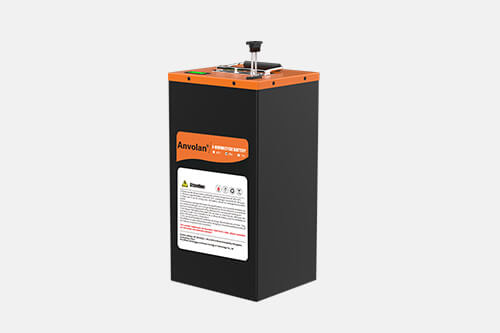
For high-power electric tricycle applications, a power battery with a 72V voltage platform and 280Ah large capacity can provide sufficient endurance reserve for the whole vehicle. The large capacity design supports long continuous operation, reduces charging frequency and improves operational efficiency. The high voltage platform helps reduce current loss at the same power level and improves energy transmission efficiency. Battery packs of this specification are widely used in cargo tricycles, express delivery vehicles, agricultural tricycles and sanitation vehicles, meeting the endurance and power requirements of different working scenarios.
In cargo and delivery scenarios, electric tricycles undertake a large number of material transport tasks and place high requirements on endurance and load capacity. Vehicles using large-capacity power batteries can complete longer delivery routes, reduce mid-way charging waiting and improve daily transport capacity. When vehicles start and stop frequently and climb at full load, the battery needs to provide stable high-rate discharge capability. Lithium iron phosphate power batteries have a stable discharge platform and small voltage drop under high-current output, supporting the vehicle to maintain good power performance on complex roads and ensuring stable and orderly delivery operations.
Farmland and mountainous working scenarios also impose strict requirements on the passing ability and durability of tricycles. Field roads are muddy and slopes undulate, and vehicles frequently work under heavy load. Lithium iron phosphate batteries have good tolerance to high and low temperatures and can maintain relatively stable discharge performance under large temperature differences. The high cycle life enables them to withstand frequent deep discharge, reduce battery replacement frequency and lower long-term cost, adapting to the demand for long-term high-intensity operation of field working vehicles.
Sanitation and community service vehicles usually need long-duration low-speed operation, with fixed working routes and frequent start-stop. Such scenarios particularly value the charge-discharge cycle life and maintenance convenience of batteries. Vehicles using lithium iron phosphate power batteries have longer charging intervals and faster charging speeds, shortening parking and recharging time and improving effective working hours. Meanwhile, the good safety of lithium iron phosphate material and low risk of thermal runaway can reduce operators' concerns about battery safety and improve the safety factor of vehicles running in densely populated areas.
During selection, users need to comprehensively consider multiple factors based on their own usage scenarios. First is capacity and endurance matching. The appropriate battery capacity should be determined according to daily driving mileage and load conditions. Second is charge-discharge performance. Users need to evaluate whether the battery can meet the current requirements under conditions such as starting and climbing. Third is charging conditions. Confirm that the battery voltage and interface are compatible with the existing charger, and replace supporting charging equipment when necessary. For users in cold regions, attention should also be paid to the low-temperature discharge performance of the battery and reasonable evaluation of winter endurance attenuation.
Battery management and maintenance should not be ignored either. Standardized charge-discharge operations can extend battery service life and avoid excessive discharge and long-term full-charge storage. Choosing products equipped with a complete battery management system allows real-time monitoring of battery status and prevents abnormal conditions such as overcharging, over-discharging and overcurrent, ensuring safe use. Regularly checking battery connection terminals and maintaining good heat dissipation and ventilation help keep the battery in good working condition. Waste batteries should be handed over to professional institutions for recycling to avoid environmental pollution caused by random disposal.
From the economic perspective, the initial purchase price of lithium iron phosphate power batteries is usually higher than that of lead-acid batteries, but their longer cycle life, higher energy efficiency and lower maintenance cost make the total life-cycle cost more competitive. For commercial vehicles with long daily mileage and frequent battery replacement, choosing lithium iron phosphate power batteries can significantly reduce later investment and improve overall economic benefits, making them a better choice for long-term operation.
With the development of electric vehicles and new energy technology, the application prospects of lithium iron phosphate power batteries in the electric tricycle field are increasingly broad. A lithium iron phosphate power battery with a 72V voltage platform and 280Ah large capacity provides a reliable, durable and efficient power solution for cargo transport, farmland operation, community service and other scenarios. Proper selection, standardized use and scientific maintenance can fully release battery performance, extend the service life of vehicles and batteries, and help electric tricycles achieve more efficient and economical operation.
Be the first to receive our latest news, how-to user guides,
and exclusive deals! Subscribe now.

 Headquarter Address:10F, Building 25, N0. 179 Fengguan, Dongshen Road, Dongguan, Guangdong
 Factory Address:Building 3, Area D, Shengyang Science and Technology Industrial Park, East District of Suichuan County Industrial Park, Ji'an, Jiangxi
 Headquarter Telephone No.:+86 769 2366 8529
Factory Telephone No.:+86 796 6111618
 Contact Person:Kevin Chen
 Email Address:chen@xpower-world.com