Global layout
 +86 769 2366 8529




Time:2026-07-07 Views:115
In scenarios such as scenic spot tours, park shuttle services, cultural tourism towns and resort sightseeing vehicles have become the core travel and service carriers. The cruising stability, continuous power performance and operation failure rate of vehicles directly affect tourist experience and park operation efficiency. Traditional sightseeing vehicles are generally equipped with lead-acid batteries, which have pain points such as short cruising range, slow charging speed, low cycle life, high operation and maintenance costs, and poor low-temperature performance, making it difficult to meet the high-frequency, long-duration and all-weather operation needs of scenic spots. With the advantages of high capacity, high voltage and high stability power configuration, 72V 120Ah Lithium-ion Sightseeing Car has become a preferred solution for the upgrading and renovation of large and medium-sized sightseeing vehicles and the supporting of new vehicles. From the perspective of practical application, this paper launches a systematic set of solutions including accurate selection, vehicle modification, charging supporting, daily operation and maintenance, and fault avoidance, helping cultural tourism operators and equipment purchasers upgrade the power system of sightseeing cars, reduce long-term operation costs, and improve vehicle cruising ability and safety stability.
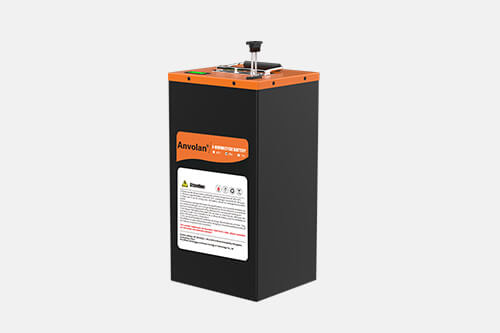
The first is the core adaptive selection scheme, which accurately matches the parameters of 72V 120Ah lithium batteries and sightseeing vehicles to avoid performance waste and equipment damage caused by adaptation deviation. The rated energy storage of the 72V 120Ah lithium battery pack reaches 8.64kWh, which is specially designed for 8-14 seat large and medium-sized manned sightseeing cars, adapting to the mainstream 4kW to 6kW drive motors of sightseeing cars on the market, and perfectly fitting the working conditions of flat road cruising, gentle slope climbing and full-load carrying in scenic spots. Compared with the conventional 48V battery version, the 72V high-voltage system delivers more stable power output with sufficient climbing torque and no weak power during full-load driving. The 120Ah large-capacity configuration completely solves the pain point of frequent supplementary charging of small-capacity batteries, supporting high-frequency continuous operation for 8 to 10 hours a day, with a single full-charge cruising range of 90 to 110 kilometers, fully covering the daily operating mileage of most scenic spots and parks. In terms of cell selection, commercial sightseeing vehicles prioritize the 24-string lithium iron phosphate cell solution equipped with an intelligent BMS protection system. Compared with ternary lithium solutions, it has higher high-temperature resistance, lower attenuation and stronger safety, adapting to complex scenarios such as outdoor open-air parking, high-temperature exposure and continuous day and night operation. It has a cycle life of more than 4000 times, meeting the needs of stable operation for 3 to 5 years, and serves as the optimal cell adaptation solution for commercial sightseeing vehicles.
The second is the vehicle modification and installation implementation scheme. For the upgrading scenario of traditional lead-acid sightseeing vehicles converted to lithium batteries, standardized construction procedures are formulated to ensure compliant, safe and stable modification. The original battery compartment of most old sightseeing vehicles is compatible with 72V large-capacity battery packs, and there is no need for large-scale modification of the vehicle body structure during renovation. It only needs to remove the original lead-acid battery pack, clean accumulated dust and aging interfaces of lines, and complete line matching and debugging. Professional specifications shall be followed during installation. The 72V 120Ah lithium battery pack has a moderate weight and requires two people to place and fix it cooperatively. The battery pack shall be locked with the original fixing bracket to prevent battery displacement and line friction damage caused by vehicle driving bumps. Meanwhile, special 72V lithium battery chargers and controllers must be matched, and original lead-acid controllers and chargers are prohibited to avoid battery bulging, overheating, unbalanced voltage difference and other faults caused by mismatched charging voltage and current and abnormal discharge logic. After modification, the vehicle shall be powered on for comprehensive testing to detect no-load voltage, full-load discharge current, climbing power output and other parameters, ensuring the coordinated matching of batteries, motors and electronic control systems without virtual power, sudden power failure or power stuttering, so as to guarantee compliant and stable vehicle operation after modification.
The optimized supporting charging system scheme is the key to improving the operation efficiency of sightseeing vehicles and extending battery life. In view of the large-capacity lithium battery characteristics of 72V 120Ah Lithium-ion Sightseeing Car, intelligent segmented fast charging equipment shall be adopted, with a standard 15A to 20A special lithium battery charger, which balances charging efficiency and cell maintenance. The complete single charging duration is controlled within 6 to 8 hours, adapting to the centralized supplementary charging operation rhythm of scenic spots during night shutdown. Compared with the 10 to 12-hour charging time of lead-acid batteries, it greatly shortens the charging waiting time and improves vehicle turnover efficiency. Meanwhile, a standardized charging and operation maintenance scenario shall be built. The charging area shall be dry, ventilated, shaded and rain-proof, equipped with leakage protection and overload power-off devices to prohibit dangerous operations such as open-air high-temperature charging and rainy wet charging. Follow the principle of shallow charging and shallow discharging in daily use. Supplementary charging can be carried out when the remaining power is 20% to 30% after operation. There is no need to exhaust the power deeply every time, and power shall be cut off in time after full charging at night to avoid accelerated cell aging caused by long-term floating charging. For multi-vehicle centralized operation scenarios, a batch intelligent charging system can be built to realize synchronous charging, independent temperature control and overload protection for multiple vehicles, uniformly manage and control charging status, and reduce manual operation and maintenance costs.
The long-term operation maintenance and working condition adaptation scheme focuses on the high-frequency operation scenarios of scenic spots, targeted solving problems such as battery attenuation, frequent faults and reduced cruising range, so as to maximize the service life of equipment. In daily operation, the 72V 120Ah lithium battery pack adapts to a wide temperature working range of -20℃ to 45℃ with excellent four-season operation stability. During high-temperature summer periods, avoid long-term open-air exposure and static placement of vehicles, and power off for cooling during operation intervals to reduce cell thermal loss. In low-temperature winter environments, slight capacity attenuation of batteries is a normal phenomenon. Preheating charging can be adopted to avoid high-current climbing and rapid acceleration at low temperatures and protect cell activity. For long-term idle sightseeing vehicles, the battery power shall be maintained at 50% to 60%, and a complete charge and discharge cycle shall be carried out monthly to calibrate the BMS system and prevent battery dormancy and large voltage difference caused by power deficit. Meanwhile, establish a regular inspection mechanism, check battery line interfaces, shell tightness and voltage difference weekly, conduct in-depth performance detection monthly, and timely eliminate hidden dangers such as loose lines, cell attenuation and protection board failure. Compared with lead-acid batteries, it can reduce more than 80% of operation and maintenance faults and greatly cut down maintenance and replacement costs.
The safety protection and risk avoidance scheme builds a solid safety bottom line for the operation of 72V 120Ah lithium-ion sightseeing cars. Regular 72V 120Ah lithium battery packs are equipped with industrial-grade intelligent BMS protection systems, with multiple protection functions including overcharge, overdischarge, overcurrent, short circuit, high and low temperature protection and balanced voltage stabilization. It can real-time monitor the voltage of single cells, overall temperature and discharge current, and automatically power off for protection under abnormal working conditions to eliminate safety accidents such as thermal runaway, fire and short circuit. Three high-frequency risks must be avoided during operation: first, overload and long-term steep slope driving are prohibited to prevent battery overheating loss caused by continuous high-current discharge; second, disassembling battery packs, modifying lines and removing protection devices without permission are prohibited; third, in-depth wading of vehicles shall be avoided to prevent battery pack water inflow and line short circuit. Meanwhile, aluminum alloy battery boxes with IP65 high protection level are preferred, which are waterproof, shockproof, compression and wear-resistant, adapting to the normalized operation scenarios of bumpy roads and rainy and snowy weather in scenic spots, and fully guaranteeing vehicle operation safety.
From the perspective of comprehensive operation cost optimization, the 72V 120Ah Lithium-ion Sightseeing Car power upgrading solution has extremely high implementation value. Although the upfront procurement and modification cost is higher than that of lead-acid batteries, the advantages of lithium batteries such as ultra-long service life, low operation and maintenance cost and high operation efficiency can quickly dilute the initial investment. Lead-acid batteries have high annual replacement frequency, high energy consumption and frequent shutdowns due to faults, while 72V 120Ah lithium batteries can operate stably for more than 5 years without frequent replacement, with lower charging energy consumption and more stable cruising range. It can effectively reduce invisible expenses such as vehicle operation shutdown losses, maintenance and frequent battery replacement in scenic spots. For commercial scenarios such as scenic spots, parks and resorts, this standardized scheme including selection, modification, charging and operation maintenance can comprehensively improve the operation efficiency of sightseeing vehicles, reduce comprehensive vehicle use costs and ensure operation safety, serving as the optimal implementation scheme for the upgrading of electric sightseeing vehicle power systems.
Be the first to receive our latest news, how-to user guides,
and exclusive deals! Subscribe now.

 Headquarter Address:10F, Building 25, N0. 179 Fengguan, Dongshen Road, Dongguan, Guangdong
 Factory Address:Building 3, Area D, Shengyang Science and Technology Industrial Park, East District of Suichuan County Industrial Park, Ji'an, Jiangxi
 Headquarter Telephone No.:+86 769 2366 8529
Factory Telephone No.:+86 796 6111618
 Contact Person:Kevin Chen
 Email Address:chen@xpower-world.com