Global layout
 +86 769 2366 8529




Time:2026-07-07 Views:83
As a core tool for urban and rural freight, agricultural operations and short-distance travel, electric tricycles always work in complex operating conditions such as outdoor bumpy roads, alternating high and low temperatures, and continuous heavy-load operation. Battery safety is the primary bottom line for vehicle operation. As a mainstream large-capacity power configuration in the civil tricycle market, 60V 100Ah Lithium Battery for Electric Tricycle balances cruising ability and power performance, and is widely adapted to multiple scenarios such as household travel, stall distribution and agricultural transportation. Compared with traditional lead-acid batteries, this lithium battery features higher energy density, more stable cruising range and longer service life, but its battery cells have stronger activity and stricter requirements for circuit matching, installation specifications, charge-discharge working conditions and ambient temperature. Most battery safety accidents in the market stem from non-standard selection, insufficient protection, improper use and maintenance omissions rather than inherent product quality problems. From the core perspective of safety, this paper comprehensively analyzes the original safety architecture, core safety standards, high-frequency potential safety hazards, standardized installation and operation procedures, and long-term protection schemes of 60V 100Ah lithium batteries for electric tricycles. It helps users establish a complete vehicle safety system, fundamentally avoid safety risks such as short circuit, battery bulging, thermal runaway and fire, and ensure the all-weather safe and stable operation of vehicles.
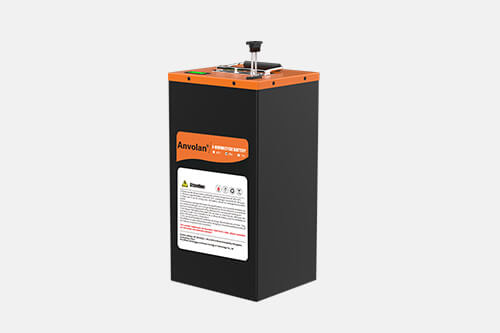
The original hardware safety architecture is the basic safety guarantee of 60V 100Ah Lithium Battery for Electric Tricycle. Qualified formal products build a factory safety defense line through multiple structural and electronic control designs. At present, all compliant commercial models adopt lithium iron phosphate cells, which have extremely strong thermal stability with a thermal runaway triggering temperature as high as 800℃. They possess excellent high-temperature resistance, puncture resistance and extrusion resistance, and are not prone to cell rupture and electrolyte leakage even under working conditions of bump extrusion and slight collision, making them the safest lithium battery material for electric tricycle scenarios. The overall battery adopts a high-strength aluminum alloy sealed shell with IP67-level waterproof and dustproof technology, which can effectively resist rainwater wading, outdoor dust and road muddy water invasion, and eliminate internal short-circuit faults caused by external environments. The interior is equipped with glass fiber heat insulation partitions and multi-layer insulation protection structures to realize independent protection of single cells, avoid mutual extrusion and frictional heating of cells. Meanwhile, it is equipped with an industrial-grade intelligent BMS battery management system, integrating seven heavy protection functions including overcharge, overdischarge, overcurrent, short circuit, high and low temperature, reverse connection and voltage stabilization balancing. It can monitor cell voltage, working current and battery temperature in milliseconds and automatically power off and lock under abnormal conditions, eliminating potential safety hazards at the hardware level.
Circuit system matching safety is the most easily neglected link with the highest accident rate, and parameter mismatch will directly break the battery safety protection system. The standard full-charge voltage of 60V 100Ah Lithium Battery for Electric Tricycle is 71.4V, with a wide working discharge current range, adapting to conventional tricycle working conditions with 1000W to 2000W power motors. During refitting and upgrading, users must ensure that the original vehicle controller, lines and fuses fully adapt to 60V voltage specifications. Mixing 48V low-voltage controllers is strictly prohibited, because low-voltage electronic control cannot bear high-voltage discharge load, which is extremely prone to current overload, circuit breakdown and instantaneous sparking. The main vehicle lines need to adopt national standard copper wires of 6 square millimeters or above. Inferior thin wires will generate continuous heat under long-term high-load discharge, and aging and melting insulating layers will easily cause spontaneous combustion due to circuit short circuit. Meanwhile, special original lithium battery chargers must be matched, and mixing lead-acid chargers and miscellaneous fast chargers is forbidden. Non-adaptive chargers with unstable voltage and current output will cause cell overcharge, unbalanced voltage difference and local overheating, leading to battery bulging and accelerated cell aging in long-term use, and even triggering thermal runaway accidents in severe cases. In addition, unauthorized removal of BMS protection boards, circuit modification and parallel capacity expansion are prohibited, which will destroy the original safety architecture and completely deprive the battery of protection capabilities.
Working condition and environmental safety management is the key to extending battery life and avoiding sudden safety accidents. The complex operating scenarios of tricycles impose high requirements on battery tolerance. In terms of temperature adaptation, the standard safe working temperature range of 60V 100Ah lithium batteries for electric tricycles is -20℃ to 60℃. In high-temperature summer weather, long-term outdoor exposure and continuous heavy-load climbing will rapidly raise the battery temperature. When the temperature exceeds 60℃, the cell activity will be abnormal, accelerating aging and increasing the risk of thermal runaway. It is necessary to avoid long-term continuous operation in high-temperature periods, power off and dissipate heat in time after parking, and prohibit static exposure in high-temperature environments. In low-temperature winter environments, the electrolyte activity of the battery decreases and the capacity attenuates slightly, which is a normal phenomenon. High-speed full-charge driving and heavy-load rapid acceleration at low temperatures are strictly prohibited, because high-current discharge will cause lithium precipitation and internal damage to cells, laying hidden dangers for long-term safety. In terms of driving conditions, long-term overload and continuous steep slope driving should be avoided, as such conditions will lead to continuous high-current discharge of the battery, sharp rise in internal temperature and increased cell load. Meanwhile, deep wading and long-term water immersion of vehicles should be avoided. Even with battery waterproof rating, long-term water pressure penetration will damage the sealing structure, causing internal moisture, circuit corrosion and short-circuit faults.
Standardized installation and fixation directly determine driving dynamic safety, and non-standard installation is an important cause of in-operation fires. 60V 100Ah Lithium Battery for Electric Tricycle has a large self-weight and regular volume. During installation, it is necessary to strictly fit the fixed points of the original tricycle battery compartment, and use special reinforced brackets and anti-slip buckles for locking and fixation to prevent floating, loosening and offset of the battery. The vehicle will continuously bump and vibrate during driving, and unfixed batteries will rub against the vehicle body repeatedly, resulting in damaged shells and worn and peeled lines. Direct contact between positive and negative poles and vehicle metal will easily cause short-circuit sparking. Installation must follow strict wiring specifications: connect the negative pole first and then the positive pole, compress and fasten the wiring terminals tightly to avoid electric arc sparks caused by loose virtual connection, and insulate and wrap the terminals completely to prevent exposure and contact between positive and negative poles. After installation, check the battery heat dissipation space to avoid closed extrusion and sundry accumulation, ensure smooth air circulation, timely dissipate working waste heat, and eliminate hidden high-temperature hazards. For old tricycles with deformed battery compartments, insufficient bearing capacity and aging damaged lines, repair and rectification must be completed before battery installation, and forced adaptation with faulty equipment is prohibited.
Daily charge-discharge and operation maintenance safety is the core of long-term safety protection, and scientific usage can avoid more than 90% of subsequent potential safety hazards. In terms of charging safety, all charging work must be carried out in a dry, ventilated environment without flammable and explosive items. Closed indoor charging, unattended overnight charging and outdoor rainy-day charging are prohibited. Adhere to the principle of shallow charging and shallow discharging in daily use: replenish power in time when the remaining power is 20%-30%, avoid charging after deep power depletion which will damage the cell structure and reduce safety stability; power off in time after full charging to prevent battery overheating and unbalanced voltage difference caused by long-term floating charging. Conduct regular safety inspections every week to check for damaged battery shells, loose and aging lines and oxidized and overheated terminals, and detect cell voltage difference and overall battery status through the BMS system every month to eliminate invisible faults in a timely manner. When the vehicle is idle for a long time, maintain the battery power at about 50%, store it in a normal-temperature and dry environment, and perform shallow charge and discharge once a month to prevent battery dormancy and cell aging failure caused by power deficit. Meanwhile, violent operations such as battery dropping, smashing, piercing, extrusion and unauthorized disassembly are strictly prohibited. Waste batteries shall be recycled in compliance with regulations, and random disassembly and discarding are forbidden to avoid secondary safety risks.
From the perspective of comprehensive safety specifications, 60V 100Ah Lithium Battery for Electric Tricycle is equipped with perfect original safety protection capabilities. Compliant products have stable quality and high safety factor, and can adapt to most operating scenarios of electric tricycles. Its potential safety risks mostly come from improper manual use, equipment mismatch, non-standard installation and insufficient maintenance, rather than inherent product defects. In the process of use, users can completely avoid various safety problems such as short circuit, overheating, fire and bulging by strictly abiding by hardware adaptation standards, installation and fixation specifications, working condition and environmental requirements, and daily operation and maintenance guidelines, and building a full-range battery safety protection system. While meeting daily cruising and power demands, it maximizes the battery safety performance and service life, providing a solid guarantee for the long-term safe, stable and compliant operation of electric tricycles.
Be the first to receive our latest news, how-to user guides,
and exclusive deals! Subscribe now.

 Headquarter Address:10F, Building 25, N0. 179 Fengguan, Dongshen Road, Dongguan, Guangdong
 Factory Address:Building 3, Area D, Shengyang Science and Technology Industrial Park, East District of Suichuan County Industrial Park, Ji'an, Jiangxi
 Headquarter Telephone No.:+86 769 2366 8529
Factory Telephone No.:+86 796 6111618
 Contact Person:Kevin Chen
 Email Address:chen@xpower-world.com